Author: Grimbard

  • The Dyatlov Pass Incident Explained: What the Evidence Supports

    The Dyatlov Pass Incident Explained: What the Evidence Supports

    The Dyatlov Pass Incident Explained: What the Evidence Supports

    In February 1959, nine experienced young hikers died on the eastern slope of Kholat Syakhl in the northern Urals. Their tent had been cut open from inside. They left it inadequately dressed for severe winter conditions. Searchers later found bodies at different locations down the slope and near a cedar tree.

    The Dyatlov Pass incident is often sold as proof that something impossible happened: a military secret, a UFO, a monster, an attack, a sonic weapon, or a curse. The evidence supports a harder and more human account. A dangerous snow event, brutal weather, darkness, injury, disorientation, and the failure of rescue can explain much of what made the case look supernatural. But “explained” should not mean every minute of that night has been reconstructed with certainty.

    The best-supported modern physical model examines a delayed slab avalanche. Researchers Johan Gaume and Alexander Puzrin showed how a small but dangerous snow-slab release could plausibly have developed after the hikers cut into the slope to pitch their tent, and how such an event could account for the urgent exit and some of the severe injuries.[^1]

    That is not a tidy ending. It is a disciplined one.

    What happened at Dyatlov Pass?

    The group was led by Igor Dyatlov, a student from the Ural Polytechnical Institute. After one member turned back earlier because of illness, nine hikers continued into the northern Urals. They made camp on a slope on the night of February 1, 1959, rather than reaching more sheltered woods.

    When they did not return, a search began. Investigators found the tent damaged and partially buried in snow. The hikers’ tracks led away from it. Several bodies were found between the tent and the forest; others were found later near a ravine. The cause of death for several was hypothermia, while others had serious chest or head injuries.

    Those facts are frightening without embellishment. A tent is supposed to be the smallest possible shelter from a winter landscape. Leaving it without adequate clothing is not mysterious because people are irrational. It is mysterious because the people had a reason to believe staying was worse.

    Illustration: a clearly non-documentary topographic view of a snowy slope, tent position, and delayed slab line.

    Illustration: a physical explanation can be incomplete without being weak.

    Why the cut tent matters

    The tent is one of the case’s strongest pieces of evidence because it records urgency. If the group cut their way out from inside, they were not calmly packing up to investigate a noise. Something made the normal exit feel unavailable, too slow, or unsafe.

    An avalanche explanation has often been dismissed with a simple objection: no huge avalanche scar was visible when searchers arrived. But the 2021 model does not require a cinematic wall of snow. It examines how a delayed slab release on the altered slope could have occurred and then become difficult to identify after wind and later snowfall changed the scene.[^1]

    The model is not a time machine. It cannot tell us who cut the tent, what every person believed, or exactly when each injury occurred. It does demonstrate that a snow-slab mechanism is physically plausible in terrain that earlier popular accounts treated as unsuitable for an avalanche.

    That is an important correction. “No visible giant avalanche” is not the same as “no possible snow event.”

    The cold did the work horror likes to assign to monsters

    Once the hikers were outside, the conditions became lethal. They were on an exposed mountain slope at night, in extreme cold and wind, with limited clothing and a damaged shelter above them. Reaching the forest may have seemed like the best available move because trees offered some protection from wind and materials for a fire.

    But a decision can be reasonable at the instant it is made and still lead toward disaster. Hypothermia alters judgment. Darkness makes distance and slope difficult to read. Injuries reduce mobility. A separated group loses the ability to share heat, information, and help.

    This is why the incident needs no paranormal addition. The terror is procedural. First, shelter becomes unsafe. Then the replacement shelter is too far away. Then every small task—lighting a fire, finding a companion, returning uphill, deciding whether to split up—costs more than the body can afford.

    There is a temptation to turn the case into a puzzle box because the evidence is fragmented. But real winter emergencies are often fragmented. The landscape preserves some objects, hides others, and leaves investigators with decisions rather than a clean narrative.

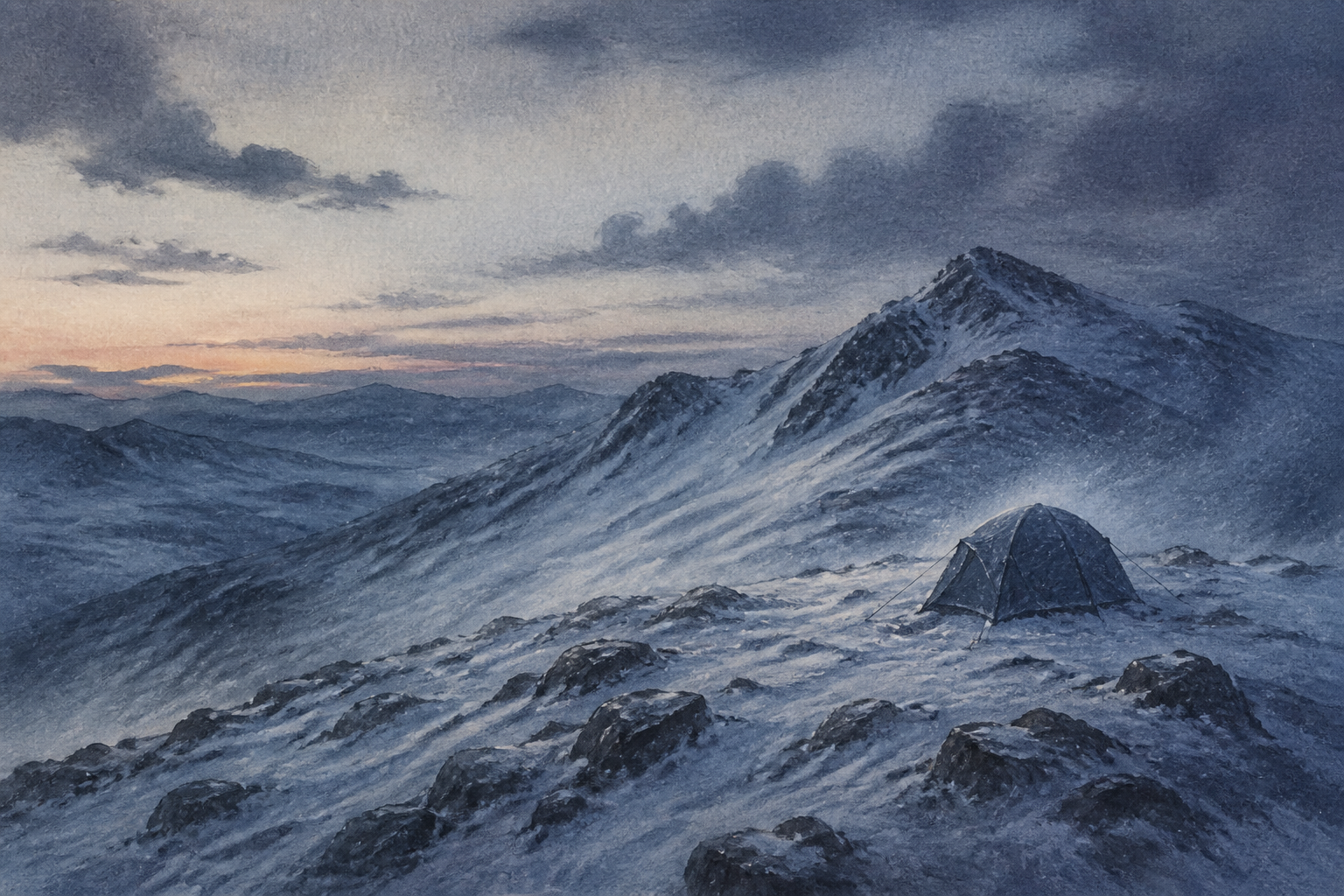
    Illustration: a respectful distant winter tent and scattered gear on snow, with no people or bodies.

    Illustration: the case concerns a failed shelter and nine lives, not a supernatural stage set.

    What about the injuries and the stranger claims?

    Serious injuries have fueled some of the wilder theories. The slab-avalanche model specifically addresses how snow loading and terrain could produce significant trauma without the kind of visible external damage people expect from an assault.[^1] It does not erase every uncertainty; it gives a material mechanism worth considering before inventing a hidden attacker.

    Other famous details need context. Reports about missing soft tissue on some bodies are often repeated as if they were an occult clue. Bodies discovered later in a stream environment and exposed to decomposition, water movement, scavenging, and time will not look like bodies found immediately after death. A responsible article should rely on forensic documentation rather than turning those details into decoration.

    The claim that local Mansi people attacked the group is especially irresponsible. It has circulated for decades despite a lack of evidence and despite the broader tendency of mystery stories to blame the nearest Indigenous community when investigators need a villain. The case does not justify that prejudice. Do not use it as a colorful “theory.”

    Nor does the case demonstrate a UFO, a secret weapon, infrasound panic, or a creature on the mountain. These ideas persist because they are narratively efficient. They give the hikers an enemy. The available evidence is more difficult: weather, snow physics, exposure, human effort, and a situation that became unrecoverable.

    What remains uncertain

    A sober explanation still leaves questions. Researchers cannot reconstruct the exact timing of every move. We do not know each person’s perception of the threat. We cannot fully restore the snowpack, wind, visibility, equipment state, and physical condition minute by minute.

    That is the same discipline needed when we ask why emergency broadcasts can feel frightening: the evidence can create dread on its own. A missing final explanation is not a blank check for supernatural ones.

    Uncertainty is not an invitation to make anything possible. It is an instruction to rank explanations by evidence. The slab-avalanche work is valuable because it tests a physical scenario against terrain and snow mechanics. It does more than declare an opinion.

    That approach belongs to the same family as the H. H. Holmes “Murder Castle” myth. A missing final explanation can be honest without becoming supernatural. The record is allowed to have gaps. The task is to keep the gaps from being filled by whatever story sells the strongest poster.

    The Grimbard reading: the mountain did not need an evil intention

    The Dyatlov Pass incident is horrifying because ordinary survival logic broke down under extraordinary conditions. The tent became dangerous. The forest became necessary. The return became impossible. Nine people were caught in a sequence where every remaining choice was worse than the choice before it.

    That is enough. It is more than enough.

    For more Archive files that separate the documented event from the version horror culture prefers to tell, join The Grimbard Press and receive Dead Ship, a free illustrated Subscriber Archive Edition.

    FAQs

    What happened at Dyatlov Pass?

    Nine hikers died in the northern Urals in 1959 after leaving their tent during severe winter conditions. The exact sequence remains incomplete, but modern research supports a plausible snow-slab avalanche scenario combined with exposure and injury.

    Was Dyatlov Pass caused by an avalanche?

    A 2021 study found that a delayed slab avalanche could plausibly explain key parts of the incident. It is a strong physical explanation, but it does not recreate every detail of the night with certainty.

    Did a UFO or secret weapon cause the Dyatlov Pass deaths?

    No reliable evidence establishes either claim. Such theories are more speculative than the weather, terrain, and snow-physics explanations supported by available evidence.

    Did local Mansi people attack the hikers?

    There is no evidence supporting that claim. It should not be repeated as a colorful mystery theory or used to blame an Indigenous community for an event investigators could not fully reconstruct.

    [^1]: Johan Gaume and Alexander Puzrin, “Mechanisms of slab avalanche release and impact in the Dyatlov Pass incident in 1959”, Communications Earth & Environment 2, 10 (2021).
  • Why Are Emergency Broadcasts So Scary? When a Warning Becomes Horror

    Why Are Emergency Broadcasts So Scary? When a Warning Becomes Horror

    Why Are Emergency Broadcasts So Scary? When a Warning Becomes Horror

    The sound arrives before the explanation. A television program cuts out. A tone claims the room. A plain voice delivers a few compressed sentences as though somebody, somewhere, has already decided that you need to know this now.

    That is why emergency broadcasts can feel frightening even when they are only tests. They are built to interrupt routine, borrow institutional authority, and turn attention into action. Analog horror does not invent that machinery. It takes the machinery seriously enough to ask what happens when the warning is vague, corrupted, or more confident than it should be.

    Real alerts exist to deliver life-saving information. In the United States, the Emergency Alert System and related warning channels are designed to distribute official public-safety messages from authorized sources.[^1] If you receive a real alert, follow the instructions from official local, state, or federal emergency authorities. The horror version is fiction precisely because it breaks the rules that make a real warning useful.

    An alert does not ask permission to enter the room

    Most media waits to be chosen. You pick a program, open a tab, start a video, or press play. An emergency interruption reverses that relationship. It enters an activity you already trusted and declares that the existing activity no longer matters.

    That reversal is unsettling because it changes the status of the screen. A television is usually furniture. A radio is background. A phone notification can be ignored until you decide otherwise. During an alert, the device becomes a mouth for an authority outside the room.

    The message is brief because brevity is useful in a real emergency. It may identify a hazard, a place, a time, and an action. But that compression also creates a powerful horror tool. It provides information without the comfort of a full story. You learn that something is wrong before you learn how wrong it is.

    Analog horror leans into that gap. The frightening broadcast is often not a monster speaking. It is a system speaking in the calm, procedural language meant to make danger manageable—and failing to explain the one thing the audience needs most.

    Illustration: radio microphone and emergency binder on an empty municipal desk.

    Illustration: authority is frightening in horror when the desk is empty but the message keeps arriving.

    Authority becomes dread when it cannot be checked

    An official warning works because the listener has reasons to trust its source. There are recognizable agencies, procedures, locations, and channels. The message should be clear enough to act on and specific enough to verify.

    The unease resembles the discomfort behind why a face can look strange in a dark mirror: a familiar signal is still present, but the normal clues that let you interpret it have gone unreliable. With a broadcast, the missing clue is whether the message can be verified before the danger arrives.

    Horror reverses each condition. The logo is almost familiar. The voice is too calm. The date is missing. The instruction is precise but the hazard is not. A warning tells people to avoid a place nobody has heard of, or to remain indoors for a reason it refuses to name.

    The dread does not come from a grainy screen by itself. It comes from a familiar format behaving just slightly outside its jurisdiction. Something has learned the grammar of public safety and is using it without accepting the responsibility that usually comes with it.

    That is why a generic “DO NOT PANIC” screen is weaker than a message that sounds operationally plausible but contains one impossible fracture. Horror needs the audience to feel the promise of reliable information before it can show the promise failing.

    Film scholar Annette Davison describes analog horror as a contemporary folk form that circulates recurring motifs: emergency broadcasts, hijacked messages, confidential warnings, uncanny faces, and doubles.[^2] Those motifs endure because they are already shared cultural shorthand. We know what a warning is supposed to do. The horror begins when it performs the shape of a warning without giving us a safe action.

    The fear of incomplete instructions

    Good emergency communication tells people what happened, where it matters, and what to do next. The fact that official alert systems work through designated authorities and multiple dissemination routes is not bureaucratic decoration; it is part of the safety design.[^1]

    Analog horror uses the opposite. It makes an instruction impossible to follow.

    Stay inside—but not in any room with a window. Do not answer the door—but do not let them know you are home. If a family member calls, do not use their name. The command has the brisk certainty of a safety notice, but no real public authority would leave people with an uncheckable rule and no reliable source.

    The viewer’s mind starts filling in the missing hazard. That is cheaper and more frightening than showing it. The story makes the audience perform the investigation while denying them the tools an investigator would need.

    This is why analog horror overlaps with night-shift horror. Both make a familiar system feel unreliable: a character inherits a record or routine that has lost the part explaining whether anyone is still in control.

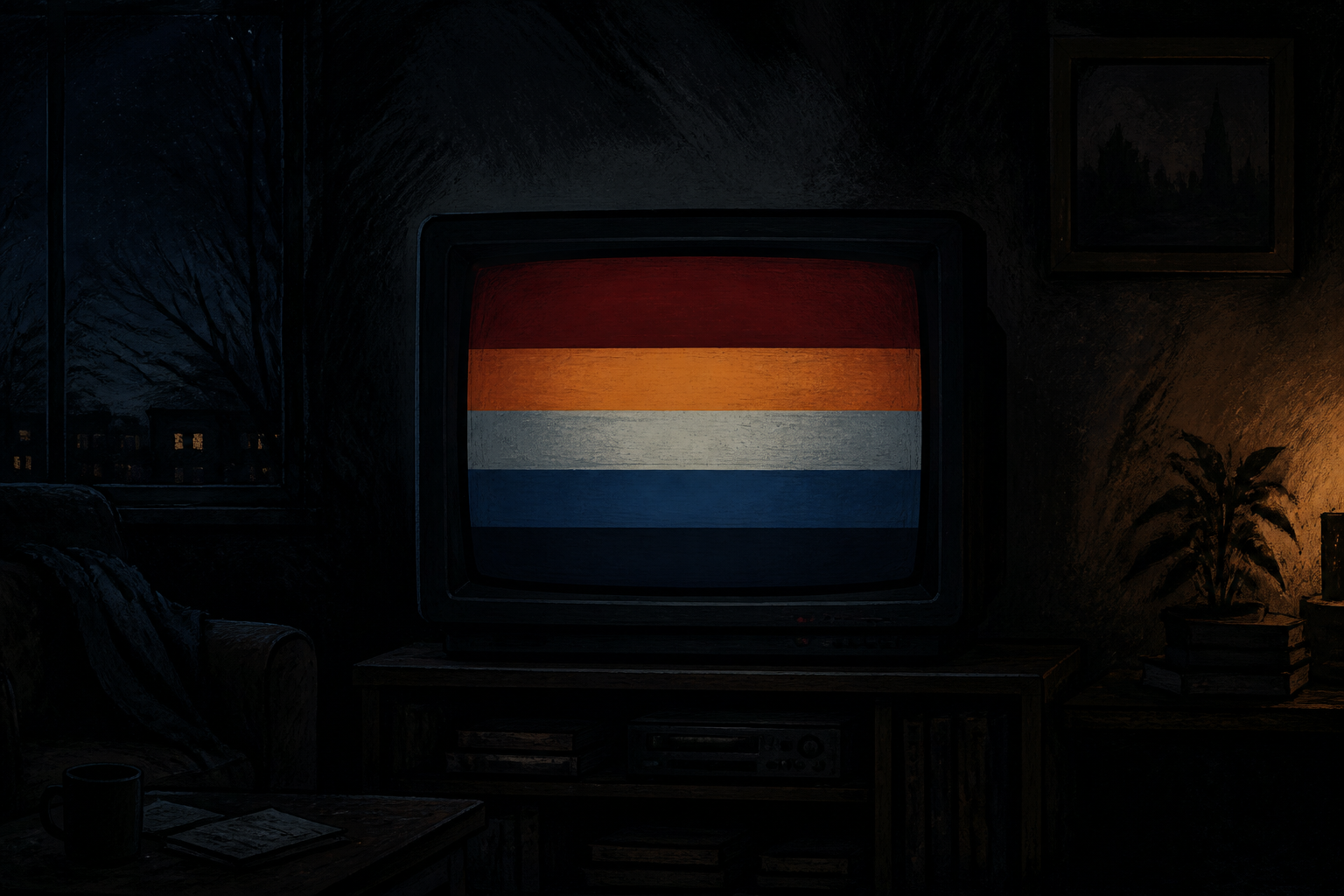
    Illustration: a late-night television in a dark room with an abstract warning triangle and no readable text.

    Illustration: real alerts should be clear and actionable; horror turns clarity into a missing person.

    Why old technology adds pressure

    Analog horror often chooses CRT televisions, weather radios, local-access graphics, VHS tapes, and public-service announcements. Nostalgia is part of the effect, but it is not the whole effect.

    Older media feels bounded. A tape has an end. A broadcast has a station. A local channel has a place in a community. When something impossible appears there, the intrusion feels physical: it is not simply somewhere online. It has entered a device that belongs in a room.

    The roughness of the image can help because it withholds detail. Static, low resolution, and damaged audio create room for inference. But a VHS filter is not an automatic scare. If the message could just as easily be an email, the old equipment is costume rather than form.

    The best analog horror asks why this particular message came through this particular channel. It gives the medium a job. Maybe the broadcast is the last system still reaching a town. Maybe the old tape is the only record that has not been overwritten. Maybe the fake authority needs a medium people are trained to obey.

    How to use the device without faking a real alert

    Writers and creators should be careful here. Real emergency systems are not props for a prank. Do not reproduce operational alert text, official logos, or instructions in a way that could be mistaken for an actual warning. Do not imitate a local emergency message and circulate it without unmistakable fictional framing.

    The safer creative move is also the better one: invent a clearly fictional institution, avoid realistic operating details, and make the story’s logic visible around the message. Give the audience a reason to know they are watching fiction even as the characters do not.

    The Grimbard reading is simple. An emergency broadcast is scary because it assumes the world has changed before you have had time to agree. It offers a voice with enough authority to interrupt your life and just enough information to make you fear the next sentence.

    For more horror about incomplete evidence and the damage a record can do, join The Grimbard Press for Dead Ship, a free illustrated Subscriber Archive Edition.

    FAQs

    Why do emergency alert sounds feel scary?

    They are designed to seize attention quickly during urgent situations. The sudden interruption and association with possible danger can produce a strong emotional response, even during a test.

    Are emergency broadcasts part of analog horror?

    They are a common analog-horror motif. The genre uses the authority and interruption of warning formats to create uncertainty, but it should not be confused with real public-safety communication.

    What makes an analog-horror broadcast effective?

    It needs a believable reason for the medium, a recognizable authority structure, and one carefully controlled failure of information. Static alone is not a story.

    What should I do if I receive a real emergency alert?

    Follow the instructions in the alert and check official local, state, or federal emergency sources for updates. Do not rely on fictional-media conventions for real safety decisions.

    [^1]: FEMA, Integrated Public Alert and Warning System glossary.
    [^2]: Annette Davison, “The Surprising Folklore of Analog Horror”, Film Quarterly (2026).

  • Why Is the Number 13 Unlucky? The History Behind Triskaidekaphobia

    Why Is the Number 13 Unlucky? The History Behind Triskaidekaphobia

    Why Is the Number 13 Unlucky? The History Behind Triskaidekaphobia

    Thirteen is missing from elevator panels, hotel floors, airplane rows, and sometimes dinner-party plans. The fear even has a name: triskaidekaphobia, from Greek roots for thirteen and fear.

    But the short answer to why 13 is unlucky is less tidy than the superstition itself. There is no single securely documented ancient moment when the world agreed that thirteen was cursed. What we have is a layered folk history: older symbolic habits, religious stories, nineteenth-century popularization, commercial avoidance, and the ordinary human urge to remember the bad day that confirmed a rule.

    That does not make the belief trivial. A superstition can shape a building even if nobody can point to its first brick.

    The trouble with the “one origin” story

    Most quick explanations name one source: the Last Supper, a Norse myth, an old Babylonian law code, or the alleged fatality of the thirteenth guest at a table. These stories are attractive because they make the fear feel ancient and inevitable.

    The record is messier. A number can carry different meanings in different places. Thirteen has been treated as lucky, sacred, ordinary, or ominous depending on culture and context. The specific Western association with bad luck did not arrive as one sealed package from antiquity.

    One persistent claim deserves special caution: that the Code of Hammurabi skipped a thirteenth law because Babylonians feared the number. The apparent omission comes from modern editorial numbering, not a documented ancient superstition. It is exactly the kind of clean origin story folklore likes to invent after the fact.

    Nathaniel Lachenmeyer’s history of the number tracks the belief through several strands rather than pretending there is one source to blame.[^1] That is the useful approach. Twelve often reads as complete—months, signs, hours, a jury, apostles. Thirteen can look like the figure that arrives after the pattern has closed. But symbolic discomfort is not the same thing as a universal rule of bad luck.

    Illustration: a twelve-part clock face interrupted by an unnumbered thirteenth marker.

    Illustration: superstition often begins where a familiar pattern appears to have one piece too many.

    The Last Supper and the table for thirteen

    Christian tradition is one important part of the later Western story. The Last Supper is commonly invoked because thirteen people are traditionally understood to have sat at the table: Jesus and the twelve apostles, with betrayal and crucifixion immediately following in the narrative.

    That association helped make a dinner table of thirteen feel ominous in parts of Europe and North America. But it is not proof that the number was universally feared beforehand, nor does it explain every later custom. It is one powerful story among several.

    Folklore often works this way. A memorable narrative attaches itself to a number, object, date, or gesture. The association becomes easier to repeat than the history that complicated it. Soon a hotelier can omit a floor without needing to know whether the customer is thinking about theology, a bad dinner guest, or a film franchise.

    The number survives because it is portable. It can sit at a table, over an elevator door, on a calendar, or in the seat number you would rather not have on a long flight.

    Friday the 13th is a later fusion

    Fear of thirteen and fear of Friday are often treated as one ancient superstition. They are better understood as separate anxieties that became a powerful combined symbol relatively late.

    Friday had accumulated associations with misfortune in some Christian contexts. Thirteen had its own bad-luck reputation. Literature, journalism, film, and seasonal repetition helped fuse them into the phrase everyone recognizes now: Friday the 13th.

    That fusion is a useful reminder that popular culture does not merely repeat superstition. It manufactures its furniture. A novel, a headline, a movie poster, or a yearly warning can make a custom feel older than it is. Repetition gives the superstition a calendar appointment.

    The fear is not the same everywhere. In some places, a different date carries the ominous weight; in others, thirteen is not especially unlucky at all. The variation is not a footnote. It is the point. Superstitions are local agreements about which patterns deserve attention.

    That is also why figures such as the Black Dog can change from report to report without losing their grip. A legend stays useful when a community can keep adapting it to the anxiety nearest at hand.

    Illustration: a nineteenth-century dinner table prepared for thirteen, all chairs empty.

    Illustration: the number becomes ominous when an ordinary social arrangement gives it a story.

    Why buildings still skip the thirteenth floor

    An elevator that jumps from 12 to 14 is not evidence that architects believe a number changes concrete. It is evidence that buildings are also businesses.

    If a portion of guests, buyers, or tenants dislikes the number, omitting it can feel like inexpensive insurance. The choice then reinforces the belief for everyone else. A child sees no 13 button and learns that the absence must mean something. The superstition becomes part of the environment, not merely a story told about it.

    That is why superstition deserves better than a smug dismissal. It is not always an individual conviction. It can be a system of small accommodations—one floor, one room number, one missing seat—that makes a shared anxiety visible.

    The feeling has something in common with why a face can look strange in a dark mirror. Once you expect the pattern to be wrong, your attention begins doing work on its behalf. The missing number is an invitation to notice every bad thing that follows.

    Why a superstition survives after people stop believing it

    Most people who avoid a thirteenth floor do not think they are making a metaphysical claim. They may say they are only being cautious, honoring a preference, or sparing themselves an unnecessary moment of unease. That is exactly how a superstition gains durability. It no longer needs total belief; it needs only enough small acts of avoidance to keep appearing in the world.

    The effect is self-reinforcing. A building omits 13 because people recognize the custom. Visitors then encounter the omission and treat it as proof that the custom matters. The missing label is a tiny piece of environmental storytelling: it establishes a rule without explaining the rule. Horror uses the same device when a character finds a hotel with no room 13, a street with no house 13, or a ledger that jumps over a number. The absence turns an ordinary system into a suspect one.

    There is also a practical reason this particular fear is so memorable. Numbers feel objective. A locked door can be interpreted; a number seems to be simply there. When a culture makes one number feel contaminated, it gives anxiety an easy handle. You can count toward it, avoid it, and notice it anywhere. That portability is why thirteen has outlived many of the stories people use to explain it.

    The Grimbard reading: thirteen is frightening because it is a loose thread

    Horror does not need thirteen to have occult power. It needs the number to arrive after an orderly sequence and make someone wonder whether the order was ever secure.

    Twelve shuts the door. Thirteen is the person still standing in the hall.

    That is a much better use for the superstition than a list of fake ancient facts. Let the number remain what it has become: a cultural loose thread, pulled tight by stories until even an elevator panel looks like it is keeping a secret.

    For more folklore that separates a good story from a good source, join The Grimbard Press and receive Dead Ship, a free illustrated Subscriber Archive Edition.

    FAQs

    What is triskaidekaphobia?

    Triskaidekaphobia is the term commonly used for fear of the number thirteen or a strong belief that it brings bad luck.

    Is 13 unlucky in every culture?

    No. Number symbolism varies widely. Thirteen is not universally treated as unlucky, which is one reason a single-origin explanation is misleading.

    Why do hotels skip the 13th floor?

    Many hotels and buildings omit the label because some customers prefer to avoid it. The choice is usually a commercial accommodation, not a claim that the physical floor does not exist.

    Did the Code of Hammurabi omit 13 because it was unlucky?

    No reliable evidence supports that claim. The apparent missing number comes from later editorial numbering, not an established Babylonian taboo.

    [^1]: Nathaniel Lachenmeyer, 13: The Story of the World’s Most Notorious Superstition, Smithsonian Institution catalog record.

  • Black-Eyed Children: How a 1990s Internet Legend Learned to Knock

    Black-Eyed Children: How a 1990s Internet Legend Learned to Knock

    Black-Eyed Children: How a 1990s Internet Legend Learned to Knock

    Two children stand at a car window late at night. They want a ride. Or they need to use a phone. Or they ask, politely at first, to come inside. The person telling the story notices something wrong only after the request has already made courtesy feel dangerous: the children’s eyes are entirely black.

    The Black-Eyed Children—or Black-Eyed Kids—are one of the clearest examples of a modern urban legend becoming old in public memory. The story is often presented as ancient, vampire-adjacent folklore. The better-supported history is much more recent. It is tied to accounts circulating from the 1990s, especially a reported encounter by Texas journalist Brian Bethel in Abilene, then to the accelerant of online retelling.[^1]

    That distinction matters. A reported experience is not the same thing as evidence that supernatural children visit cars and doorsteps. But a story does not need paranormal proof to become real folklore. It only needs a form that strangers can repeat, modify, and recognize.

    The story’s likely ground zero

    The modern Black-Eyed Children legend is commonly traced to Brian Bethel’s account of an encounter in Abilene, Texas, in 1996. In the later version he discussed publicly, he described being approached in a movie-theater parking lot by two boys who asked for a ride. The encounter became frightening when he saw their eyes, which he described as completely black.[^1]

    Bethel treated the experience as something that happened to him. That is the beginning of a personal testimony, not a laboratory result or an independently verified supernatural case. The distinction is not meant to sneer at the account. It is how a useful archive keeps its shelves from collapsing: reported by a witness belongs on a different card from confirmed by evidence.

    Once the account circulated online, it acquired the features that make a story easy to carry. The setting could change from Texas to a rural road, a gas station, an apartment hall, or a front porch. The children could be younger or older. The request could be for a ride, a phone, a bathroom, or permission to enter. The eyes remained the same, because they solve the entire story in one image.

    Illustration: abstract blocks of an early internet message board glowing in a dark room; no readable text.

    Illustration: the legend did not need a campfire. It had an early internet connection.

    Why the request to enter is more frightening than the eyes

    Solid-black eyes are an efficient horror detail. They remove the ordinary information we expect from a face. But the legend’s real engine is the request for permission.

    The children usually do not attack. They ask. That makes the listener responsible for a decision before the story has explained the danger. A person who refuses a child at a door risks feeling cruel. A person who agrees may be admitting something that knows exactly how to use politeness.

    This is an old mechanism in a new costume. Folklore is full of threshold rules: do not invite the stranger in, do not open the door after a certain hour, do not accept a gift whose terms you do not understand. The Black-Eyed Children update that rule for parking lots, late-show theaters, and suburban porches. The monster does not need a castle. It needs access.

    That is why the story feels intimate even when it is obviously designed for retelling. It recruits the listener’s own manners. You know what you are supposed to do when someone asks for help. The legend makes that knowledge feel like a trap.

    A contemporary legend, not a recovered ancient one

    As the story spread, claims of older sightings appeared. That is common in successful folklore. Once a legend has a recognizable shape, earlier vague memories and unrelated stories can be pulled toward it. A strange child seen near a road decades ago becomes an earlier Black-Eyed Child because the new legend gives the memory a name.

    That process is older than the internet even when the delivery system is new. The Black Dog gathered reports, exaggerations, and local anxieties into a figure people could recognize on sight; the Black-Eyed Children do something similar with a request at the door.

    That backward growth is not fraud in every case. It is one way folklore works. People remember through available patterns. The problem begins when later retellings use those patterns to claim an unbroken ancient tradition that the record cannot show.

    The Black-Eyed Children are most interesting when we resist that temptation. They are internet-age creatures. Their pale faces, strange speech, and requests for entry combine several older anxieties, but their transmission belongs to the era of mailing lists, paranormal forums, reposted anecdotes, and stories that could circle the country without ever gaining an independent witness.

    The same process is visible in how Slender Man was born in a Photoshop thread. A new monster can become culturally durable faster than a regional legend once the network supplies the campfire.

    Illustration: a rain-darkened apartment doorway with a chain lock and a bright threshold, no people visible.

    Illustration: the story is about the threshold long before it is about the eyes.

    Why the legend lasts

    The Black-Eyed Children compress several fears into a small scene:

    • a child who asks for help but does not feel like a child;
    • a face that removes the eyes we use to judge attention and emotion;
    • a request that makes refusal feel morally uncomfortable;
    • a door, car, or home that becomes a border rather than a refuge.

    It also lets the listener complete the frightening part. The story rarely provides a verified consequence. The narrator drives away, locks the door, or feels a wave of dread. That gap is useful. A named monster can be argued with. An unanswered request keeps working after the account ends.

    This is different from saying the legend is harmless. Some versions turn vulnerable children, strangers, or disability-coded appearance into easy threats. A careful telling should not confuse an invented monster rule with a reason to treat real people suspiciously. Horror is allowed to use the door. It does not get to make kindness itself look foolish.

    The Grimbard reading: folklore now moves at the speed of recognition

    The Black-Eyed Children are proof that folklore did not end when people stopped gathering around one fire. It changed its infrastructure.

    The first telling may have been a single person’s account. The creature that survives now is made from every person who knows which details must remain: black eyes, a request, a threshold, and the awful feeling that the decision has already been made for you.

    For more files on the stories that outgrow their first telling, join The Grimbard Press and receive Dead Ship, a free illustrated Subscriber Archive Edition. It begins with a document, a vanished crew, and a rule about what not to trust in the dark.

    FAQs

    Are Black-Eyed Children real?

    There is no reliable evidence that Black-Eyed Children are supernatural beings. They are best understood as a modern urban legend built from reported encounters and repeated online storytelling.

    When did the Black-Eyed Children legend begin?

    The modern legend is commonly associated with a reported 1996 encounter in Abilene, Texas, and later online circulation. Claims of a much older stable tradition are difficult to document.

    Why do Black-Eyed Children ask to be invited in?

    The request for entry creates the story’s main tension: it turns ordinary politeness and the safety of a threshold into a decision the listener fears getting wrong.

    Is this the same as creepypasta?

    It overlaps with creepypasta and internet horror, but it also works as contemporary folklore: a flexible story told as if it could have happened to someone nearby.

    [^1]: Emma Cieslik, “Death as a Child: The Modern Legend of the Black-Eyed Children”, Atlas Obscura (2024).

  • Why Are Clowns Scary? The Psychology Behind Coulrophobia

    Why Are Clowns Scary? The Psychology Behind Coulrophobia

    Why Are Clowns Scary? The Psychology Behind Coulrophobia

    Clowns are supposed to make their intentions easy to read. The grin is huge. The clothes are loud. Every movement is made to cross a room. Yet many people find the costume unsettling before it does anything remotely threatening.

    The short answer is that a clown can make ordinary social reading fail. The painted face displays a permanent emotion while hiding the real face beneath it. The behavior may be exaggerated or erratic. The body is familiar, but the signals it normally sends are altered. Horror has spent more than a century learning how useful that mismatch can be.

    That does not mean every dislike of clowns is a clinical phobia, or that there is one explanation for everyone. The fear commonly called coulrophobia is better understood as a cluster of possible pressures: masked expression, uncertain intent, surprise, media associations, and individual experience. A 2023 study of people who reported clown fear found several of those factors mattered, especially uncertainty about harmful intent, portrayals in media, and unpredictable behavior.[^1]

    A smile that cannot answer you

    Human faces are not decoration. We use them constantly to decide whether a person is amused, embarrassed, irritated, bored, or safe to approach. The clues are tiny: an eye movement, a mouth that changes before speech, a look that does not match a laugh.

    A clown replaces those moving clues with a fixed design. White makeup can flatten ordinary skin cues. An oversized painted mouth stays cheerful when the performer is silent. Red marks around the eyes can make attention look permanent. The costume does not merely hide identity; it supplies an emotion in advance and refuses to revise it.

    That is why the usual claim that clowns are frightening because they look “not quite human” is too crude. The problem is not that a clown is less human. It is that the costume gives a human body a face that behaves unlike a face. You are looking at a social signal that cannot participate in the conversation.

    The same pressure appears in quieter forms elsewhere in horror. A porcelain doll has eyes that seem alert but never focus back. A reflection in dim light can look unfamiliar because the face stops providing stable information. In why dolls are creepy, the fear comes from a familiar form that cannot complete recognition. A clown adds motion, proximity, and a demand to react.

    Illustration: circus makeup, gloves, and an obscured mirror reflection on a dressing table.

    Illustration: the costume creates an emotion before the performer has expressed one.

    The costume also changes the rules

    Clowning is allowed to violate small social rules. A clown may stare too long, invade personal space, fall down on purpose, pull an impossible object from a pocket, or pretend not to understand a direct question. In a circus or a party, those violations have a frame: this is a performance, people are watching, someone else is in charge.

    Outside that frame, the same behavior can feel like a breach. The costume says play, while the setting says why are you here? Horror does not need to add a weapon to make that tension useful. It only needs to remove the audience, the ring, or the scheduled ending.

    That is one reason a clown in a bright daytime parade and a clown in an empty parking lot do not produce the same reaction. The image is not doing all the work. Context decides whether the exaggeration feels licensed.

    This is also why treating every clown fear as an “uncanny valley” example misses the human part of it. The uncanny valley is often used as a catch-all phrase for anything vaguely human that feels wrong. But clown fear can be more specific: a person is present, the person is performing happiness, and you cannot reliably read what they want from you.

    Horror did not invent the fear—but it gave it a costume department

    Modern horror did not create every uneasy response to painted faces. Masks, comic performers, carnival inversion, and public spectacle all have longer histories. What horror did was turn the clown’s social permission into a threat.

    The standard sinister-clown image borrows a useful contradiction. A clown is expected to lower the stakes. It belongs around children, celebrations, and managed foolishness. When that figure becomes dangerous, the comfort is not simply removed. It is used as camouflage.

    That is why the most effective clown horror rarely depends on a single monstrous reveal. The painted smile is already a kind of locked door. The story becomes frightening when someone must decide whether to trust the figure behind it.

    The same mechanism appears in why a face can look strange in a dark mirror: the mind dislikes a familiar signal that will not settle. A clown turns that instability outward. It is another person carrying a face that cannot answer your face.

    Illustration: a stylized painted smile divided by a dark theater curtain.

    Illustration: the unsettling part is not the smile itself, but the fact that it never changes.

    Why children and adults can react differently

    Children may have fewer established rules for separating costumes from ordinary social behavior. They can also be more sensitive to voices, size, volume, and unpredictable movement. But adults are not immune because they are “too rational” for the costume. Adults bring additional associations: a childhood scare, a film character, a news cycle, an awkward party, or the awareness that the painted expression is an intentional mask.

    The study of clown fear is useful here because it does not reduce the response to one embarrassing weakness. Participants described different pathways. Some linked the fear to a frightening personal experience. Others emphasized the inability to read the clown’s expression or anticipate its behavior. Media exposure mattered for many, but it was not the whole explanation.[^1]

    That variety is worth preserving. A reader can dislike clowns without needing a diagnostic label, and a writer can use clown imagery without assuming the costume is universally frightening. Fear becomes sharper when the story identifies the exact promise that has failed.

    The Grimbard reading: a clown is an instruction that will not explain itself

    The face says: laugh. The body says: watch. The setting may provide no answer about whether either instruction is safe.

    That is the enduring horror of the clown. It is not simply a monster in bright colors. It is a public signal that demands trust while withholding the ordinary evidence that trust is deserved.

    For more evidence-minded horror, join The Grimbard Press and receive Dead Ship, a free illustrated Subscriber Archive Edition. It begins with a recovered record, not a painted grin—and it is very clear that nobody in the file is asking to be let in.

    FAQs

    What is coulrophobia?

    Coulrophobia is the commonly used term for a fear of clowns. It can range from mild unease to a strong phobic response, but only a qualified professional can assess a clinical phobia.

    Why do clown faces feel unsettling?

    Makeup can hide normal facial cues while displaying a fixed emotion. That makes it harder to read intention in the fast, ordinary way people usually read one another.

    Are clowns scary because of the uncanny valley?

    Sometimes uncanny feelings may contribute, but clown fear also involves context, behavior, social unpredictability, personal experience, and horror-media associations. It is not explained by one concept alone.

    Did horror movies create fear of clowns?

    No. Horror amplified and shaped a pre-existing unease around masks, performance, and unpredictability. Film and television can make those associations stronger for some viewers.

    [^1]: R. A. R. et al., “Fear of clowns: An investigation into the aetiology of coulrophobia”, Frontiers in Psychology (2023).

  • Why Found-Footage Horror Feels So Real

    Why Found-Footage Horror Feels So Real

    Why Found-Footage Horror Feels So Real

    The camera shakes. Someone says they heard something downstairs. The image breaks apart at the exact moment you would like it to become useful.

    Found-footage horror works because it does not present itself as a finished story. It presents itself as evidence with a hole in it. The viewer is not merely asked to watch a character make a mistake. The viewer is asked to inspect the record afterward, to notice the shadow at the edge of the frame, and to live with the fact that the camera stopped before it answered the only question that mattered.

    Found footage feels real because the frame is restricted, the recorder is inside the danger, and the evidence arrives without an all-knowing narrator. It uses limitation as a source of dread. The audience has to supply the explanation, and audiences are exceptionally good at supplying a bad one.

    The camera is a witness, not a window

    In conventional film language, the camera is often invisible. It can be anywhere, cut away from danger, show us the threat, then show us the reaction. Found footage changes the contract. The camera belongs to someone in the story. It has a reason to be there, a person holding it, a battery that can fail, and blind spots created by fear.

    That makes every decision about the frame meaningful. Why are they still recording? Why did they pan left? Why did they not look behind them? The camera does not have to be realistic in a documentary sense to be effective, but it has to have a story role. A device held by a character is a promise that somebody may later find what it recorded.

    The promise is cruel. It turns survival into an editing question.

    Evidence is scarier when it is incomplete

    Illustration explaining evidence, limitation, and refusal in found-footage horror.
    Illustration: found-footage horror turns evidence, limitation, and refusal into tension.

    The form’s best trick is refusing to show enough. A sound occurs offscreen. A face appears for two frames. A message is interrupted. The viewer receives a piece of information that demands interpretation but cannot support a stable one.

    This is different from withholding information because a story has not decided what it means. Good found footage withholds with precision. The gap has shape. We know what kind of answer is missing: who opened the door, what was moving in the treeline, why the speaker suddenly stops using a name.

    That is close to the power of a folk-horror rule. In the craft of “don’t do X”, a prohibition is frightening because it reveals a system without fully explaining it. Found footage turns the system into a damaged file. The rule may be written in the margins, and the person who knew it is already gone.

    The frame forces the viewer to participate

    A wide, polished horror shot can be beautiful. A found-footage shot is often narrow, badly lit, and late to the important thing. That inconvenience is not a flaw when the film understands it. The viewer starts scanning the edges of the image, listening for a sound beneath dialogue, and doubting whether a glitch was an accident.

    The audience becomes a co-investigator. It performs the labor normally done by exposition: matching timestamps, reading background objects, wondering whether the narrator is reliable. The form creates fear by making attention feel necessary. If you stop looking, you might miss the clue. If you keep looking, you may see it.

    Writers can borrow this without copying a handheld-camera aesthetic. A recovered voicemail, an incident report with redactions, a security log, or an email thread can all behave like found footage. The key is not distortion. The key is evidence that has a point of view and a limit.

    Glitches are punctuation, not plot

    Illustration showing how offscreen space and frame edges create found-footage tension.
    Illustration: frame edges and offscreen space create found-footage tension.

    Bad found footage mistakes technical noise for dread. A corrupted image is not automatically frightening. It becomes frightening when corruption takes something specific away.

    Let the audio fail after a name is spoken. Let a camera drop its signal during the one moment a witness turns toward the door. Let the automatic timestamp continue after everyone has left the room. Each interruption should sharpen the question rather than decorate the scene.

    This is where the form resembles a room that feels wrong. The reader does not need to be told that the atmosphere is uncanny. Give them the bad detail: the security camera has a blind spot exactly where the employee badge reader is; the footage restarts with the door open; the report’s author has crossed out their own name.

    Evidence, limitation, refusal

    My working framework for found-footage horror has three parts.

    Evidence: The file contains something the audience can examine. It must be concrete enough to invite judgment.

    Limitation: The file cannot see, hear, or preserve everything. The limitation should arise from the device or narrator, not from the author hiding behind fog.

    Refusal: The story denies total closure. It leaves a remaining fact that cannot be reconciled without making the horror smaller.

    That last part is the hardest. A refusal is not a random ending. It is an ending that understands exactly what answer it is withholding and why an answer would betray the form. The best final image does not say, “Nothing was explained.” It says, “This was all the explanation anyone got.”

    The file stays open

    Found footage is not realistic because cameras make things true. It is realistic because cameras make people believe there ought to be an answer. We trust the recording, then discover the recording has needs, blind spots, and fear of its own.

    The final terror is not that the footage is fake. It is that it may be genuine and still useless when you need it most.

    For after-hours horror built from ordinary systems that refuse to behave, On the Clock, After Dark is the next file to open. Join The Grimbard Press for Dead Ship, a free illustrated Subscriber Archive Edition, and more stories that leave just enough evidence behind.

    FAQs

    Why does found-footage horror feel more realistic than ordinary horror?

    It frames events as incomplete evidence recorded by someone inside the story. Limited vision, imperfect sound, and missing context make viewers actively interpret what they see.

    Does found footage need a shaky camera?

    No. The defining feature is a story-world recording with limits and a reason to exist. Security footage, voice notes, screen recordings, and recovered documents can use the same principle.

    What makes a found-footage glitch scary?

    A glitch works when it removes or distorts a meaningful piece of evidence. Random static becomes repetitive quickly; an interruption at the wrong moment creates a specific unanswered question.

    How can writers use found-footage techniques in prose?

    Use a document or recording with a clear author, purpose, and limitation. Let its omissions arise naturally, then leave one crucial fact unresolved rather than explaining every anomaly.

    Sources and further reading

    This is a craft analysis. Verify all credits, dates, and plot details against the original film or its distributor before naming a specific work in the published version.

  • Free September 4–8: There Be Monsters: Then and Now

    Some warnings are only stories until you are the person standing at the gate.

    From September 4 through September 8, There Be Monsters: Then and Now is free to download on Kindle. It is the first book in my There Be Monsters series: thirteen illustrated tales of folk horror, haunted places, buried histories, and the quiet moment when an old rule turns out to have been useful.

    Inside are a bell that rings for the dead when no one has died, a lake tour that returns without its passengers, a sealed crawlspace, a well with a price, and other places where people learn too late that curiosity is not the same thing as permission.

    Get the free Kindle book on Amazon

    If you read it and it gives you something to think about, an honest Amazon review helps an independent horror author find the readers who may actually want this kind of book. Constructive feedback helps, too. I do not need a particular rating; I value a real response after you have spent time with the stories.

    Every warning was true once. Some are still being written.

  • The Mary Celeste Mystery: What We Know About the Empty Ship

    The Mary Celeste Mystery: What We Know About the Empty Ship

    The Mary Celeste Mystery: What We Know About the Empty Ship

    An empty ship makes a particular demand on the imagination. A house can be left because its occupants moved. A vessel at sea is a smaller world with fewer exits. When the people are gone and the ship remains, the question is not simply where they went. It is what convinced them to leave the one thing keeping them alive.

    The Mary Celeste was found adrift near the Azores in December 1872 by the crew of the Dei Gratia. Its captain, his family, and crew were absent. The ship’s abandonment was real; a final certain explanation is not. The mystery has gathered a thick skin of ghost-ship details over the years, so the responsible version starts by separating the historical record from the story people wish it told.

    The discovery was documented

    Royal Museums Greenwich reports that the Dei Gratia sighted the brigantine adrift in the Atlantic near the Azores on 4 December 1872. The ship had departed New York for Genoa the previous month. The Historical Association’s account places the abandonment sometime between 25 November and 4 December and notes a damaged or disordered deck, open hatches, and worn rigging.

    Those facts are already enough. A commercial vessel was found without the people who had been aboard it. The rescue vessel had to decide what it was seeing, how to bring the ship in, and how to account for a situation that would become a salvage inquiry.

    The word mystery does not mean no evidence exists. It means the evidence does not force one conclusion.

    The popular story has added furniture

    Illustration comparing documented Mary Celeste facts with unproven theories.
    Illustration: documented facts and unproven Mary Celeste theories should remain separate.

    You may have heard that the Mary Celeste carried a hot meal left on the table, a cat alive below deck, or every possession intact as though the crew had stepped away for a minute. Those images are good fiction. They should not be treated as the core historical record without a source from the investigation or a reliable maritime archive.

    This is the trouble with a famous absence. It invites props. Every added detail makes the room more theatrical and the mystery more certain-looking. But a properly told Mary Celeste story is not a locked-room puzzle with one missing clue. It is an incomplete maritime record whose missing people cannot clarify it.

    That incompleteness is the entire engine.

    Why would anyone leave a seaworthy ship?

    Any explanation has to reckon with the basic terror of the decision. The sea is not an empty road. A lifeboat or small boat is a worse shelter than a brigantine unless the people aboard believe remaining is immediately more dangerous.

    Several ideas have been proposed: fear of weather, problems with navigation or pumps, a temporary evacuation, concerns about alcohol vapour from the cargo, or some combination of pressure and misjudgment. None becomes fact merely by being plausible. A hypothesis may explain one feature of the scene and fail another.

    The best article therefore ranks, rather than crowns. A weather-based explanation is a reconstruction of conditions. A cargo-vapour theory is a reconstruction of perceived danger. Fraud and violence are claims that require stronger evidence than their melodrama supplies. Supernatural explanations are part of the legend’s afterlife, not evidence from the ship.

    Before publication, every specific statement about the lifeboat, cargo, chronometer, pump, logbook, and salvage hearing should be checked against an archival or court source. The point is not to make the story less readable. It is to stop readability from borrowing the authority of a document we have not inspected.

    Ghost ships are machines for making absence visible

    Illustrated timeline of the Mary Celeste voyage, discovery, and Gibraltar salvage inquiry.
    Illustration: the voyage, discovery, and Gibraltar salvage inquiry form the documented timeline.

    A sea monster gives fear a body. A ghost ship gives fear a vacancy.

    That distinction explains why sailors’ sea-monster beliefs and the Mary Celeste sit beside one another without being the same story. The monster is something seen at the edge of knowledge. The empty ship is a record of people who saw something—or feared something, or made a choice—and are not available to tell us which.

    The ship itself becomes a witness with no language. Its deck, rigging, cargo, and log offer fragments. They can show condition. They cannot report motive. Horror understands this instinctively. The more an object appears to know, the more unbearable it is when the object cannot speak.

    Why no final answer is the honest ending

    The Mary Celeste has lasted because it refuses the kind of ending readers often demand. We want a culprit, a wave, a leak, a betrayal, a creature. The record gives us competing reconstructions instead.

    That does not make all explanations equal. It means the final sentence must stay proportionate to the evidence. The crew disappeared. The ship was found. The rest is argument.

    That is enough to make the vessel frightening. A ship is built around collective dependence. Ten people can endure bad weather, bad food, cramped quarters, and fear because the ship gives them a shared task: keep it afloat. The Mary Celeste is the nightmare of finding the task still in progress after the people have vanished.

    An unsolved history is not an invitation to invent whatever answer fits the mood. It raises the standard for every detail we retain. A strong account marks the boundary between document and inference, then leaves that boundary visible. On a dark sea, certainty is not improved by shouting into it.

    For maritime myth and the monsters people imagined beyond the chart’s edge, Monsters of the Wine-Dark Sea is the natural next voyage. For an original story about a vessel that keeps perfect time without its passengers, join The Grimbard Press and receive Dead Ship, the free illustrated Subscriber Archive Edition.

    FAQs

    When was the Mary Celeste found?

    The Dei Gratia sighted the Mary Celeste adrift near the Azores on 4 December 1872.

    Was the Mary Celeste completely undamaged?

    No simple version is accurate. Historical accounts describe a vessel that could be brought in but also record signs of disorder and weathering. Specific conditions should be traced to the salvage record.

    What happened to the Mary Celeste crew?

    No definitive explanation has been established. Proposed explanations include weather, navigation problems, perceived danger from cargo, and temporary evacuation.

    Is the Mary Celeste a true ghost ship?

    It is often called a ghost ship because it was found abandoned, but there is no evidence that a supernatural event caused the disappearance.

    Sources

    – Royal Museums Greenwich: The mystery of the Mary Celeste – Historical Association: The Mary Celeste

  • Victorian Postmortem Photography: What These Images Were Actually For

    Victorian Postmortem Photography: What These Images Were Actually For

    Victorian Postmortem Photography: What These Images Were Actually For

    Old photographs have acquired a bad reputation on the internet. A child sits too still. A woman’s face is severe. Someone sees a stand behind a shoulder and announces that the subject must be dead.

    Usually, that confidence is borrowed from a myth.

    Victorian postmortem photography was real. It was a mourning practice in which a deceased person was photographed, sometimes because the family had no image of them from life. But it does not follow that every unsmiling nineteenth-century portrait is postmortem, that a posing stand proves death, or that families were staging some elaborate performance of the uncanny. The historical image deserves better attention than a viral diagnosis.

    Postmortem photographs were made to remember and mourn the dead. They can feel disturbing now because early photography, death, intimacy, and stillness meet in a form that modern viewers often encounter without its original context.

    The photograph was sometimes the only likeness

    Photography changed what a family could keep. In the early decades after the daguerreotype’s invention in 1839, a portrait could be costly and uncommon. The Smithsonian’s National Museum of American History notes that a postmortem daguerreotype might be the only photograph that existed of a deceased person. That fact alters the emotional temperature of the image.

    It was not made primarily to frighten a future stranger. It was made because a person had died and someone wanted a visible record of their face.

    The Library of Congress defines postmortem photographs as pictures of deceased people or pets, often posed in a lifelike or resting manner and preserved as keepsakes. Its wording is carefully limited. It does not say that all portraits from the period are postmortem. Nor should we.

    Stillness is not a diagnosis

    Illustration correcting common myths about Victorian postmortem photography.
    Illustration: visual clues in old portraits are not automatic proof of postmortem photography.

    Long photographic exposures required sitters to hold very still. That alone explains a great deal of the stern posture modern viewers mistake for death. Posing stands, clamps, and other supports helped living people remain steady during a portrait session. They are not corpse stands.

    The same warning applies to closed eyes, blurred hands, pale skin, or an unfamiliar expression. An old photograph has technical limits and social conventions. It may show fatigue, grief, formal posing, motion, damage, or a person who simply did not smile for the camera. Treating every ambiguity as evidence of a dead subject says more about our appetite for a secret than it does about the picture.

    This is not an argument that postmortem images are imaginary. Collections label known examples, and the practice is well documented. The University of Michigan’s Clements Library describes how such photographs could preserve the memory of a loved one, especially a child who had not been photographed while alive. The useful distinction is between an identified object in a collection and an internet guess.

    Mourning was visible, not hidden

    Nineteenth-century death occurred more often in the home than it does for many people today. Mourning customs were public and material: clothing, hairwork, memorial cards, funeral rituals, framed photographs. The Met describes postmortem portraiture as a final visual record able to preserve the image held in the mind.

    That does not make the photographs cheerful. It makes them legible. A family could hold love and grief in the same image without treating the dead person as an object of spectacle. Modern discomfort may partly come from the fact that we encounter the image detached from that relationship, circulated as a curiosity with its original name and mourners stripped away.

    The difference matters. “Creepy” is often a word we use when someone else’s intimacy arrives without an invitation. It should not be the only word we have.

    The real horror is what context removes

    Illustrated timeline of early photography and nineteenth-century mourning practices.
    Illustration: early photography and mourning practices need their historical context.

    An unidentified image can become a haunted prop in seconds. Someone crops it, adjusts the contrast, adds a claim about a corpse propped in a chair, and sends it through the same channels that spread ghost stories. The audience receives a puzzle rather than a person.

    That process is related to why mirrors, dolls, and old recordings work in horror. A familiar human signal arrives with something missing: movement, voice, context, a reply. In the dark-mirror illusion, the brain tries to resolve incomplete visual information. In an unlabeled old portrait, the culture does something similar. We fill a historical silence with whatever story we already know.

    The responsible response is slower. Check the archive label. Look for a photographer, date, collection record, and provenance. Distinguish a memorial photograph from a living portrait. Do not repost identifiable deceased people as decorative mood boards. And do not assume that a family’s photograph exists for our entertainment.

    Photography made the boundary visible

    The camera’s unsettling promise is that it preserves a face while time keeps moving. Postmortem photography makes that promise unusually direct. The person cannot return the gaze, but their image remains available to it.

    That is why the practice belongs near gothic fiction. The image seems to keep someone present, while reminding the viewer that presence is not the same as life. The Scarab has room for that kind of old, intimate unease: objects that carry more history than their owners can bear.

    The final courtesy is simple. Let the photograph be a record of mourning before it becomes a piece of horror aesthetics. It will still be unsettling. It may become more so, because then the absence belongs to someone real.

    > Join The Grimbard Press for Dead Ship, a free illustrated Subscriber Archive Edition, and evidence-minded visits to the stranger shelves of history.

    FAQs

    Was Victorian postmortem photography real?

    Yes. Archives and museums hold labelled examples of photographs made after death as keepsakes or memorials.

    Does a posing stand prove a person in an old photograph was dead?

    No. Long exposures often required supports for living sitters. A stand, stiff pose, or serious expression is not enough to identify a postmortem portrait.

    Why were postmortem photographs made?

    Early photographs could be rare and expensive. For some families, a postmortem image was the only visual record they had of a loved one.

    Should historic postmortem photographs be shared as horror images?

    Only with strong context, appropriate rights, and respect for the deceased and their family. They are records of mourning, not generic spooky decorations.

    Sources

    – Library of Congress: Postmortem photographs – Smithsonian: Postmortem Daguerreotype – University of Michigan Clements Library: Post-mortem photography – Metropolitan Museum of Art collection note

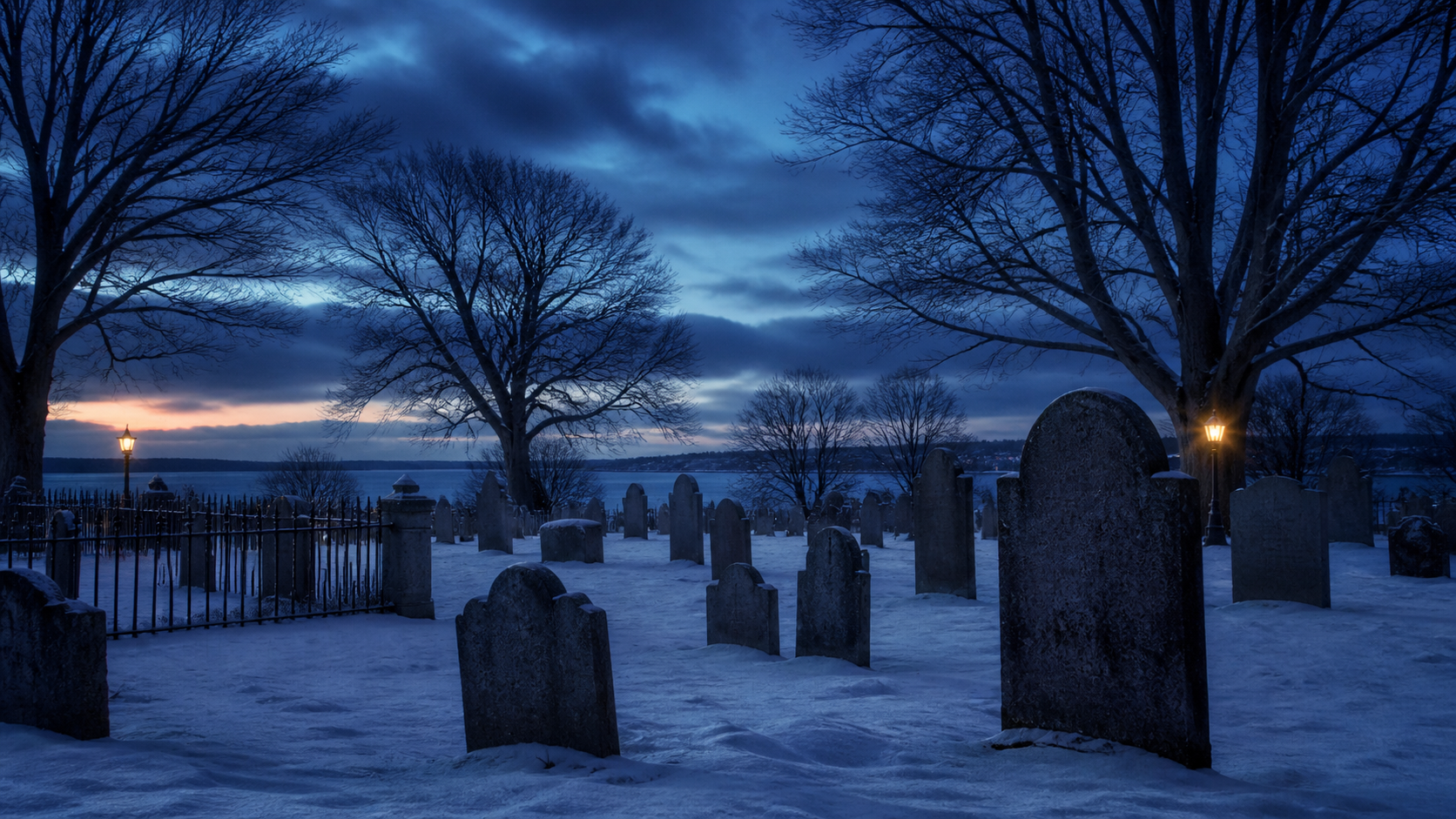
  • Mercy Brown and the New England Vampire Panic

    Mercy Brown and the New England Vampire Panic

    Mercy Brown and the New England Vampire Panic

    Mercy Brown has been called an American vampire often enough that the phrase begins to sound like a fact. It is not. She was a young woman in Exeter, Rhode Island, who died in 1892 amid a devastating tuberculosis crisis in her family. After her death, her body was exhumed in a practice now folded into the phrase “New England vampire panic.”

    The story is horrifying without pretending Mercy Brown was anything but human. It shows what illness looks like before it has an explanation people can use, and what grief can make a community attempt when ordinary care has failed. The vampire language came later, and it can blur the local practices, the medical terror, and the dignity owed to the dead.

    The Mercy Brown case was a response to tuberculosis, folk belief, and desperation in nineteenth-century Rhode Island. It belongs to a wider regional pattern of anti-vampire exhumation practices, but it should not be treated as proof that New Englanders believed in a familiar Dracula-shaped creature.

    The illness was real before the monster was named

    Tuberculosis—then commonly called consumption—could move through a household slowly and visibly. It took breath, weight, strength, and sometimes several members of the same family. Before antibiotics and before the germ theory of disease became practical, everyday medical knowledge did not offer a reliable cure. The pattern of one person sickening after another made a supernatural explanation emotionally available: perhaps the dead were not resting. Perhaps they were taking life from the living.

    That belief was not a substitute for intelligence. It was an attempt to act in the face of powerlessness. Folklore often supplies a procedure when medicine cannot yet supply a cure. The procedure may be wrong and painful; it can still make sense as a human response to terror.

    The City of Providence’s historical material on Rhode Island cemetery lore notes that rural Rhode Island and Connecticut saw several exhumation incidents now associated with vampire banishment practices, and identifies Mercy Brown as the best-known Rhode Island case. The Science History Institute’s account of the wider panic likewise stresses that the record includes folk history, oral history, and official history—different kinds of evidence that must not be forced into one clean narrative.

    What happened in Exeter needs careful language

    Illustration connecting tuberculosis, grief, and folklore in nineteenth-century New England.
    Illustration: illness, grief, and folklore shaped the wider context of the Mercy Brown case.

    The established outline is limited but stark. Mercy Lena Brown died in Exeter in January 1892. Her family had suffered tuberculosis, and her brother Edwin was ill. Community members believed a deceased relative might be harming the living. Mercy’s body was exhumed, and her heart was removed and burned as part of an attempted remedy.

    Before publication, this article needs a final check against contemporary 1892 Rhode Island reporting for every exact date, name, quotation, and sequence of events. That is not a technicality. Later accounts often absorb one another’s details until a scene feels fully documented when it is actually a patchwork of memory, journalism, and retelling.

    What can be said now is enough: a real family was in crisis; a real young woman’s grave was opened; and a community made an intervention it hoped would stop a disease. No supernatural conclusion is required.

    “Vampire panic” is useful, but it is also blunt

    The label helps modern readers find a regional history. It can also flatten it. In Eastern European vampire traditions, the word can carry specific beliefs, rituals, and local histories. In nineteenth-century New England, the practices grouped under the phrase were shaped by their own cultural conditions: Protestant communities, tuberculosis, burial customs, local stories, and the pressure of watching relatives die.

    Calling every case “vampire hunting” turns a varied record into a movie genre. It can also turn the people involved into caricatures. The better question is not, “Did they believe in vampires exactly as we imagine them?” It is, “What did they think the dead were doing, and what did they hope their action would change?”

    That question keeps the horror where it belongs: in the gap between need and knowledge. The Brown family did not need a gothic villain. They had an illness that would not release its hold.

    The dead deserve more than a mascot role

    Illustrated timeline separating the Mercy Brown record from later vampire retellings.
    Illustration: distinguish the Mercy Brown record from later vampire retellings.

    Mercy Brown is sometimes marketed as “America’s last vampire.” The phrase is catchy, but it makes a dead teenager into a roadside attraction. It also encourages readers to linger on bodily details that do not deepen the history.

    The essential fact is more unsettling: when people cannot name the force hurting them, they may give it a body. In this case, the body belonged to someone who had already suffered the same disease.

    Grimbard’s interest in legends is not an excuse to repeat their cruellest framing. Evidence-minded horror should be capable of saying that a story is compelling and that part of its circulation is wrong. The Bell Witch offers a different example of how a family account becomes a large public legend; the Blood Countess story shows how repetition can turn a historical woman into a more convenient monster.

    Why this story persists

    The Mercy Brown case survives because it has a perfect horror shape: snow, a cemetery, a sickbed, a hidden cause, a desperate rite. But the shape arrived after the fact. The human core is a family living through an epidemic before the tools to stop it existed.

    That is the durable lesson. Folklore does not only produce monsters to frighten people. Sometimes it produces monsters because people are already frightened and need an enemy they can confront.

    There Be Monsters: Among the Dead follows that unstable border between bodies, stories, and the meanings we force onto both. Join The Grimbard Press for Dead Ship, a free illustrated Subscriber Archive Edition, and future files that keep the legend and the record in separate columns.

    FAQs

    Who was Mercy Brown?

    Mercy Lena Brown was a young woman from Exeter, Rhode Island, who died of tuberculosis in 1892 and was later exhumed during a family health crisis.

    What was the New England vampire panic?

    It is a modern label for several eighteenth- and nineteenth-century New England exhumation practices connected to tuberculosis and beliefs that the dead might harm the living.

    Was Mercy Brown believed to be a literal vampire?

    Later accounts use vampire language, but the historical practices and beliefs should not be collapsed into a modern fictional vampire template. The exact local terms and meanings require careful source checking.

    Why is tuberculosis central to the story?

    Tuberculosis could devastate families before effective treatment existed. The pattern of illness created pressure for an explanation and an intervention, even when neither could cure the disease.

    Sources

    – Providence historical material on Rhode Island vampire lore – Science History Institute: Vampire Panic – Contemporary Rhode Island newspaper verification required before publication.