Author: Grimbard

  • Dark Fantasy Books Based on Mythology and Folklore

    Dark Fantasy Books Based on Mythology and Folklore

    Old books, carved masks, feathers, and a winter branch arranged on a candlelit archive table

    The best dark fantasy books based on mythology and folklore do more than borrow a monster’s name. They keep the pressure that made the older story matter: an obligation nobody can escape, a boundary that should not be crossed, a god whose gift costs more than it gives. Some retell a known myth from a silenced character’s point of view. Others build a new world from the structures of several traditions. The useful question is not simply Which mythology is this? It is What relationship does the novel have to its source?

    This reading path sorts six books by that relationship, then adds practical guidance for darkness, romance, pace, and mythic distance. None is presented as a substitute for the living tradition, epic, or folklore that inspired it. Fiction transforms. A good reader keeps the transformation visible.

    Start with the experience you want

    Choose a mythic retelling if you want to recognize the bones of the old story and watch a new character take control of them. Choose folklore-rich historical fantasy if you want household spirits, winter roads, religious pressure, and belief embedded in daily life. Choose myth-inspired secondary-world fantasy if you want the scale and danger of epic tradition without a scene-by-scene retelling.

    Darkness also takes different forms. One book may be violent on the page. Another may be comparatively restrained but emotionally merciless. A novel can contain monsters and still feel hopeful; it can contain no graphic creature at all and leave the reader with a colder wound.

    If you want a broader guide to the border between genres, begin with dark fantasy versus horror versus Gothic. The books below often occupy more than one category.

    For winter folklore and slow dread: The Bear and the Nightingale

    Katherine Arden’s The Bear and the Nightingale places a young woman in a medieval Russian village where household spirits and older customs remain part of the lived landscape. The publisher describes a wilderness village, a Winter King, old magic, and conflict with the church. The result is historical fantasy that lets belief become practical: neglecting an offering is not an abstract theological position when something at the threshold has been keeping watch.

    Read it for atmosphere, accumulating pressure, and a heroine whose ability to perceive the old world makes her vulnerable to both human authority and supernatural danger. The pace is deliberate rather than frantic. Romance exists, but the book’s strongest bond is between person, household, season, and story.

    Best for: readers who want Russian folklore, winter setting, and slow-building menace.
    Darkness: moderate, with family coercion and supernatural threat.
    Mythic distance: folklore woven into an original narrative rather than one direct retelling.

    For Norse myth from the edge of the feast: The Witch’s Heart

    Genevieve Gornichec’s The Witch’s Heart moves Angrboda from the margins of Norse myth to the center of her own life. The official description begins with her punishment by Odin, her relationship with Loki, and the children whose destinies are bound to Ragnarök.

    This is the choice for readers who want a recognizable mythic sequence reframed through domestic labor, motherhood, prophecy, and the terrible knowledge that love cannot simply negotiate with fate. It is romantic, but not in the sense of promising that love makes the gods reasonable. The quiet scenes make the epic consequences hurt.

    Best for: Norse-myth readers who want character intimacy and fate closing in.
    Darkness: grief-heavy rather than relentlessly graphic.
    Romance: substantial and complicated.
    Mythic distance: close to named figures and events, with a transformed viewpoint.

    A winter doorway, an extinguished hearth, and three small carved animal figures casting long shadows

    For prophecy, political violence, and a created world: Black Sun

    Rebecca Roanhorse’s Black Sun is not a direct transcription of one Indigenous myth. Its publisher calls it a secondary-world epic inspired by civilizations of the pre-Columbian Americas, structured around a solar eclipse, political power, forbidden magic, and the approach of a god.

    That distinction matters. Calling it “Aztec fantasy” or “Maya mythology retold” would flatten the novel’s invented cultures and the varied civilizations informing them. Read it as a demonstration of what mythic inspiration can do at architectural scale: calendars, ritual offices, histories of violence, sacred authority, and competing accounts of who has the right to name justice.

    Best for: readers who want epic scope, multiple viewpoints, and a dark political engine.
    Darkness: high, including bodily harm and ritual violence.
    Romance: present but not the primary organizing promise.
    Mythic distance: an original world shaped by historical and cultural inspiration.

    For a villain recast inside a sacred epic: Kaikeyi

    Vaishnavi Patel’s Kaikeyi revisits a queen traditionally blamed for catastrophe in the Ramayana. The publisher’s account emphasizes her struggle for agency in a world governed by kings and gods, and the cost when her chosen path collides with a destiny others consider sacred.

    This book is especially useful for seeing how a retelling argues with inherited judgment. It does not erase the epic’s consequences. It asks what must be omitted to make one woman a convenient moral answer. Readers unfamiliar with the Ramayana can follow the novel, but the book becomes richer when approached as one modern interpretation of a living, widely varied sacred tradition—not as the corrected final version.

    Best for: readers interested in political agency, family obligation, and counternarrative.
    Darkness: emotional and political, with war and supernatural conflict.
    Romance: secondary to kinship and power.
    Mythic distance: close to epic characters, deliberately revisionary.

    For folklore turned bodily and ferocious: The Devourers

    Indra Das’s The Devourers moves between contemporary Kolkata and seventeenth-century Mughal India through a collection of dangerous narratives. The publisher describes beings who are human-adjacent, animal, ancient, and ruled by blood-deep instincts. The novel uses shapeshifter traditions without reducing them to a clean monster taxonomy.

    This is the most visceral selection here. Transformation has smell, appetite, sex, violence, and consequence. It is also a story about who records a monster’s account and what transcription does to the listener. Readers looking for a cozy folklore atmosphere should start elsewhere. Readers who want beautiful prose with teeth have found the right door.

    Best for: literary dark fantasy, shapeshifter horror, and frame narratives.
    Darkness: high; check content guidance if sexual violence or graphic transformation is a concern.
    Romance: desire is central, but rarely safe.
    Mythic distance: an original mythology in conversation with South Asian settings and traditions.

    For death bargains and a folkloric road: Gods of Jade and Shadow

    Silvia Moreno-Garcia’s Gods of Jade and Shadow begins in 1920s Mexico and sends its heroine on a journey bound to a Maya death god. The publisher’s description follows that journey from Yucatán to Mexico City and into Xibalba. It is often lighter on the surface than the most brutal books in this list, but its engine is still a bargain with mortality and power. The novel works best for readers who enjoy a quest structure, historical setting, and a thread of romance running beside supernatural danger.

    Be precise when describing it: “Maya-inspired” is more useful than treating all Mesoamerican traditions as interchangeable. The book’s movement between Jazz Age modernity and mythic obligation is the attraction. The old world is not sealed behind glass. It rides in the car.

    Best for: readers who want a faster journey, a death-god bargain, and romantic tension.
    Darkness: moderate.
    Romance: meaningful.
    Mythic distance: named mythic figures in an original historical-fantasy plot.

    Six paths leaving an archive table: winter forest, black sun, palace, underworld road, carved door, and moonlit city

    Interpretive illustration grouping the reading paths in this guide; it does not represent one source tradition.

    How to read myth-based fantasy without flattening the source

    First, notice whether the source is a closed literary corpus, a reconstructed historical tradition, or part of a living religion and culture. Those are not identical relationships. “Based on mythology” can describe a new angle on a Greek literary figure, a secondary world inspired by several civilizations, or fiction engaging with stories people still hold sacred.

    Second, let the author’s note and bibliography guide the next step. A novel can be your invitation to read a translation, listen to a scholar, or seek work by writers from the culture represented. It should not become the only account you carry.

    Third, resist ranking traditions by how “dark” they are. Darkness is a choice made by the novel: what it foregrounds, what it changes, and which consequences it follows. Mythologies contain tenderness, law, humor, ritual, cosmology, grief, and ordinary life as well as monsters.

    The There Be Monsters hub follows that principle across old creatures and modern retellings: preserve the record, mark the transformation, then ask why the monster still works.

    FAQ

    What is mythological dark fantasy? It is fantasy that uses mythic figures, structures, or cosmologies while foregrounding danger, moral pressure, violence, dread, or costly magic. It may retell a known story or build an original world from mythic inspiration.

    Are myth retellings accurate to the original stories? They are interpretations, not replacements. Many myths survive in multiple and sometimes contradictory versions, and modern novels deliberately change viewpoint, sequence, or motive.

    Which book should I start with if I do not like graphic horror? The Bear and the Nightingale or Gods of Jade and Shadow are gentler entry points than The Devourers. Individual tolerances differ, so consult book-specific content guidance.

    Which book has the strongest romance? The Witch’s Heart and Gods of Jade and Shadow put romantic relationships closest to the main plot, though neither promises an uncomplicated outcome.

    Is Black Sun a retelling of a specific myth? No. It is an original secondary-world fantasy inspired by civilizations of the pre-Columbian Americas.

    Myth survives because each generation finds another door into it. If you want the door to open onto monsters, changing legends, and original fiction, explore There Be Monsters: Then and Now. For a free illustrated story and new Archive dispatches, join The Grimbard Press.
  • Why Abandoned Places Feel Haunted Before Anything Happens

    Why Abandoned Places Feel Haunted Before Anything Happens

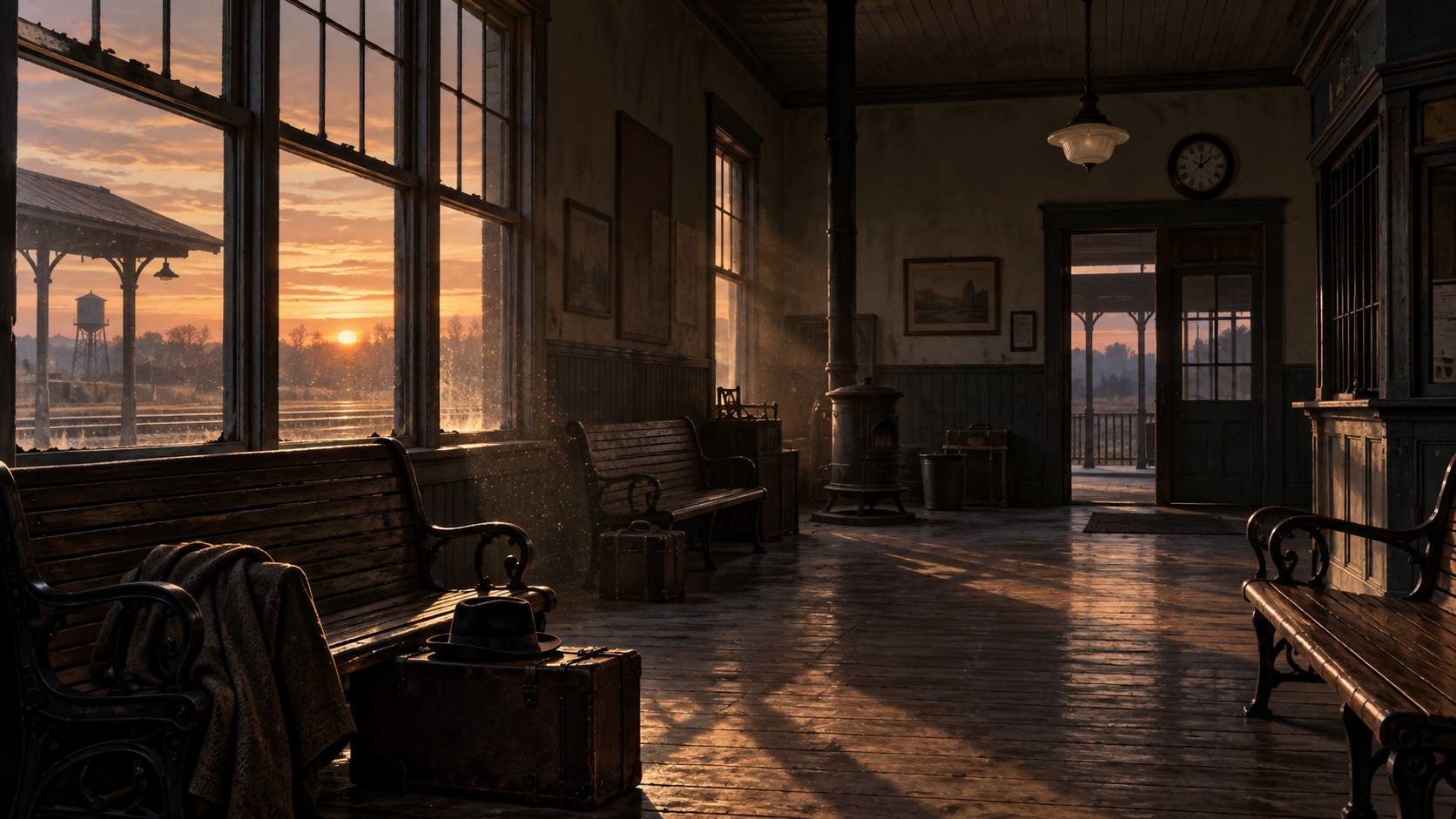
    A deserted railway waiting room at dusk, dust in the last window light

    Abandoned places feel haunted because they violate a familiar expectation: a room built for people is suddenly missing them, while the evidence of their presence remains. A chair faces a table. A calendar hangs where somebody once checked a date. Wind moves through a corridor that was designed to be quiet. Your mind supplies the absent occupants and begins asking why they left. No ghost has to appear for that question to feel urgent.

    This is not proof of a paranormal event, and there is no single scientific mechanism that explains every uneasy visit. It is a useful way to describe an experience many people recognize. Architecture gives us clues about human activity; decay scrambles them; uncertainty invites a story.

    The building still tells you what should be happening

    A school corridor implies bells, footsteps, and children changing rooms. A hotel desk implies a person ready to answer a question. An empty factory implies machinery that should be loud enough to drown out thought. When the building keeps its shape but loses its routine, expectation and reality no longer match.

    That mismatch is more effective than simple darkness. An empty field at night may be frightening, but it does not present the same precise absence. A place designed for occupancy seems to be waiting for someone. Even if you know its closure was ordinary—costs, relocation, redevelopment—the rooms can make the absence feel personal.

    This is why an abandoned site in a story should not be described only as “creepy.” What was it for? What behavior did it organize? Show the reader the missing action. A row of numbered hooks with no coats can do more work than a paragraph about shadowy energy.

    Traces make strangers feel almost present

    The most powerful objects are usually ordinary. A cup, a handwritten sign, a worn stair tread, or an outline left by a removed picture tells us somebody used the place repeatedly. These are traces, not messages. We do not know the person, but the object helps us imagine a gesture: the cup lifted, the stair climbed, the picture straightened.

    The temptation is to invent a complete biography from one clue. That is good fuel for fiction and poor historical method. A child’s shoe does not tell you why a building closed. An unmade bed does not prove a sudden flight. If you are writing about a real site, separate what records establish from what your imagination proposes. If you are writing fiction, use the gap deliberately; make the reader aware of how little the protagonist actually knows.

    A dusty table with one intact teacup and a square of unfaded wallpaper

    Silence changes the scale of small sounds

    People often describe an abandoned building as silent, but the silence is full of low-level activity. Water drips. Metal expands or contracts. Leaves scrape a broken pane. A distant vehicle sounds closer through open rooms. Because there is no ordinary human activity to absorb those noises, each one seems to ask for an explanation.

    In a horror scene, the strongest sequence is often simple: establish a repeated sound, let the character explain it, then change one part of the pattern. A drip stops when the character enters. A door taps three times after the wind dies. The reader is frightened by a failed explanation, not necessarily by volume.

    For another look at how stories exploit incomplete sensory evidence, read why forests feel scarier at night. The setting differs, but the practical question is the same: how much can you know from limited cues?

    Decay lets two times occupy one room

    A ruin is a visible disagreement between past purpose and present condition. Wallpaper still marks a home; moss now crosses the floor. A sign still promises a service; the business is gone. That double exposure makes it easy to imagine a past scene running underneath the present one. Gothic stories have relied on this effect for centuries, but modern offices, malls, and transit stations can produce it too.

    The effect is not merely nostalgia. A building can preserve evidence of exclusion, labor, failed promises, or environmental damage. The question “Who lived here?” should sometimes become “Who worked here?” or “Who was not allowed in?” History gives the atmosphere weight. A generic ruin can feel decorative; a place with a documented use can become morally difficult.

    Our Gothic reading path explores how fiction turns architecture into pressure. For a Grimbard route through places whose boundaries seem unreliable, browse the Lost Boundary Archive.

    A long empty hallway where daylight reveals layers of paint and water damage

    How to appreciate a ruin without entering it

    The romance of abandoned places must not obscure their real risks. The National Park Service warns that abandoned mine sites may contain unstable structures, hidden shafts, unsafe water, and dangerous air. Other derelict buildings can present different structural, environmental, or legal hazards. Do not enter a closed site for a photograph or a story prompt.

    There are safer ways to study the effect. Visit a publicly accessible historic site, take a guided tour, use a local archive’s photographs, or observe a building from a lawful public viewpoint. Read municipal or preservation records before deciding what happened there. The facts may be less sensational than a ghost story and more compelling.

    If you are a writer, make a field note in three columns: what you can see, what you can reasonably infer, and what you are inventing. That division protects real people’s histories while leaving plenty of room for fiction. It also gives your imagined haunting a stronger foundation: the reader senses where the evidence ends and dread begins.

    For readers, the same exercise changes how you look at photographs of deserted sites. Ask when the photograph was made, who owns the property, and what might have been moved out of frame. A dramatic image can be an invitation to research, but it is not a complete history. That little pause makes the eventual story you tell about the place more interesting and more honest.

    FAQ

    Does feeling haunted mean a place is paranormal? No. An uneasy feeling can arise from expectation, unfamiliar sounds, traces of former use, and uncertainty. It does not settle a supernatural question.

    Why are abandoned schools and hospitals especially unsettling? They are buildings with strong expectations of routine, care, and human presence. Their emptiness is therefore unusually legible.

    Is it safe to explore abandoned buildings? Do not assume so. Access may be prohibited, and deterioration can conceal serious hazards. Choose authorized visits and public archives instead.

    For more grounded explorations of eerie places, join The Grimbard Press. If you want the unsettling place to cross fully into fiction, explore the Grimbard books.
    Source: U.S. National Park Service, abandoned mineral lands hazards and safety. The article’s psychological framework is interpretive, not a clinical diagnosis.

  • The Midnight Carnival: Folklore of the Show That Comes to Collect

    The Midnight Carnival: Folklore of the Show That Comes to Collect

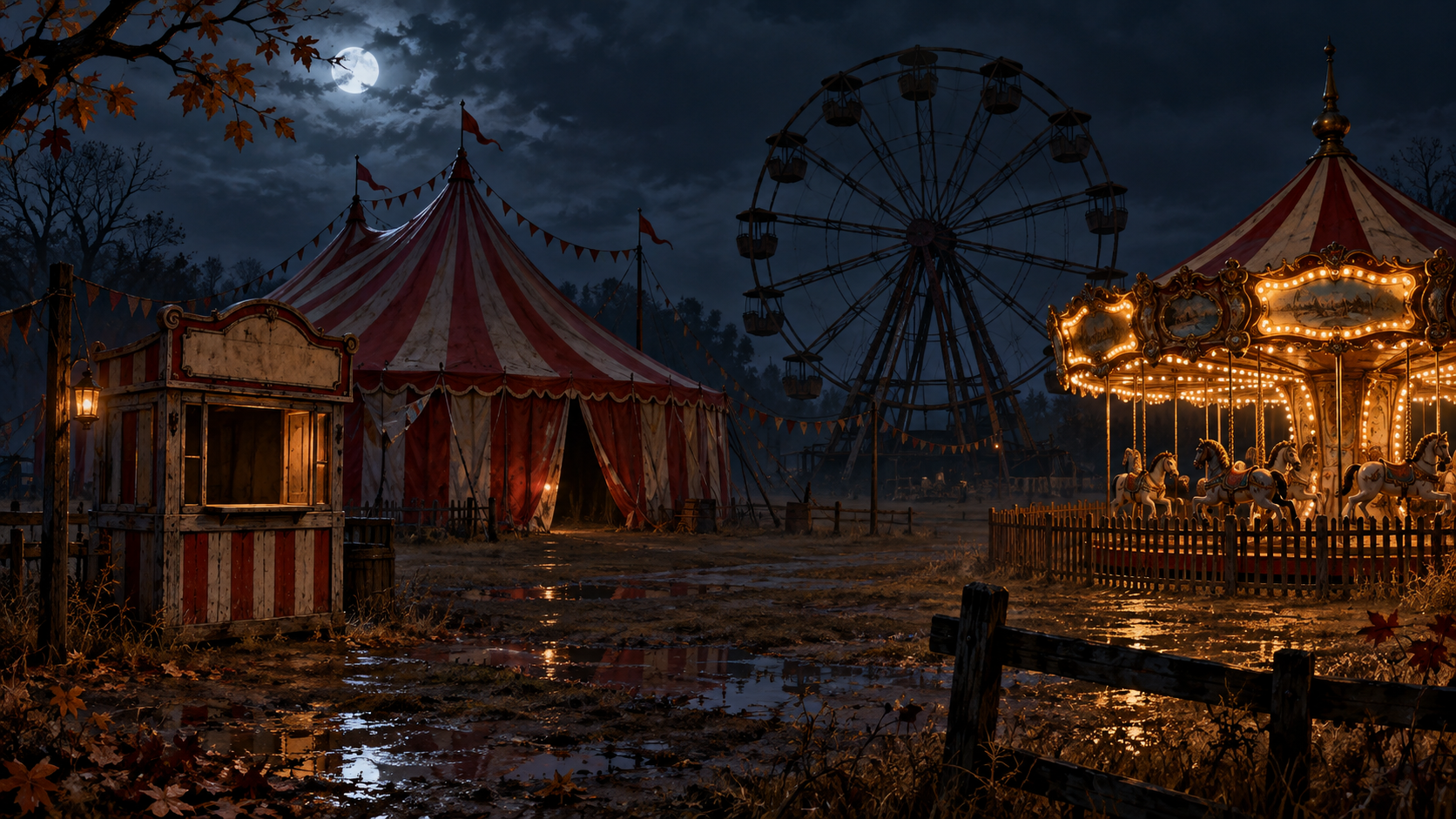
    Empty midnight carnival with striped tent, Ferris wheel, and carousel light

    A carnival arrives in a field outside town, which nobody uses, and is running by dark. It takes money, hands out prizes that cost less than the money, and leaves before anyone thinks too hard about it. In the morning there’s flattened grass and a smell of fryer oil.

    That’s a real business, and it’s also one of the most reliable horror engines we have. Here’s why.

    The lot has its own laws

    Travelling shows in America built a whole culture that outsiders weren’t invited into, starting with the language. Show people had their own slang: the lot for the ground the show stands on, a mark for the customer, a grind show for the one that runs continuously, a joint for a game booth, with it for belonging to the show. Some of it came from older travelling traditions, some was invented on the road, and its purpose was practical: talk in front of the customer without the customer following along.

    Add the rest of the arrangement. The show is temporary. It’s staffed by people the town doesn’t know and won’t see again. It runs at night, on a site with no permanent structures. The games are built so the house wins. Nobody in town can name a single person on the lot.

    Every one of those is a fair description of a small business. Every one is also the setup for a folktale about a bargain you shouldn’t take.

    The old bargain stories

    Long before midways there were fair-day stories, and the shape is always similar. A stranger arrives at the market or the crossroads. He offers a trade that’s too good. The victim accepts, because the price sounds like nothing, and then finds out what the small print meant.

    Folk tradition is full of them. The devil who buys a soul for seven years of luck. The fiddler who plays better than he should after a night on the road. Stingy Jack, who wins his bargain twice and is punished with exactly what he asked for. In every version the loser is not innocent. He wanted something for less than it cost.

    Carnivals inherited that story wholesale, because a midway is a place where you hand over money for a chance at a thing worth more than the money. It’s a bargain booth with lights on it.

    What the customer never sees

    A weathered carnival ticket on dark wood

    Carnival horror also runs on a second engine: the parts of the show that are real and unsettling on their own.

    There’s the history of the sideshow, in which people with disabilities and differences were displayed for money, sometimes with a degree of control over their own act and income, often without it. There’s the tent that’s dark inside and cheap outside. There’s the machinery, assembled overnight by tired men and disassembled the same way. There’s the fact that the person taking your ticket is in costume, and that you will never know what’s underneath.

    Writers have worked this ground for a century, from carnival noir to Ray Bradbury’s autumn show in Something Wicked This Way Comes. The reason it keeps working isn’t that carnivals are sinister. It’s that they’re temporary, and anything temporary can leave with something of yours.

    The rules people keep anyway

    Midway superstition is real, some of it borrowed from theatre and the circus:

    • Don’t say a performer’s act will go well. Say almost anything else.
    • Don’t whistle backstage in some traditions, don’t wear certain colors in others.
    • Don’t ask a show person where they were before this stop.
    • Don’t be the last one on the lot after the lights go off.

    That last one isn’t superstition so much as sense. The show is packing. You’re not with it.

    The story in October 31

    “The Show Only Runs Once” is the fourth story in October 31.

    > October 31st, 1954 — a traveling carnival, somewhere off the highway.

    Wendell Pace has been three weeks on the lot, and in three weeks he’s learned exactly one rule that matters: do not ask where the crew came from before this stop. He asked twice. The first time, a roustabout named Lomax laughed it off.

    Then there’s the second ring of the evening, the one the audience doesn’t realize is for them.

    The title is the promise the show makes, and like every bargain in this kind of story, it’s true in a way the customer didn’t consider. I’ll leave the rest where it is. If you’ve ever stood on a midway at closing and felt the whole thing start to fold itself up around you, the story will land.

    —

    The Show Only Runs Once is Night 4 of 31 in October 31, thirty-one folk horror stories set on Halloween night across six centuries. Read it on Amazon → · Free with Kindle Unlimited.

    Take the 31 Nights challenge. One story a night through October, with a free printable calendar. Get the calendar →

    Previous: The Banshee Doesn’t Scream, She Keens · Tomorrow night: Witches’ Familiars: Cats, Courts, and Massachusetts Before Salem

  • Short Horror Story Collections for Busy Readers

    Short Horror Story Collections for Busy Readers

    A pocket-sized stack of horror story collections beside a clock and autumn window

    The best short horror story collections for busy readers offer a complete experience in one sitting, but they do not all do the same job. Some give you an anthology of voices and styles; some build a single author’s recurring obsessions; others are linked stories that reward reading in order. Choose by the kind of fifteen- or thirty-minute window you actually have, not the reading life you wish you had.

    This guide separates classic unease, contemporary variety, and October-friendly sampling. It also offers a small plan that can survive travel, late work, and the week when you simply do not feel like being frightened.

    First, collection or anthology?

    A collection usually gathers stories by one writer. An anthology brings together multiple writers, often around a theme. That difference matters when you have limited time. A single-author collection lets you learn a voice and notice how an image changes from story to story. An anthology lets you change pace after every ending. Neither is inherently quicker; story lengths vary widely even inside one volume.

    Before buying or borrowing, open the table of contents. Ten long pieces may demand more attention than twenty very short ones. Check whether the description calls the work “linked,” “interconnected,” or a “novel in stories.” Those can be excellent books, but they may be less suited to a reader who wants to drop in anywhere.

    For one quiet, disorienting story at a time: Shirley Jackson

    Shirley Jackson’s Dark Tales is a strong choice if you prefer ordinary situations that become subtly unsafe. The publisher’s description emphasizes unsettling domestic and social settings rather than a single monster. Jackson’s stories often ask the reader to notice a change in behavior before the characters acknowledge it. That can make a brief piece linger longer than a more graphic tale.

    Try one story on a weeknight, then leave a few minutes to ask what information the narrator withheld or what social rule suddenly stopped protecting somebody. Reading several in a rush can blur their distinct endings. If you want to understand why her houses and families remain so influential, our Gothic autumn reading path offers a route to her longer work.

    A single open storybook under a warm lamp, with a dark hallway beyond

    For a sampler of American weird fiction: American Supernatural Tales

    The Penguin Classics anthology American Supernatural Tales gathers writers across different periods of American supernatural fiction. It is a useful tasting menu if you want to see how the tradition moves from older ghostly and uncanny modes into twentieth-century weirdness. Do not treat the whole book as one continuous mood: its value is contrast.

    For a busy reader, pick an author you know and an author you do not. Read them on separate nights. Ask whether the fear comes from a revealed creature, an implied pattern, a disturbed setting, or a narrator who cannot make sense of experience. That one comparison is a better use of a short reading window than racing to finish an enormous table of contents.

    Older anthologies can also contain dated language or assumptions. A story’s historical importance does not require you to overlook them. If you are choosing a book for a friend, preview the contents rather than assuming every “classic” fits their boundaries.

    For contemporary voices in conversation: When Things Get Dark

    Edited by Ellen Datlow, When Things Get Dark collects stories written in tribute to Shirley Jackson. The publisher identifies eighteen contributions from a range of contemporary writers. This is the anthology to pick if you want to see what “Jackson-like” can mean without reading eighteen imitations of the same plot. Domestic tension, communal pressure, estrangement, and uncertainty can all be translated into different voices.

    Because it has a clear organizing influence, it works well as a two-week project: read one story every other evening and note which writers make you want to seek out a full collection. You do not need to know Jackson’s complete bibliography first. It is enough to recognize that the anthology is a conversation with her work, not a sequel to it.

    For a deliberate October ritual: October 31

    If your goal is a season-shaped habit rather than a literary survey, October 31 is the Grimbard book route for reading across the month. Treat each sitting as an appointment with atmosphere, not a quota. Check the current book description and sample before purchase so you know its format and intensity fit your taste. If you miss three evenings, resume on the next available night; a calendar is a prompt, not a contract.

    Our 31-day horror reading challenge builds in short pieces, longer weekends, and rest days. That structure is useful even if you choose an entirely different collection. A successful plan should have a low-friction “minimum version”: one story, one chair, one evening a week.

    An autumn weekly planner with seven blank spaces and three small books

    Build a reading plan you can actually finish

    Start by counting available sessions, not dates. If you can read four nights a week, your October plan has about sixteen sessions—not thirty-one. Borrow or sample one book first. Keep it where you already pause: beside the bed, in your bag, or in an e-reader app. Decide in advance that finishing a single story counts.

    Next, alternate intensity. Follow a dark story with a gentler or more curious piece, or take a night off. Horror works by affecting you; there is no prize for ignoring your own limits. If an anthology contains an especially long entry, split it across two sessions without guilt. If you are reading for discovery, mark the writers whose voices surprise you and use those notes for your next library visit.

    Finally, make room for an ending. On October 31, return to the story that stayed with you most, or share it with a friend who likes the same kind of dread. The payoff of a collection is not a completed stack. It is finding out which fears you want to revisit—and which voices you trust to lead you there.

    FAQ

    Are horror collections easier to read than novels? They can be easier to fit into short sessions, but individual stories vary in length and intensity. Check the contents before committing.

    Can I read an anthology out of order? Usually, yes. Read the introduction or editor’s note first if you want context, then sample by title or author unless the book says its stories are linked.

    Where should a newcomer start? Choose Dark Tales for one author’s quiet unease, American Supernatural Tales for a historical sampler, or When Things Get Dark for contemporary variety.

    For more practical reading paths and folklore, join The Grimbard Press. To make October itself your reading cue, explore October 31.

    Sources: Penguin Random House on Dark Tales; American Supernatural Tales; When Things Get Dark. Reading-time suggestions are editorial, not publisher-reported story lengths.

  • What Are Thin Places in Celtic Tradition?

    What Are Thin Places in Celtic Tradition?

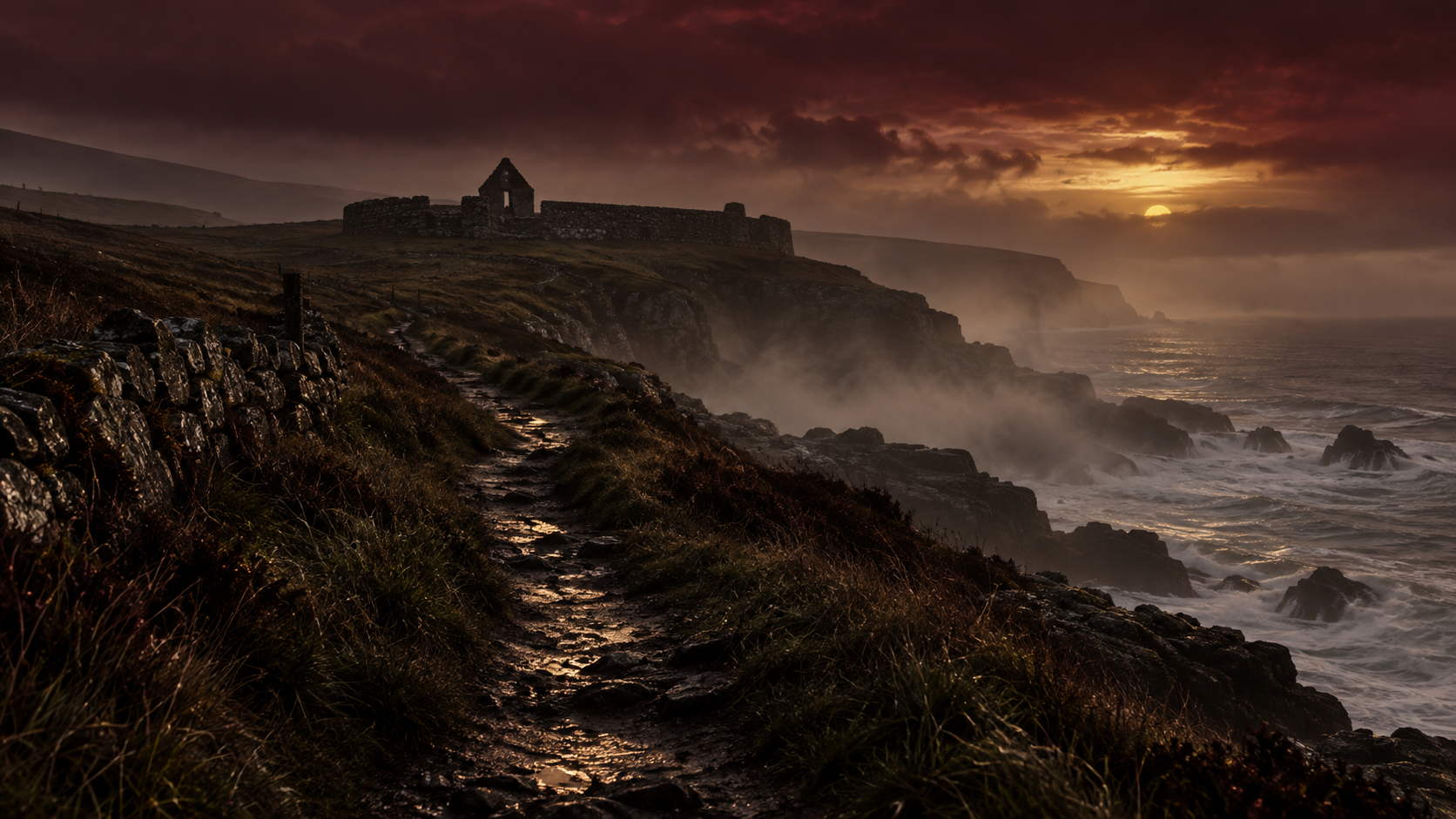
    An Irish coastal path between dark grass and sea mist at twilight

    A “thin place” usually means a location where the boundary between ordinary life and the spiritual or otherworldly feels unusually near. People often connect the phrase to Celtic tradition, especially the landscapes of Ireland and Scotland. The careful answer is that the phrase is prominent in modern Celtic spirituality, while older Irish and Scottish stories contain many distinct ideas about the Otherworld, sacred sites, seasonal crossings, and beings associated with particular places. Those are related conversations, not proof that every ancient community used one shared category called a thin place.

    That distinction matters if you love folklore. It lets a hill, well, island, or path have its own story instead of turning every location into a generic portal. It also keeps a useful modern metaphor from being mistaken for a documented ancient quotation.

    What does “thin place” mean today?

    In contemporary writing, a thin place may be a landscape where prayer feels easier, a site where the past seems present, or a moment when a person feels close to something beyond their usual account of the world. The language is flexible. Some writers mean God; others mean ancestors, fairies, memory, ecological attention, or simply awe.

    A study of Celtic pilgrimage describes “thin places” as a theme in contemporary expressions of Celtic Christianity. That phrasing is more precise than saying the phrase is an unbroken ancient Celtic teaching. Another scholarly discussion of Iona traces the influential language of a “thin” boundary through modern religious and literary contexts, including George MacLeod’s descriptions of the island.

    None of this makes the experience false. It changes what kind of claim we are making. “This place feels thin to me” is an account of experience. “Ancient Celts taught that this exact site was a thin place” is a historical assertion that needs a much more specific source.

    What do older place traditions actually give us?

    Irish tradition offers stories of the aos sí and places associated with them, including earthen forts and mounds. It offers encounters that turn on hospitality, trespass, time, and the rules of a place. Scottish, Welsh, and Breton traditions are not interchangeable variations of one Irish map. Each has its own languages, records, local practices, and later retellings.

    Heritage Ireland’s account of Samhain describes Irish folklore in which the boundary between this world and the supernatural draws thin at the seasonal turning. It also notes stories of the aos sí associated with underground or otherwise hidden domains. That is a valuable connection to make, but Samhain is a calendar occasion; a holy well is a site; a fairy fort is a place embedded in a community’s rules. We lose detail when we flatten all three into the same label.

    An old stone well in a quiet grove, with no figures or supernatural effects

    Is the phrase itself ancient?

    It is safest not to present the English phrase as an ancient Celtic term. The scholarship above shows its strong modern life, especially around Iona and Celtic Christian practice. That does not prove no earlier person ever used a similar image. It does mean a blog post should not claim a single ancient origin without evidence. “Celtic” is also broad: it names languages and cultures across several places and periods, not one timeless belief system.

    Writers sometimes say that a veil between worlds is thinnest at Samhain. This is a familiar and evocative modern explanation, and Heritage Ireland uses similar language when introducing the holiday’s folklore. But a neat one-line formula is still an explanation, not a substitute for the particular source, date, and community behind a given story.

    The practical test is simple. Ask: Which tradition? Which place? Which recorded account? What does the storyteller say is there, and what is a later interpreter adding? A legend about a mound that must not be disturbed differs from a pilgrim’s account of prayer on Iona, even if both leave a reader feeling that ordinary categories are insufficient.

    Why do thresholds work so well in stories?

    A threshold joins two conditions without making them the same. Shorelines are land and not-land. Dusk is day and not-day. A cemetery is part of a living town but organized around the dead. A ruined building belongs to the present while visibly carrying an earlier use. These places naturally invite stories about uncertainty, permission, and return.

    The strongest fiction does not merely announce that the “veil is thin.” It gives the crossing a cost. Perhaps a traveler must answer a question honestly; perhaps a path can be found only once; perhaps somebody takes a gift without understanding the obligation attached. The rules create tension because the reader can see how a good intention might still lead to harm.

    For a neighboring tradition in which an encounter carries a clear social warning, see our banshee post. For a wider introduction to landscape and communal belief in fiction, see what folk horror means in books.

    A twilight footpath dividing a village field from a misted woodland

    How to visit a meaningful place without turning it into a prop

    You do not need to believe in a literal portal to approach a site with care. Check whether it is public, private, sacred, or protected. Stay on permitted paths. Do not take stones or offerings, leave candles, climb fragile ruins, or treat a living community’s practice as a spooky backdrop. Read the local interpretation before inventing a story about the place.

    Then pay attention to more than atmosphere. Who maintains the site? What language appears in its name? Has its meaning changed through worship, tourism, conservation, or loss? An attentive visit can be more unsettling—and more respectful—than a staged midnight photograph.

    If a local guide or community source offers a different account from the one you read online, do not immediately force the two into a single “authentic” version. Traditions can coexist, conflict, and change. Note who is speaking and when. Folklore is a record of relationships among people and places, not a list of supernatural properties assigned to scenery.

    FAQ

    Are thin places part of Celtic folklore? The modern phrase is commonly associated with Celtic spirituality. Older Celtic-language traditions include many stories about significant places and otherworldly encounters, but should not be treated as one uniform “thin places” doctrine.

    Is Samhain a thin place? Samhain is a seasonal festival, not a location. Some Irish folklore and modern retellings describe the boundary between worlds as more permeable then.

    Does a thin place have to be frightening? No. The phrase may describe wonder, prayer, grief, or closeness as readily as dread.

    If carefully sourced folklore is your sort of autumn reading, join The Grimbard Press. For stories that let place shape the danger, browse October 31.

    Sources: Celtic pilgrimage study; folklore scholarship on Iona; Heritage Ireland on Samhain.

  • Doppelgängers and the Fetch: Why Seeing Your Double Meant Death

    Doppelgängers and the Fetch: Why Seeing Your Double Meant Death

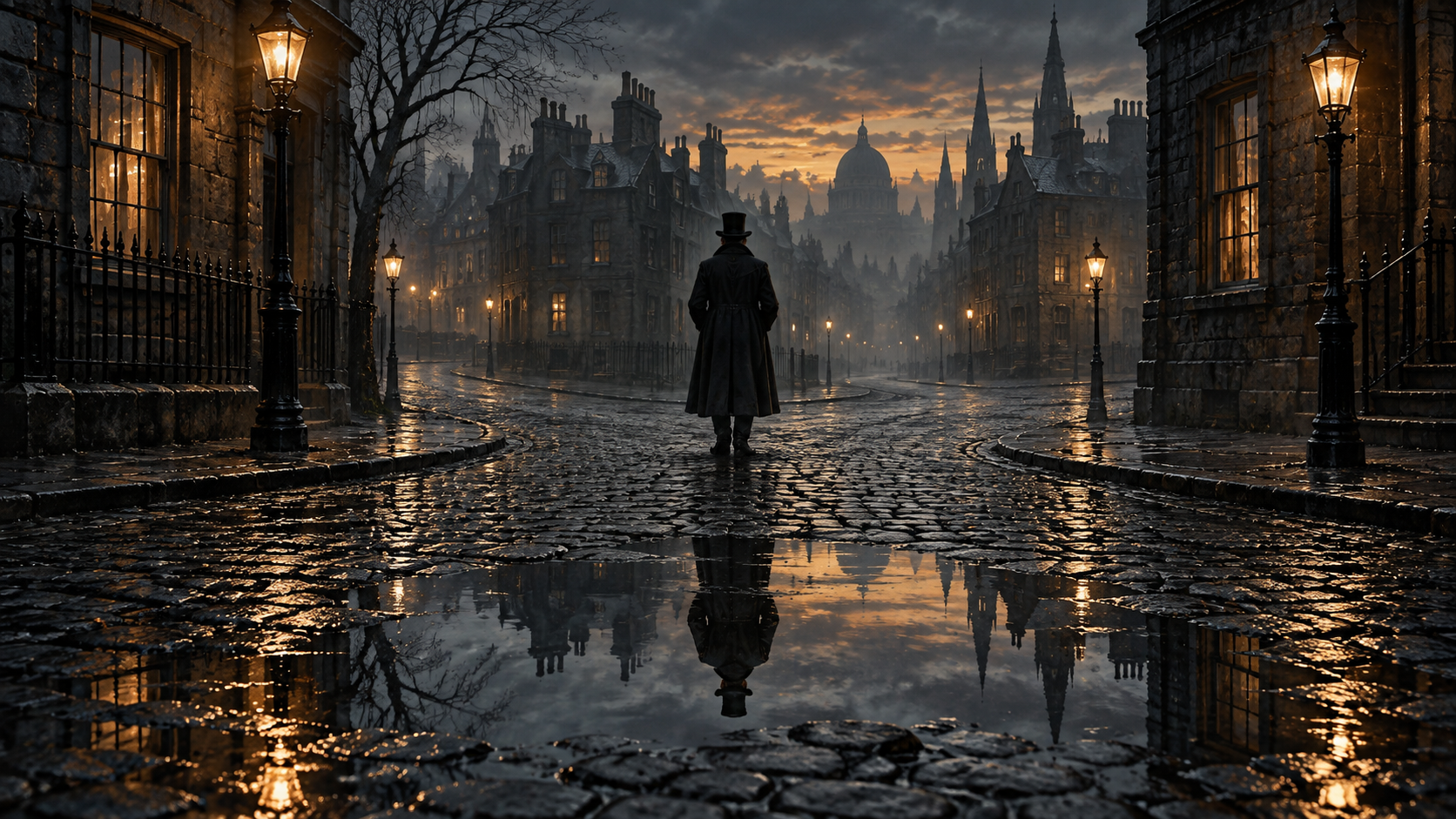
    Rainy Victorian crossroads where a puddle reflection faces the wrong way

    There’s a particular kind of fear that doesn’t need a monster in it. Someone you know walks past you on the road and doesn’t answer when you call. You find out later they were forty miles away.

    Nothing attacked. Nobody was hurt. And everyone who hears the story knows it’s bad.

    The word is newer than the belief

    Doppelgänger is German and means, plainly, “double-goer.” The writer Jean Paul coined it in the 1790s. The belief it names had been around for centuries in half of Europe under other names.

    In Ireland the double is the fetch, and the tradition comes with a rule that I find more unsettling than the apparition itself: the hour decides the meaning. See a person’s fetch in the morning and they’ll have a long life. See it in the evening and they won’t. Same sight, same person, opposite verdict, and nothing you can do to change which one you got.

    In Norway the vardøger works in reverse. You hear someone arrive before they arrive: footsteps on the porch, a key in the lock, a coat hung up. Then, a few minutes later, they do all of it again for real. The vardøger isn’t usually a death omen. It’s a spirit that runs ahead of its person, and people who grew up with it talk about it almost fondly.

    Scottish tradition has the co-walker, a double that keeps company with a living person and can be seen by those with the sight. Robert Kirk, a Scottish minister, wrote about that world in the 1690s in a manuscript now known as The Secret Commonwealth. Germanic tradition also has the fylgja and the wraith, and the meanings blur where the traditions meet.

    The famous sightings

    A tarnished mirror reflecting a shadowed Victorian hallway

    The literature of doubles is mostly literary men reporting on themselves, which is worth keeping in mind.

    Goethe described riding away from a meeting with a lover and seeing himself coming the other way on the road, dressed in clothes he did not own. Eight years later, he said, he rode that road again in exactly those clothes.

    Percy Shelley, in the weeks before he drowned in 1822, was reported to have seen a figure of himself who asked how long he meant to be content. Mary Shelley recorded the account after his death.

    Abraham Lincoln’s friend Ward Hill Lamon recorded Lincoln describing a double image of his own face in a mirror, one healthy, one pale, and Mary Lincoln reading it as a sign he would not survive a second term.

    The most detailed story, the one about the schoolteacher Emilie Sagée whose double appeared in front of a classroom of girls in the 1840s, was published by Robert Dale Owen in 1860 and has never been traced to any independent record. Treat it as folklore that arrived in the shape of a case study.

    Why the double is so frightening

    Most folklore monsters want something: blood, a child, a bargain, a debt. The double wants nothing. It doesn’t speak, chase, or bargain. It does what you do, badly, somewhere you aren’t.

    The threat it carries is that your identity is not a thing you own. Someone else can be you, in front of people who know you, and be believed. Every subsequent version of this story, the changeling that takes your child’s face, the thing in the ice wearing your friend’s coat, runs on that same fuel. The horror is not that something is out there. It’s that you can no longer prove which one of you is the real one, and neither can your friends.

    What the folklore says to do

    Not much, and that’s consistent. There is no salt or iron for this one.

    • Don’t follow it.
    • Don’t speak to it.
    • Don’t let it know you saw it.
    • Note the hour. In the fetch tradition, the hour is the whole message.

    When a belief’s only advice is “note the time,” what it’s really telling you is that the outcome was decided before you looked up.

    The story in October 31

    “Two of Everything” is the second story in October 31.

    > October 31st, present day — a research station, the ice.

    Adaeze Okoye keeps her mug on the left side of the desk because she’s left-handed and the desk isn’t. It’s the kind of small accommodation you make when you live somewhere built by other people, and it’s the kind of detail that starts to matter when the crew begins asking each other where everyone was at six in the morning.

    By then nobody wants to say the obvious thing out loud, and the alibis are useless: everyone was alone, the way everyone is alone at a research station in the off hours.

    The station has a crew, a schedule and a floor plan, all of which assume each person is one person. The story is about what happens to that arithmetic when it stops holding.

    —

    Two of Everything is Night 2 of 31 in October 31, thirty-one folk horror stories set on Halloween night across six centuries. Read it on Amazon → · Free with Kindle Unlimited.

    Take the 31 Nights challenge. One story a night through October, with a free printable calendar. Get the calendar →

    Previous: What Was a Strigoi? · Tomorrow night: The Banshee Doesn’t Scream, She Keens

  • Gothic Horror Books for Autumn: A Reading Path from Manor to Ruin

    Gothic Horror Books for Autumn: A Reading Path from Manor to Ruin

    An autumn gothic reading table with a candlelit book, manor silhouette and falling leaves

    The best gothic horror books for autumn do more than supply a decaying mansion. They make a place feel burdened by history, then ask what the living will sacrifice to keep that history hidden. If you want a practical reading path, start with a short, psychologically sharp house story, move to an older novel of secrets and inheritance, and finish with a book that lets the uncanny spread beyond the walls.

    This is a path, not a ranking. Choose the branch that matches how much time and supernatural certainty you want. A ruined estate is only one version of the Gothic; isolation, family power, obsession, and the uneasy return of the past are the real architecture.

    First, what makes a book Gothic?

    Gothic fiction often gives emotion a physical address. A corridor conceals information; an inherited property embodies an inherited obligation; a storm turns a decision into an ordeal. It can contain ghosts, but a haunting is not required. The pressure may come from secrecy, coercion, grief, or a narrator whose account cannot be trusted.

    That distinction helps when searching for an autumn read. “Gothic” does not promise a jump scare on every page. It promises atmosphere with consequences. If you prefer an early guide to the neighboring genres, read our dark fantasy, horror, and Gothic comparison.

    Stop 1: a haunted house you can finish quickly

    Start with Shirley Jackson’s The Haunting of Hill House if you want the house to be both a setting and a question. Eleanor enters a group investigation carrying her own loneliness; the novel refuses to make every perception easy to sort. Its power lies partly in the gap between what happens and what can be proved. The Library of America edition identifies the novel among Jackson’s essential works, alongside We Have Always Lived in the Castle.

    Choose We Have Always Lived in the Castle instead if you want a smaller domestic world and a voice that seems to know more than it tells. The Blackwood home is not a tourist attraction. It is a fortress of routine, resentment, and selective memory. Both books reward a slow evening, but neither requires a month-long commitment.

    A narrow manor corridor with a locked door and autumn light beneath it

    Stop 2: inheritance, desire, and the rooms no one mentions

    If you have a weekend, try Daphne du Maurier’s Rebecca. Its house, Manderley, is a monument to an absent woman whose influence does not depend on appearing as a literal ghost. The unnamed narrator has to negotiate social rank, marriage, memory, and the unsettling fact that a room can preserve somebody’s power. The publisher description makes the central marriage and Manderley’s shadow clear without needing to spoil its turns.

    For a longer, nineteenth-century route, Charlotte Brontë’s Jane Eyre offers a governess, a grand house, moral independence, and a secret whose treatment still invites debate. It is not interchangeable with a modern horror novel. Its romance and social critique are central. But the atmosphere of Thornfield Hall shows how suspense can grow from unequal power and incomplete knowledge. You can enjoy the locked-room intrigue while also asking whose point of view the book privileges.

    The choice between these two depends on pace. Rebecca is the more direct autumn suspense read; Jane Eyre asks for a longer stay and gives more space to its narrator’s convictions.

    Stop 3: the castle as a trap

    Bram Stoker’s Dracula is a useful next move because its opening turns hospitality into captivity. Jonathan Harker travels to a remote castle on business and gradually learns that every practical exit has closed. Later, the novel changes form and location through letters, diaries, and records. That documentary structure can feel surprisingly modern: people assemble evidence while the danger outruns their explanations.

    Read it if you like a large cast, a slow-building threat, and an older text whose assumptions deserve critical attention. If the length feels intimidating, read the castle opening as a self-contained test. You will know quickly whether its rhythm works for you. Avoid reducing the whole book to one image of a cloaked count; its fear also lives in logistics, communication, and the struggle to be believed.

    Mary Shelley’s Frankenstein offers a different kind of ruin. Its Gothic pressure comes less from a house than from an act of creation and a refusal of responsibility. The framing narratives ask who gets to tell the story and whose suffering counts. It is especially good for readers who want an autumn book that leaves them with a moral argument as well as an image.

    Stop 4: when the ruin becomes a landscape

    Once you have visited the manor and castle, take the Gothic outdoors. A shore, empty field, burial mound, or village can hold the same withheld history as a locked room. This is where Gothic reading meets folk horror: the place appears to remember an agreement the newcomer never made. Our guide to folk horror in books explains that shift from private architecture to collective belief.

    For a Grimbard path, The Scarab is a route toward cursed-object suspense, while October 31 lets you sample multiple shades of seasonal dread in shorter sittings. Check the book descriptions before choosing; a collection is a different reading commitment from a single sustained novel. A useful experiment is to alternate an older Gothic chapter with one contemporary story, noting what each makes you wait to learn.

    An abandoned stone stair ending in an open autumn landscape at dusk

    Choose your route in five minutes

    If you have one evening, pick The Haunting of Hill House or We Have Always Lived in the Castle. If you have a weekend and want romantic suspense, pick Rebecca. If you want a long classic with a strong first-person voice, pick Jane Eyre. For monsters and assembled documents, pick Dracula. For a moral argument under storm clouds, pick Frankenstein.

    You do not have to finish every station in October. Two books with contrasting moods may teach you more about your taste than a checklist of ten. Keep a note of the moment the setting stops being background and begins to demand a decision. That is often the point where Gothic atmosphere becomes Gothic story.

    FAQ

    Does Gothic horror have to include a ghost? No. A secret, power imbalance, or obsession can haunt a book without a supernatural event.

    Are Gothic and dark fantasy the same? They overlap, but Gothic names a mode of atmosphere and buried history; dark fantasy usually gives greater room to an imagined or supernatural world.

    Which book should a newcomer try first? For a concise modern entry, start with The Haunting of Hill House. For a larger romantic mystery, try Rebecca.

    For a monthly dose of folklore and dark reading paths, join The Grimbard Press. If you want a book built for the season itself, explore October 31.

    Source notes: Library of America on Shirley Jackson; HarperCollins on Rebecca. Descriptions and reading guidance are editorial judgments, not claims about current pricing or availability.

  • What Was a Strigoi? Romania’s Restless Dead Before Dracula

    What Was a Strigoi? Romania’s Restless Dead Before Dracula

    Moonlit Romanian village beside a graveyard and a small cottage

    Dracula was published in 1897. The beliefs behind it are centuries older, they belonged to farming villages in the Carpathians, and almost nothing in them looks like the count in the cape.

    The Romanian dead who won’t stay dead are called strigoi. They aren’t aristocrats. They’re your neighbors.

    The dead who come home

    Start with what a strigoi actually does in the older accounts. It doesn’t move to a castle or seduce anyone in a drawing room. It goes back to its own house.

    It comes to the family first. A widow hears her husband on the stair. Livestock sicken. Children waste. Milk won’t come. The strigoi is a local problem, and it works its way outward from the people who loved it, which is what makes the belief so much worse than the films. The thing coming for you isn’t a stranger. It knows which door sticks.

    There are also strigoi vii, the living strigoi: people said to have the trait while still alive, who wander at night in spirit and become one of the restless dead after they die. A related word, moroi, turns up in many regions, and the exact meaning shifts village to village. Folklore isn’t a filing system. It’s what people in one valley told each other, and the valley over might use the words differently.

    The signs people watched for

    The old accounts list what marks a person as likely to rise. Depending on the region:

    • Being born with a caul, the membrane still over the face.
    • Being born with a tail or an extra nipple, or with red hair and blue eyes in a dark-haired family.
    • Being the seventh child of the same sex.
    • Dying unbaptized, unmarried, or unconfessed.
    • Dying violently, or by suicide.
    • Being buried badly, or having an animal jump over the body before burial.

    Look at that list again. Most of it is ordinary bad luck, and much of it is a matter of what happened to your body in the hours after you died. That is the frightening part. Some of the qualifications are things a person can’t control at all.

    What was done about it

    Traditional protection items on a Romanian cottage table

    The precautions fall into two groups: the ones you take before the funeral, and the ones you take when the funeral didn’t work.

    Before. Garlic, on the body and around the room. Thorn or hazel laid in the coffin. A sickle set above the grave, or a needle or iron driven somewhere it would matter. Seeds scattered in the coffin to occupy the dead with counting. In places, the body was buried face-down so that if it started digging it would go the wrong way.

    After. If the deaths kept on, the grave was opened. What villagers reported finding is consistent across Europe: a body less decayed than expected, with a flushed face, fresh-looking blood at the mouth, and hair and nails that appeared to have grown. We now know these are ordinary stages of decomposition, which varies enormously with soil, cold and coffin. To a village that had already buried three people that winter, it was proof.

    Then came the part nobody wrote down gently. The heart was removed and burned. The ashes were sometimes mixed with water and given to the sick to drink. The body was staked, or beheaded, or turned over. The point was practical. This was not revenge on the dead. It was medicine for the living.

    These exhumations were not only a medieval habit. In 2004, a case in a Romanian village, in which relatives exhumed a man’s body and burned his heart, brought criminal charges and international coverage. The belief had outlasted the century everyone assumed it had died in.

    How the strigoi became Dracula

    Bram Stoker never went to Romania. He read about it. One of his sources was Emily Gerard’s 1885 essay “Transylvanian Superstitions,” which described local beliefs about the undead for an English audience, including the term nosferatu, whose origin scholars still argue about.

    What Stoker did was take a village terror and give it a title, a castle and manners. That was a brilliant piece of fiction and a bad piece of folklore. The village version has no glamour in it at all. It’s about a family that has to decide, by lamplight, whether to open a grave.

    The story in October 31

    “In a Hand the Clerk Can Read” is the first story in October 31.

    > October 31st, 1897 — a farmhouse in the Carpathian foothills.

    A boy throws stones at Dr. Emil Coțofană’s shutters until one splits. A bride will not wake right, and her husband is tearing the house apart looking for somebody who knows what to do.

    Emil trained in Vienna. He carries carbolic in his bag and has never once opened it here, because nobody in the valley trusts a wound cleaned with anything that doesn’t smell of church. On his way out he glances at the calendar without meaning to, and the word that arrives isn’t a physician’s word.

    Again.

    The valley has an autumn order nobody wrote down: herds down off the high pasture, hazel over the byre door, garlic braided and hung. Emil has spent nine years not asking what the order is for.

    It’s the first story in the book and the one Amazon’s Look Inside opens on, so you can read the beginning for free and see whether the rest is for you.

    —

    In a Hand the Clerk Can Read is Night 1 of 31 in October 31, thirty-one folk horror stories set on Halloween night across six centuries. Read it on Amazon → · Free with Kindle Unlimited.

    Take the 31 Nights challenge. One story a night through October, with a free printable calendar. Get the calendar →

    Tomorrow night: Doppelgängers and the Fetch: Why Seeing Your Double Meant Death

  • How to Build a 31-Day Horror Reading Challenge You Will Finish

    How to Build a 31-Day Horror Reading Challenge You Will Finish

    Illustration of a candlelit October reading table with an open book, calendar, and autumn leaves

    To plan an October horror reading challenge, decide on a repeatable unit first: one story, one chapter, or fifteen minutes each night. Then choose a mix of books that fits your real calendar. Thirty-one nights do not require thirty-one novels, and missing one night does not ruin the month. The most successful challenge gives you somewhere easy to return.

    Here is a practical way to make the month feel festive without turning reading into unpaid work.

    Pick a unit smaller than your ambition

    “Read horror every day” sounds appealing until an ordinary Tuesday arrives with a late shift, dishes, and a phone full of messages. Make the daily minimum laughably achievable. One self-contained short story is ideal, but a chapter or ten pages can work. The minimum is a doorway, not a ceiling. On a free Saturday you can read much more.

    If you want a book built for this exact rhythm, October 31 contains thirty-one standalone tales, each beginning on Halloween night in a different time and place. The ebook is available on Amazon. You can read one a night, but the structure also lets you catch up without losing a plot.

    Make three lanes in your reading stack

    Use a short lane for crowded evenings: a story collection, novella, or chapter-based nonfiction. Use a long lane for weekends when you want to inhabit one world. Keep a comfort lane for nights when you want an eerie atmosphere but not the most punishing material on the shelf.

    The lanes solve different problems. A short story protects consistency. A novel provides sustained attachment. A gentler book lets you preserve the ritual when your nerves or attention are tired. Readers who prefer atmospheric horror can use our guide to starting horror without gore to set that third lane.

    Build a calendar with recovery built in

    Write down the dates when you know you will be busy: travel, school events, work deadlines, visitors, and Halloween plans. Place short pieces there. Save your longest reading sessions for open weekends. A challenge designed around an imaginary free month will fail against the first real one.

    Illustrated thirty-one-square October calendar with small icons for short stories, long reads, and rest days, no text

    It helps to plan a few buffer nights. A buffer can be a reread, an audio story during a walk, or a single page from a favorite collection. You are building a seasonal habit, not testing discipline. If you miss three days, begin again on the fourth. October will not check your attendance.

    Vary the kind of fear

    Thirty-one consecutive tales of the same intensity flatten each other. Alternate subgenres and settings: folk horror after a ghost story, a city story after a forest, a comic tale after an unforgiving one. Try a haunted-house novel, then a short story about a rule, then a researched history piece. Variety makes the month feel like a journey through horror rather than a march through one aisle.

    You can use our folk-horror reading guide as one starting point and the Grimbard books page to find a route by subject. If you already have unread books at home, begin there. A new list should not require a new purchase every day.

    Match format to energy, not status

    Audio counts if it helps you read. A novella counts. One story from an anthology counts. Even rereading a favorite in a different season can reveal a new detail. The only useful question is whether the format keeps you engaged.

    For comparison, a novel may build one dread across weeks while a collection gives you many complete arcs. Our anthology-versus-novel guide helps you choose by time and temperament. There is no prize for choosing the heaviest book when you have the lightest available evening.

    Give Halloween a purpose

    You can end with a favorite long novel, a one-night novella, or a small stack of stories read by candlelight. Choose in advance so October 31 feels like an arrival. If you are reading October 31 one story per night, save its title story for the date it names. If you are mixing books, reserve a story that feels ceremonial: a house, a warning, a visitor, a door you know should stay closed.

    Illustration of three distinct October reading stacks—quick night, weekend, Halloween finale—on a dark wooden table, no labels

    Invite a friend if conversation adds pleasure. You do not need a formal book club. A nightly message with one sentence—“That ending got me”—can make the challenge feel shared. If conversation drains you, keep it private. A reading ritual can be solitary without being lonely.

    A seven-day starter plan

    On day one, choose your daily minimum and put a book where you will see it. On day two, read one short story. On day three, sample the first chapter of a longer book. On day four, read a nonfiction piece about the folklore behind a story. On day five, take the easy lane. On day six, allow a longer session. On day seven, keep only the parts of the plan you enjoyed.

    This trial week tells you more than a beautiful thirty-one-day spreadsheet. You will know whether your chosen time works, whether the novel is too demanding, and whether you want more variety. Adjust before October becomes a performance.

    One useful adjustment is to label the books by effort, not prestige. Put a slim, immediately engaging book in your easy lane; place the more demanding one on a weekend when you can linger. If a title repeatedly makes you avoid the chair, swap it. The challenge is meant to help you discover a reading rhythm, not prove loyalty to a list you made in September.

    Keep a tiny record of what worked: date, title, and one sentence about the feeling it left. That note will make next October’s choices easier. It also preserves the best part of a short story, the image that followed you after you closed the book.

    Frequently asked questions

    How many books should an October challenge include?

    As many as fit your life. One collection with thirty-one stories can supply a nightly read, while one novel plus a collection gives you both continuity and flexibility.

    What if I miss a day?

    Continue on the next day. Catch up only if that sounds enjoyable. A challenge is a reading aid, not a debt.

    Should I read only horror in October?

    No. Dark fantasy, gothic fiction, folklore, and nonfiction can deepen the season. Mix them according to mood and intensity.

    What is a good daily reading goal?

    Choose one you can keep on a busy weekday: one story, one chapter, or a short timed session. You can always read more.

    The calendar is useful only if it leads you back to the page. Start tonight with one story. For more October reading routes and a free illustrated horror story, join The Grimbard Press.

  • The 31 Nights Challenge: One Story a Night Through October

    The 31 Nights Challenge: One Story a Night Through October

    Open storybook and blank calendar beside a bedside lamp, with October branches beyond the window

    Here’s the challenge. Starting tomorrow, October 1, read one story before bed every night. Thirty-one nights, thirty-one stories, and the last one lands on Halloween.

    Each story takes about ten to twenty-five minutes. That’s shorter than an episode of anything you’d watch instead.

    How it works

    1. Get the book. October 31 has exactly thirty-one stories, one per night. The ebook is $4.99 and free with Kindle Unlimited.

    2. Get the calendar. It’s a free printable with every night’s story, dateline, and reading time, and a box to cross off. Put it on the fridge. Get the calendar →

    3. Read the night’s story. In order is best. The book is built to build.

    4. Read the companion post. Every night I post a short piece here about the real folklore or history behind that night’s story, with no spoilers. Read it before the story for context or after it to find out what was real.

    5. Save the last one. Story 31 is the title story. Read it on Halloween, after dark.

    If you miss a night, double up. Nobody’s checking. Well, the calendar is.

    The 31 nights

    An October reading calendar held on a refrigerator with small notes

    Every story in October 31 takes place on October 31st. Only the year and the place change.

    Week 1

    • Oct 1 · In a Hand the Clerk Can Read · 1897, the Carpathian foothills · 12 min
    • Oct 2 · Two of Everything · Present day, a research station on the ice · 17 min
    • Oct 3 · Counting Them Out · 1948, County Clare · 9 min
    • Oct 4 · The Show Only Runs Once · 1954, a traveling carnival · 16 min
    • Oct 5 · Nine Lives, All Spent · 1653, Massachusetts Bay Colony · 18 min
    • Oct 6 · I Told You Three Times · Present day, an Aegean island · 16 min
    • Oct 7 · Wrong Girl, Wrong Door · 1975, rural Texas · 18 min

    Week 2

    • Oct 8 · A Little Trouble in the Walls · 1544, outside Hildesheim · 15 min
    • Oct 9 · Those Who Came After · 1923, an English estate · 23 min
    • Oct 10 · The Low Road · 1799, the Hudson Valley · 15 min
    • Oct 11 · Keep Your Hands Where the House Can See Them · 2003, Ohio · 19 min
    • Oct 12 · Short a Partner · 1833, New Orleans · 19 min
    • Oct 13 · He Walked Far Enough Away · 1918, Northern Ontario · 18 min
    • Oct 14 · Stingy Jack’s Lantern · The Irish countryside, and long before · 19 min

    Week 3

    • Oct 15 · Full Measure · 1974, rural Minnesota · 17 min
    • Oct 16 · He Keeps Good Time · A small town, any year · 17 min
    • Oct 17 · Cut the Lines · 1830s, the North Atlantic · 16 min
    • Oct 18 · Every Door in the House · 1962, an English manor · 22 min
    • Oct 19 · Ground Worth More Than Food · 1996, South Texas · 17 min
    • Oct 20 · Stone That Wasn’t Praying · 1400s, a French cathedral town · 16 min
    • Oct 21 · Everything Wants Something Back · Present day, New England · 18 min

    Week 4

    • Oct 22 · A Coat That Did Not Fit · Victorian London · 22 min
    • Oct 23 · Say It Again, Slow · 1994, Louisiana bayou country · 16 min
    • Oct 24 · The One That Came Back Instead · 1810, the Welsh hills · 16 min
    • Oct 25 · An Appointment Without a Date · 1665, London · 19 min
    • Oct 26 · It Trades For It · 1950s, a New England fishing village · 19 min
    • Oct 27 · A Thing Fed Late · 1986, Nebraska · 16 min
    • Oct 28 · Not Ready for the Word · 1904, Prague · 18 min

    The last three

    • Oct 29 · Not Going Anywhere This Time · 1970s, an American suburb · 19 min
    • Oct 30 · Whose · 1931, Bavaria · 20 min
    • Oct 31 · October 31 · Present day, a small town · 26 min

    Why a story a night works

    October is supposed to be the scary month. For most of us it turns into a month of meaning to watch something frightening and ending up rewatching the same three movies.

    A story a night fixes that. It’s short enough to fit around a workday, and building a habit is part of the pleasure. By the third week you’ll be looking forward to that last half hour before bed. By the last week you won’t need the calendar to remind you.

    It also works well read aloud. Story 3, Counting Them Out, runs about nine minutes and is the best one to try that with.

    Read along with other people

    If you post about it, tag the night: #31NightsOfOctober. Tell me which story got to you. I’ll share favorites on the blog and on Facebook, and I read every reply.

    The rules

    1. One story a night.

    2. Read it after dark if you can.

    3. If a story tells you not to answer, don’t answer.

    4. Save the last one for Halloween.

    Get the free 31 Nights calendar →

    Get October 31 on Amazon →

    Night 1 starts tomorrow. It’s a farmhouse in the Carpathian foothills in 1897, and a boy is throwing stones at a doctor’s shutters.

    T. P. Grimbard

    —

    Tomorrow night: What Was a Strigoi? Romania’s Restless Dead Before Dracula