
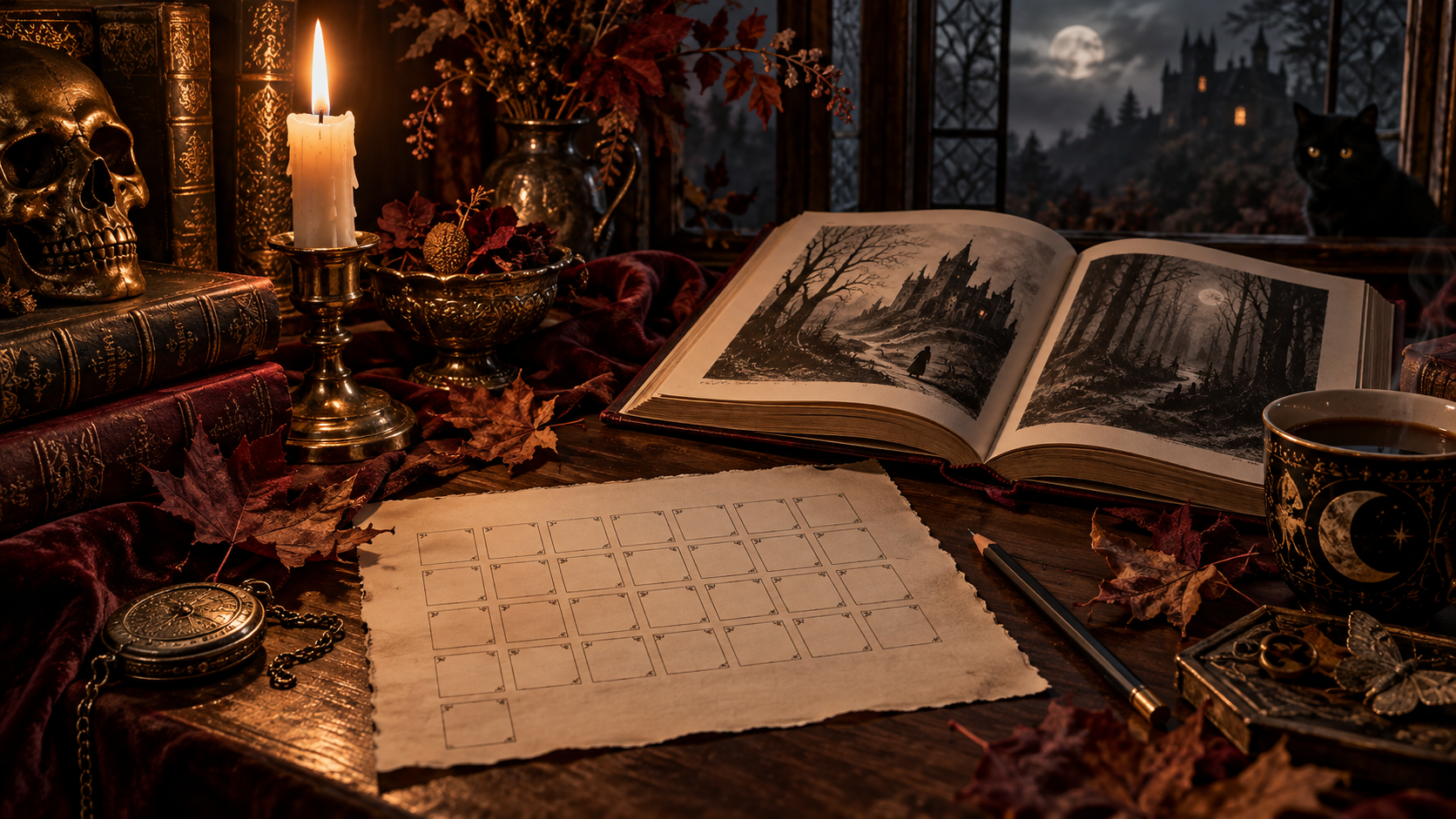

To plan an October horror reading challenge, decide on a repeatable unit first: one story, one chapter, or fifteen minutes each night. Then choose a mix of books that fits your real calendar. Thirty-one nights do not require thirty-one novels, and missing one night does not ruin the month. The most successful challenge gives you somewhere easy to return.
Here is a practical way to make the month feel festive without turning reading into unpaid work.
Pick a unit smaller than your ambition
“Read horror every day” sounds appealing until an ordinary Tuesday arrives with a late shift, dishes, and a phone full of messages. Make the daily minimum laughably achievable. One self-contained short story is ideal, but a chapter or ten pages can work. The minimum is a doorway, not a ceiling. On a free Saturday you can read much more.
If you want a book built for this exact rhythm, October 31 contains thirty-one standalone tales, each beginning on Halloween night in a different time and place. The ebook is available on Amazon. You can read one a night, but the structure also lets you catch up without losing a plot.
Make three lanes in your reading stack
Use a short lane for crowded evenings: a story collection, novella, or chapter-based nonfiction. Use a long lane for weekends when you want to inhabit one world. Keep a comfort lane for nights when you want an eerie atmosphere but not the most punishing material on the shelf.
The lanes solve different problems. A short story protects consistency. A novel provides sustained attachment. A gentler book lets you preserve the ritual when your nerves or attention are tired. Readers who prefer atmospheric horror can use our guide to starting horror without gore to set that third lane.
Build a calendar with recovery built in
Write down the dates when you know you will be busy: travel, school events, work deadlines, visitors, and Halloween plans. Place short pieces there. Save your longest reading sessions for open weekends. A challenge designed around an imaginary free month will fail against the first real one.

It helps to plan a few buffer nights. A buffer can be a reread, an audio story during a walk, or a single page from a favorite collection. You are building a seasonal habit, not testing discipline. If you miss three days, begin again on the fourth. October will not check your attendance.
Vary the kind of fear
Thirty-one consecutive tales of the same intensity flatten each other. Alternate subgenres and settings: folk horror after a ghost story, a city story after a forest, a comic tale after an unforgiving one. Try a haunted-house novel, then a short story about a rule, then a researched history piece. Variety makes the month feel like a journey through horror rather than a march through one aisle.
You can use our folk-horror reading guide as one starting point and the Grimbard books page to find a route by subject. If you already have unread books at home, begin there. A new list should not require a new purchase every day.
Match format to energy, not status
Audio counts if it helps you read. A novella counts. One story from an anthology counts. Even rereading a favorite in a different season can reveal a new detail. The only useful question is whether the format keeps you engaged.
For comparison, a novel may build one dread across weeks while a collection gives you many complete arcs. Our anthology-versus-novel guide helps you choose by time and temperament. There is no prize for choosing the heaviest book when you have the lightest available evening.
Give Halloween a purpose
You can end with a favorite long novel, a one-night novella, or a small stack of stories read by candlelight. Choose in advance so October 31 feels like an arrival. If you are reading October 31 one story per night, save its title story for the date it names. If you are mixing books, reserve a story that feels ceremonial: a house, a warning, a visitor, a door you know should stay closed.

Invite a friend if conversation adds pleasure. You do not need a formal book club. A nightly message with one sentence—“That ending got me”—can make the challenge feel shared. If conversation drains you, keep it private. A reading ritual can be solitary without being lonely.
A seven-day starter plan
On day one, choose your daily minimum and put a book where you will see it. On day two, read one short story. On day three, sample the first chapter of a longer book. On day four, read a nonfiction piece about the folklore behind a story. On day five, take the easy lane. On day six, allow a longer session. On day seven, keep only the parts of the plan you enjoyed.
This trial week tells you more than a beautiful thirty-one-day spreadsheet. You will know whether your chosen time works, whether the novel is too demanding, and whether you want more variety. Adjust before October becomes a performance.
One useful adjustment is to label the books by effort, not prestige. Put a slim, immediately engaging book in your easy lane; place the more demanding one on a weekend when you can linger. If a title repeatedly makes you avoid the chair, swap it. The challenge is meant to help you discover a reading rhythm, not prove loyalty to a list you made in September.
Keep a tiny record of what worked: date, title, and one sentence about the feeling it left. That note will make next October’s choices easier. It also preserves the best part of a short story, the image that followed you after you closed the book.
Frequently asked questions
How many books should an October challenge include?
As many as fit your life. One collection with thirty-one stories can supply a nightly read, while one novel plus a collection gives you both continuity and flexibility.
What if I miss a day?
Continue on the next day. Catch up only if that sounds enjoyable. A challenge is a reading aid, not a debt.
Should I read only horror in October?
No. Dark fantasy, gothic fiction, folklore, and nonfiction can deepen the season. Mix them according to mood and intensity.
What is a good daily reading goal?
Choose one you can keep on a busy weekday: one story, one chapter, or a short timed session. You can always read more.
The calendar is useful only if it leads you back to the page. Start tonight with one story. For more October reading routes and a free illustrated horror story, join The Grimbard Press.