Tag: haunted places

  • Why Abandoned Places Feel Haunted Before Anything Happens

    Why Abandoned Places Feel Haunted Before Anything Happens

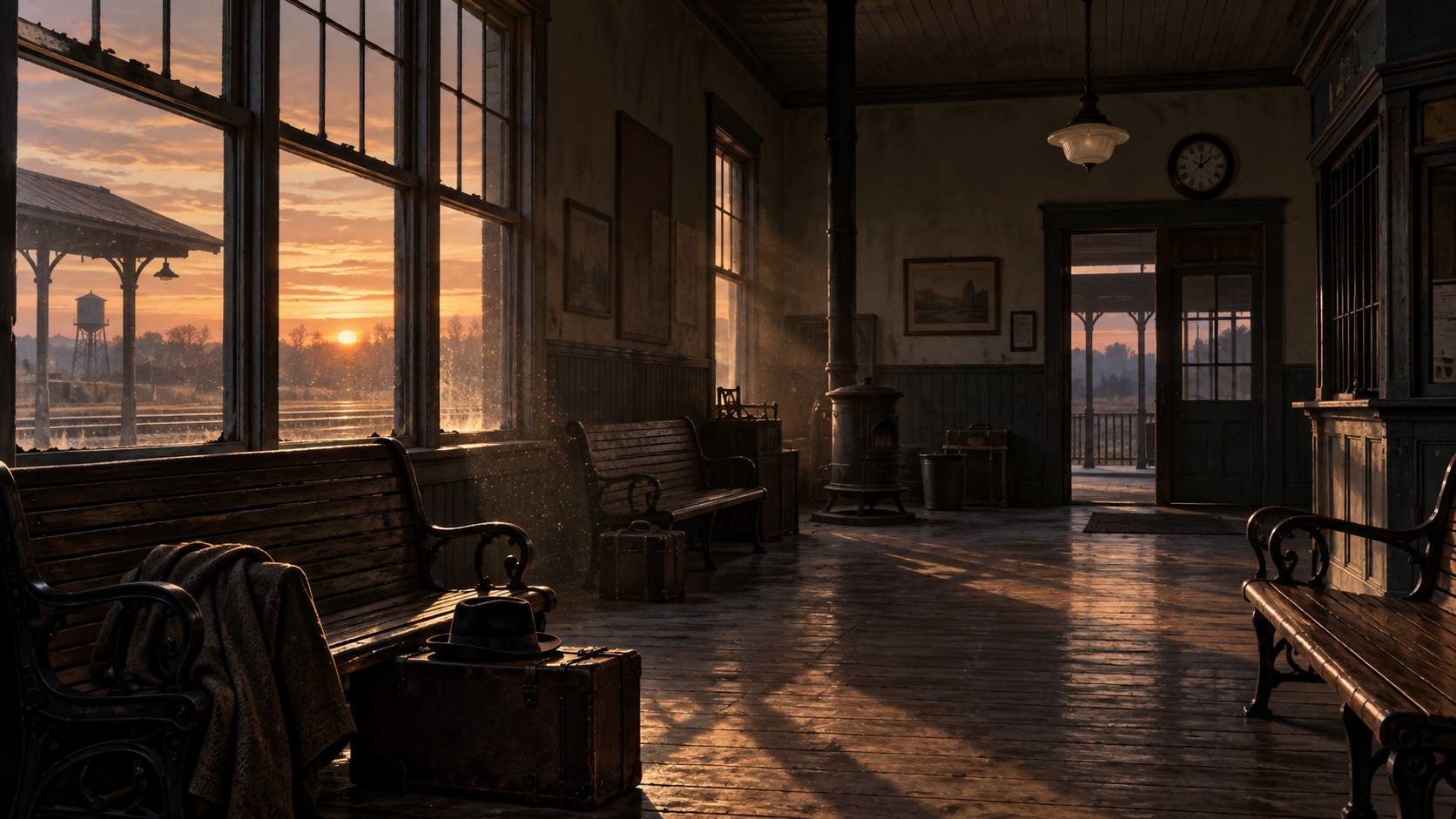
    A deserted railway waiting room at dusk, dust in the last window light

    Abandoned places feel haunted because they violate a familiar expectation: a room built for people is suddenly missing them, while the evidence of their presence remains. A chair faces a table. A calendar hangs where somebody once checked a date. Wind moves through a corridor that was designed to be quiet. Your mind supplies the absent occupants and begins asking why they left. No ghost has to appear for that question to feel urgent.

    This is not proof of a paranormal event, and there is no single scientific mechanism that explains every uneasy visit. It is a useful way to describe an experience many people recognize. Architecture gives us clues about human activity; decay scrambles them; uncertainty invites a story.

    The building still tells you what should be happening

    A school corridor implies bells, footsteps, and children changing rooms. A hotel desk implies a person ready to answer a question. An empty factory implies machinery that should be loud enough to drown out thought. When the building keeps its shape but loses its routine, expectation and reality no longer match.

    That mismatch is more effective than simple darkness. An empty field at night may be frightening, but it does not present the same precise absence. A place designed for occupancy seems to be waiting for someone. Even if you know its closure was ordinary—costs, relocation, redevelopment—the rooms can make the absence feel personal.

    This is why an abandoned site in a story should not be described only as “creepy.” What was it for? What behavior did it organize? Show the reader the missing action. A row of numbered hooks with no coats can do more work than a paragraph about shadowy energy.

    Traces make strangers feel almost present

    The most powerful objects are usually ordinary. A cup, a handwritten sign, a worn stair tread, or an outline left by a removed picture tells us somebody used the place repeatedly. These are traces, not messages. We do not know the person, but the object helps us imagine a gesture: the cup lifted, the stair climbed, the picture straightened.

    The temptation is to invent a complete biography from one clue. That is good fuel for fiction and poor historical method. A child’s shoe does not tell you why a building closed. An unmade bed does not prove a sudden flight. If you are writing about a real site, separate what records establish from what your imagination proposes. If you are writing fiction, use the gap deliberately; make the reader aware of how little the protagonist actually knows.

    A dusty table with one intact teacup and a square of unfaded wallpaper

    Silence changes the scale of small sounds

    People often describe an abandoned building as silent, but the silence is full of low-level activity. Water drips. Metal expands or contracts. Leaves scrape a broken pane. A distant vehicle sounds closer through open rooms. Because there is no ordinary human activity to absorb those noises, each one seems to ask for an explanation.

    In a horror scene, the strongest sequence is often simple: establish a repeated sound, let the character explain it, then change one part of the pattern. A drip stops when the character enters. A door taps three times after the wind dies. The reader is frightened by a failed explanation, not necessarily by volume.

    For another look at how stories exploit incomplete sensory evidence, read why forests feel scarier at night. The setting differs, but the practical question is the same: how much can you know from limited cues?

    Decay lets two times occupy one room

    A ruin is a visible disagreement between past purpose and present condition. Wallpaper still marks a home; moss now crosses the floor. A sign still promises a service; the business is gone. That double exposure makes it easy to imagine a past scene running underneath the present one. Gothic stories have relied on this effect for centuries, but modern offices, malls, and transit stations can produce it too.

    The effect is not merely nostalgia. A building can preserve evidence of exclusion, labor, failed promises, or environmental damage. The question “Who lived here?” should sometimes become “Who worked here?” or “Who was not allowed in?” History gives the atmosphere weight. A generic ruin can feel decorative; a place with a documented use can become morally difficult.

    Our Gothic reading path explores how fiction turns architecture into pressure. For a Grimbard route through places whose boundaries seem unreliable, browse the Lost Boundary Archive.

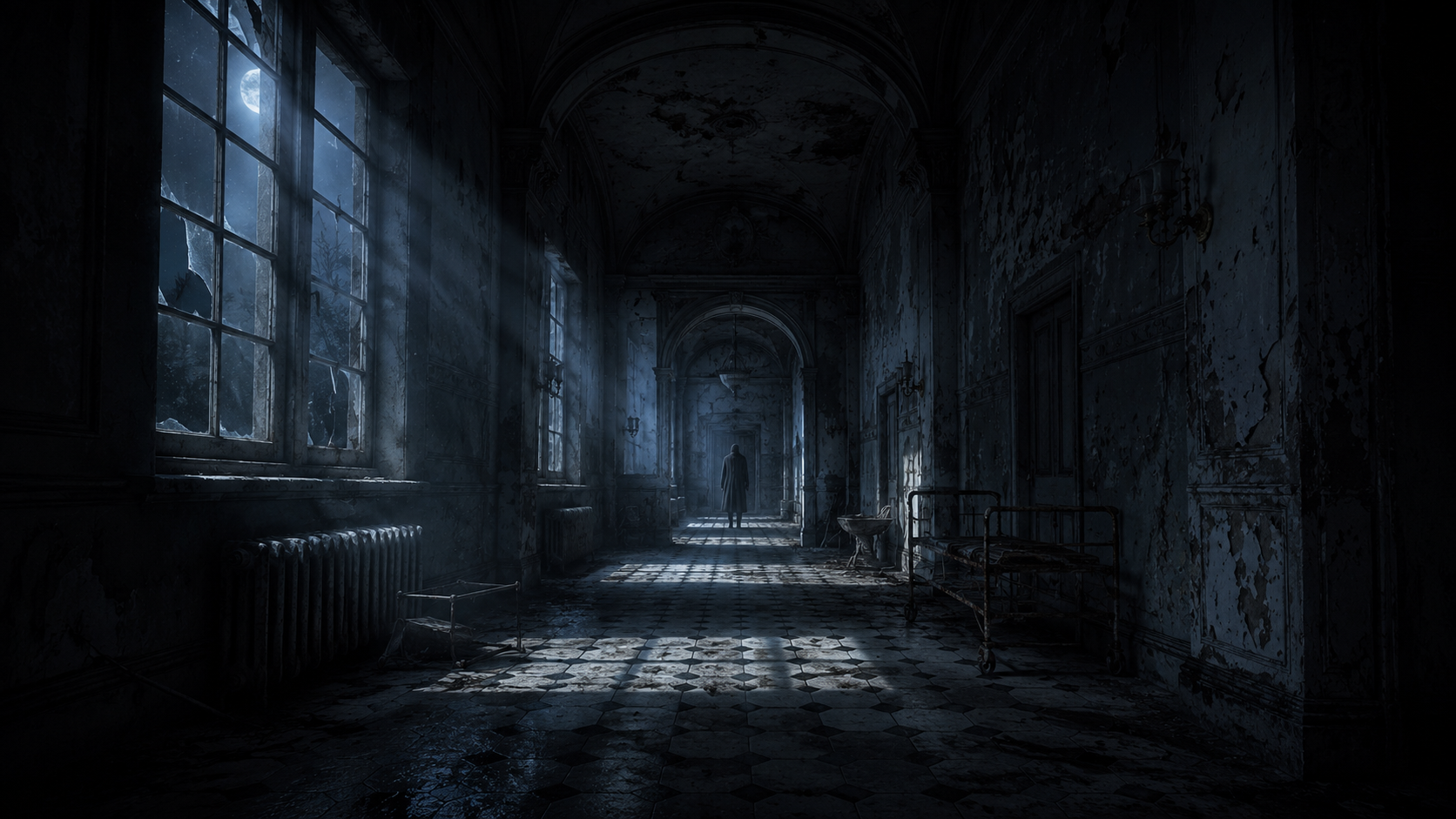
    A long empty hallway where daylight reveals layers of paint and water damage

    How to appreciate a ruin without entering it

    The romance of abandoned places must not obscure their real risks. The National Park Service warns that abandoned mine sites may contain unstable structures, hidden shafts, unsafe water, and dangerous air. Other derelict buildings can present different structural, environmental, or legal hazards. Do not enter a closed site for a photograph or a story prompt.

    There are safer ways to study the effect. Visit a publicly accessible historic site, take a guided tour, use a local archive’s photographs, or observe a building from a lawful public viewpoint. Read municipal or preservation records before deciding what happened there. The facts may be less sensational than a ghost story and more compelling.

    If you are a writer, make a field note in three columns: what you can see, what you can reasonably infer, and what you are inventing. That division protects real people’s histories while leaving plenty of room for fiction. It also gives your imagined haunting a stronger foundation: the reader senses where the evidence ends and dread begins.

    For readers, the same exercise changes how you look at photographs of deserted sites. Ask when the photograph was made, who owns the property, and what might have been moved out of frame. A dramatic image can be an invitation to research, but it is not a complete history. That little pause makes the eventual story you tell about the place more interesting and more honest.

    FAQ

    Does feeling haunted mean a place is paranormal? No. An uneasy feeling can arise from expectation, unfamiliar sounds, traces of former use, and uncertainty. It does not settle a supernatural question.

    Why are abandoned schools and hospitals especially unsettling? They are buildings with strong expectations of routine, care, and human presence. Their emptiness is therefore unusually legible.

    Is it safe to explore abandoned buildings? Do not assume so. Access may be prohibited, and deterioration can conceal serious hazards. Choose authorized visits and public archives instead.

    For more grounded explorations of eerie places, join The Grimbard Press. If you want the unsettling place to cross fully into fiction, explore the Grimbard books.

    Source: U.S. National Park Service, abandoned mineral lands hazards and safety. The article’s psychological framework is interpretive, not a clinical diagnosis.
  • Why Are Cemeteries Scary at Night? Death, Design, and the Fear of Being Watched

    Why Are Cemeteries Scary at Night? Death, Design, and the Fear of Being Watched

    Cemeteries feel frightening at night because darkness removes the social cues that normally make a public place legible. Graves become low obstacles, monuments become human-sized silhouettes, and every path seems to lead somewhere people do not go after dark. Add the fact that a cemetery is built around death, memory, and names that cannot answer back, and the mind starts supplying a watcher before it has evidence of one.

    That response is not proof that a cemetery is haunted. It is a precise collision of setting and expectation. The place asks us to remember the dead while the night makes it hard to see who—or what—is nearby.

    A cemetery was designed to be read slowly

    The modern American cemetery is not merely a storage place for graves. Nineteenth-century rural cemeteries were deliberately landscaped as places for walking, mourning, and instruction. The Smithsonian Folklife account of the rural cemetery movement describes a landscape of paths, trees, monuments, and family memory: a place that makes death visible within an ordered, living world. Read its history of cemeteries in the American landscape.

    That design can feel peaceful in daylight. At night, it creates a different kind of problem. A grid of stones is hard to scan. Trees interrupt sightlines. Statues are made to resemble bodies, angels, mourners, and guardians. A curving path denies the eye a clear end point. Horror does not need a supernatural event here; it only needs an environment that refuses to give quick reassurance.

    The same mechanism explains why a familiar backyard can feel alien after midnight. But a cemetery comes preloaded with heavier meaning. You are not just unable to identify a shape. You are unable to identify a shape among the dead.

    Darkness makes ambiguous shapes feel personal

    Human vision is excellent at catching motion and poor at resolving detail in low light. When information is thin, the brain makes fast guesses. A marble obelisk can resemble a standing figure. A flower arrangement can appear to move in a breeze. A distant lamp can become a face because the mind is built to find faces quickly, even when none are there.

    This is why the most effective cemetery scenes in horror often withhold the creature. The camera, or the prose, gives the reader a line of stones and a break in the hedge. The reader does the rest. The fear is not foolishness; it is a safety system working with incomplete data.

    There is another pressure at work: a cemetery is a public place where the usual public contract is absent. In a shop, park, or station, other people provide ordinary explanation. In a cemetery at night, there may be no one to ask whether a sound was a gate, an animal, or a person. Silence becomes a blank page.

    Death anxiety changes the stakes of a quiet place

    Being near graves can bring mortality to the surface without anyone saying a word. Psychologists study death anxiety as a real and variable response, not a single universal feeling. The Death Anxiety Scale is one early tool developed to measure differences in how people think and feel about death.

    You do not have to feel actively afraid of dying for a cemetery to get under your skin. The place condenses names, dates, families, and endings into a few acres. It interrupts the ordinary illusion that death happens somewhere else, to someone else, much later. At night, when distractions thin out, that interruption can feel sharper.

    This is also why cemetery horror should be written with care. A graveyard is not a prop emptied of human beings. It is a record of people who were loved, mourned, and often still visited. Respect makes the horror better: it gives the setting moral weight instead of treating the dead as décor.

    Why the fear of being watched arrives so quickly

    Many people describe the same sensation in a cemetery: not that something will attack, but that something is looking. The feeling comes from three overlapping features.

    1. Monuments resemble observers. Upright stones, statues, portraits, and angels occupy the visual height of a person. 2. The landscape hides observers. Trees, mausoleums, low walls, and uneven ground create pockets where a real person could stand unseen. 3. The subject matter invites personhood. A cemetery asks us to think of individual lives. When the mind sees a shape, it does not read it as a random object first; it reads it through the idea of a person who once existed.

    That is fertile ground for fiction, but it is also why a cautious visitor should not wander in after closing. The danger may be a broken path, an unsafe structure, wildlife, or another living person—not a revenant. The unease is atmospheric; basic safety is practical.

    The cemetery and the fear of premature burial

    Some older cemetery dread is historical rather than spectral. The nineteenth century produced vivid anxieties about being declared dead too soon, along with stories, patents, and alarm devices meant to answer them. Our earlier look at the subject, “The Fear of Being Buried Alive: History, Horror, and the Safety Coffin”, follows how medical uncertainty became a durable horror image.

    That fear survives because it turns the cemetery’s central promise inside out. A cemetery is meant to mark a final resting place. Premature-burial stories imagine the final place as a trap. Even readers who know the history only vaguely recognize the emotional logic: the terror of needing help in a place built for the unreachable.

    For a different Victorian route into grief, image, and memory, see the history of Victorian postmortem photography. It is a useful corrective to the idea that every historical encounter with death was gothic spectacle. Much of it was mourning made visible.

    Why cemeteries are such durable horror settings

    A cemetery lets horror writers put several fears in the same frame: isolation, uncertainty, mortality, guilt, inheritance, and the possibility that the past has not finished speaking. Crucially, it does so without requiring a monster. A locked gate, a name that appears twice, a familiar flower on the wrong grave, or the sound of someone walking where no path exists can carry a whole scene.

    The setting also permits restraint. The strongest cemetery story often leaves room for an ordinary explanation. Was that a groundskeeper? A fox? Wind in dry leaves? Or did the figure behind the mausoleum wait until the narrator turned away? Certainty ends the scene. A good cemetery lets uncertainty keep breathing.

    If you want the horror to follow you home

    For readers drawn to haunted settings, graveside dread, and the uneasy intimacy of the dead, There Be Monsters: Among the Dead is the natural next shelf. It stays with the question a cemetery raises at night: what if the boundary we rely on is thinner than it looks?

    Or join The Grimbard Press and receive Dead Ship, the free illustrated Subscriber Archive Edition. It is for readers who prefer their unease evidence-minded, atmospheric, and difficult to shake.

    Frequently asked questions

    Why are cemeteries scarier at night than during the day?

    At night, darkness reduces detail and makes monuments, trees, and paths ambiguous. Because cemeteries are already associated with death and memory, the brain is more likely to interpret ambiguous sights and sounds as meaningful or threatening.

    Are cemeteries designed to feel spooky?

    No. Many historic cemeteries were designed as landscaped places for mourning, walking, and remembrance. Features that feel uncanny after dark—curving paths, tall monuments, dense trees—often served beauty, privacy, and contemplation in daylight.

    Why do people feel watched in graveyards?

    Grave markers and statues can resemble human figures in low light, while the landscape contains many sightline breaks. The mind combines those ambiguous cues with the knowledge that the place commemorates individual people.

    Is it safe to visit a cemetery at night?

    Follow the cemetery’s posted rules and hours. After dark, uneven ground, damaged structures, wildlife, and isolation can create real risks. Respect for mourners and the site matters as much as the atmosphere.

    The last light on the path

    The cemetery is frightening at night because it makes absence feel occupied. The stones do not move. The names do not speak. Yet the place is arranged so carefully around human lives that silence can begin to sound like attention. That is the old trick: darkness does not add a ghost. It removes just enough certainty for one to stand beside you.

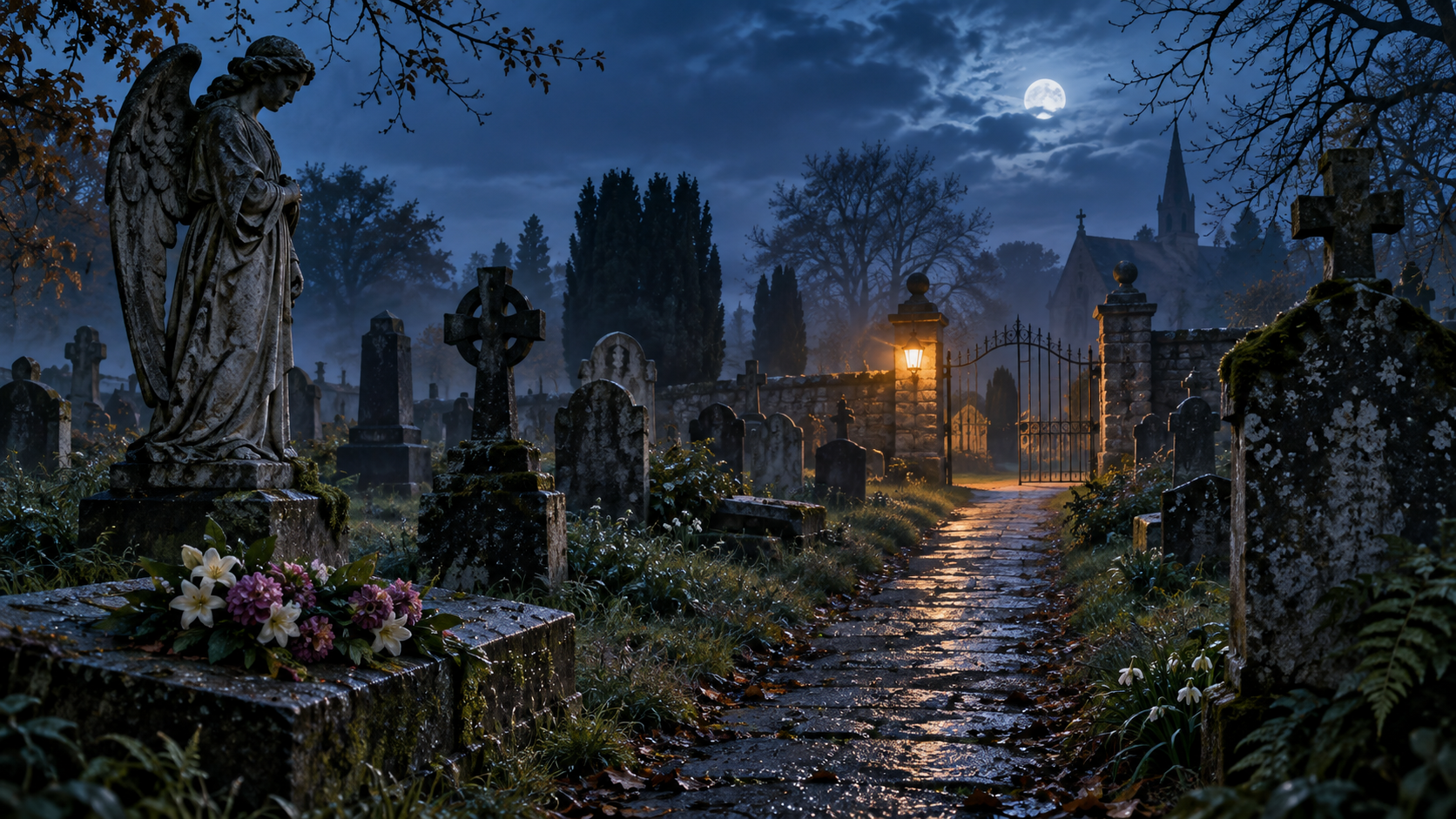
    Moonlit cemetery path and grave markers used as a retention image for an article about why cemeteries feel frightening at night.

  • Free September 4–8: There Be Monsters: Then and Now

    Some warnings are only stories until you are the person standing at the gate.

    From September 4 through September 8, There Be Monsters: Then and Now is free to download on Kindle. It is the first book in my There Be Monsters series: thirteen illustrated tales of folk horror, haunted places, buried histories, and the quiet moment when an old rule turns out to have been useful.

    Inside are a bell that rings for the dead when no one has died, a lake tour that returns without its passengers, a sealed crawlspace, a well with a price, and other places where people learn too late that curiosity is not the same thing as permission.

    Get the free Kindle book on Amazon

    If you read it and it gives you something to think about, an honest Amazon review helps an independent horror author find the readers who may actually want this kind of book. Constructive feedback helps, too. I do not need a particular rating; I value a real response after you have spent time with the stories.

    Every warning was true once. Some are still being written.

  • What Visiting Haunted Places Actually Feels Like

    What Visiting Haunted Places Actually Feels Like


    My partner and I have a tradition when we travel. Before we book anything, we look up what died there.

    Not morbidly — or not only morbidly. It’s more that the historical weight of a place interests us, and that weight is usually attached to the bad things. The flood. The fire. The crime that nobody quite got to the bottom of. The building that used to be something else before it was what it is now.

    We’ve done ghost tours in a dozen cities. We’ve walked through cemeteries at hours that made the groundskeepers nervous. We’ve stood in rooms where, by every account we could find, something happened that the people who lived through it couldn’t explain.

    I want to tell you what that actually feels like — not what the tour guides say it feels like, and not what the skeptics say it feels like. What it actually feels like, from someone who pays attention for a living.


    The First Thing Is the Cold

    Not in the “cold spot” paranormal sense, though those are real enough. The first cold is the one you feel before you know why.

    We were in a 19th-century hotel in Savannah — I won’t name it because Savannah has so many haunted hotels that naming one feels like endorsing a TripAdvisor entry — when I walked into a hallway on the third floor and stopped. My partner, two steps behind me, also stopped.

    Neither of us said anything for a moment. Then she said, “Do you feel that?”

    I did. Something in the air pressure, maybe. Something in the way the light behaved. There was no visible reason for either of us to stop.

    The room at the end of that hallway, we found out later, was the one.

    I’m not making a supernatural claim. I’m making an observation: human beings have threat-detection systems that are very old and often accurate, and old buildings that held bad events have a way of triggering them in people who aren’t defended against them. Whether that’s atmospheric or architectural or something genuinely paranormal is a question I don’t have a confident answer to.

    What I do have is the memory of stopping in that hallway.


    What the Tour Guides Know

    Ghost tour guides are, almost universally, the most interesting people in any city.

    They are amateur historians who became professional storytellers through necessity — nobody hires you to just stand on a street corner and recite municipal history. You need the ghost. But to get the ghost right, you have to get the history right. The haunting is the hook; the history is the substance. The best guides understand that the history is scarier than the ghost.

    The guide who walked us through a preserved antebellum district in South Carolina didn’t dwell on the apparition sightings. She spent forty minutes on the documented history — the people who died there, the records that survive, the gap between what the official accounts say and what the oral tradition preserved. By the time she got to the story of what people claimed to see in the third-floor window, she didn’t need to sell it.

    The thing had weight.


    What the Skeptics Get Half Right

    Skeptics are correct that most people on ghost tours experience what they came expecting to experience. Priming is real. If you tell someone a room is haunted and then dim the lights, you will generate phenomenological reports of haunting. This is not controversial.

    What the pure debunking stance misses is that “you experienced what you came expecting to experience” doesn’t fully explain every account, and it doesn’t explain why the content of those accounts is so consistent across time, culture, and witness.

    Recurring stories deserve a second look, but they are not automatically proof of a haunting. A repeated account may reflect a well-known local narrative, a striking feature of a room, or details passed between visitors. The useful question is not “can this be proven supernatural?” but “what is documented, what is reported, and what might have shaped the report?”

    I hold those categories loosely. I can value an unexplained experience without treating it as evidence for a single explanation.


    Why We Keep Going

    The honest answer is that visiting these places is a form of paying attention to the dead.

    History has a way of becoming abstract — names and dates and events compressed into summaries that carry no weight. Standing in the room where something happened does something that reading about it does not. The scale comes back. The reality of it.

    I write horror about places. The specific texture of a room, a hallway, a ridge at dusk. I can’t generate that texture from research alone. I need to stand somewhere and let it do what it does.

    My partner comes because she finds history genuinely moving, and because she has, on two occasions, experienced things she hasn’t found a satisfying explanation for. She isn’t frightened by those experiences. She finds them interesting. It’s one of the things I like most about her.

    The cold in the hallway. The woman in gray. The man on the ghost tour who looked at you like you’d asked about roads.

    These are not the same kind of evidence. But they’re all evidence of something. The places hold what happened in them, one way or another.

    I’d rather go look than not.


    Writing about haunted places and folk horror — join the Grimbard list for creature features, dark tourism notes, and new fiction: Join the Grimbard list


    How to visit a haunted place well

    • Start with the documented history, not the ghost story. A good local museum, archive, or historical society is more useful than a viral list.
    • Respect the setting: cemeteries, memorials, private homes, and sites of violence are not props or after-hours attractions.
    • Notice conditions before interpreting them. Light, noise, suggestion, fatigue, and unfamiliar architecture can all change what a place feels like.
    • Leave room for uncertainty. “I do not know” is more interesting—and more honest—than forcing an experience into belief or disbelief.

    If you are drawn to the way history, place, and an old story reinforce each other, read what makes folk horror different and browse the Monster Lore archive.