Tag: gothic horror

  • Gothic Horror Books for Autumn: A Reading Path from Manor to Ruin

    Gothic Horror Books for Autumn: A Reading Path from Manor to Ruin

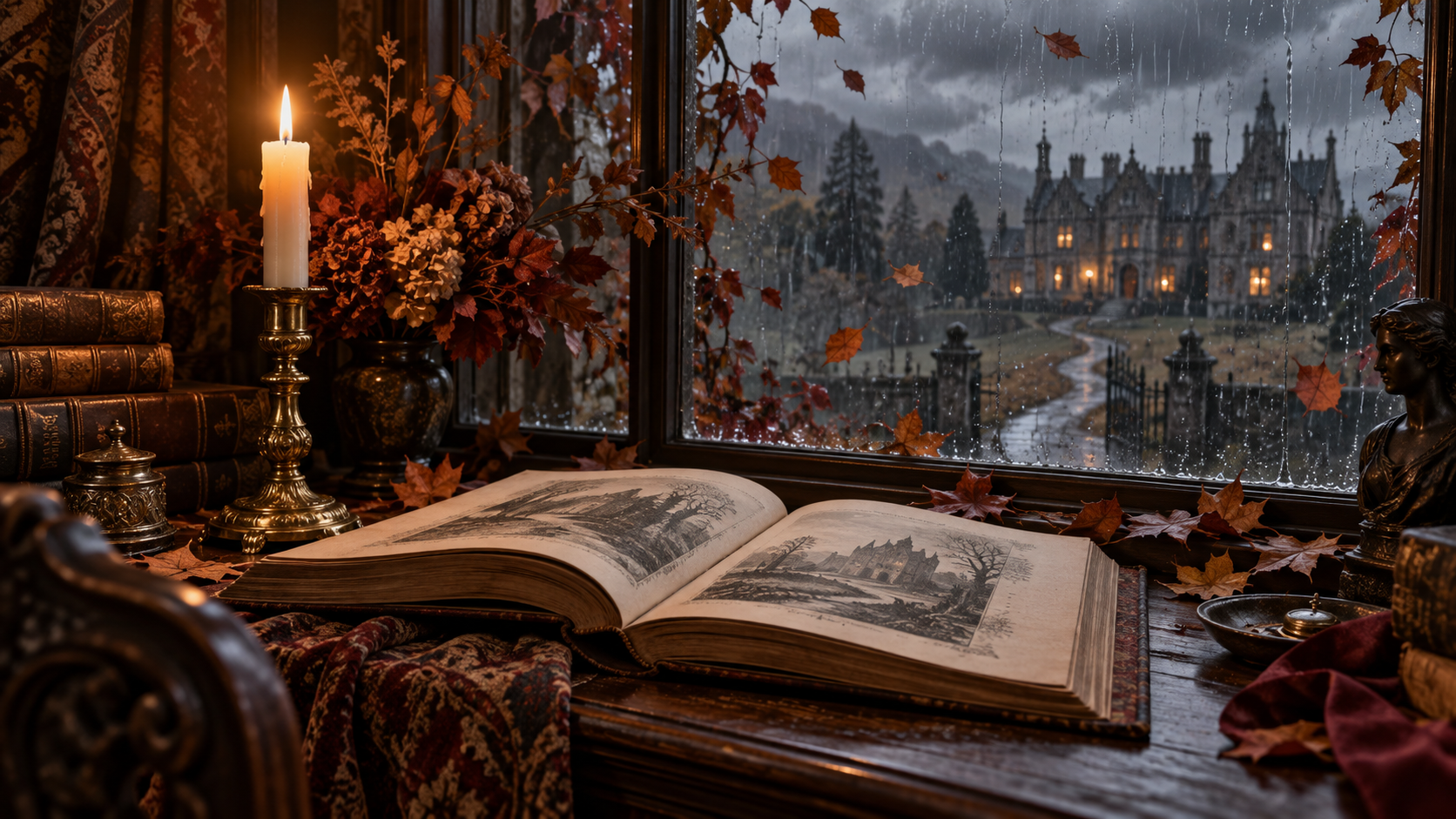
    An autumn gothic reading table with a candlelit book, manor silhouette and falling leaves

    The best gothic horror books for autumn do more than supply a decaying mansion. They make a place feel burdened by history, then ask what the living will sacrifice to keep that history hidden. If you want a practical reading path, start with a short, psychologically sharp house story, move to an older novel of secrets and inheritance, and finish with a book that lets the uncanny spread beyond the walls.

    This is a path, not a ranking. Choose the branch that matches how much time and supernatural certainty you want. A ruined estate is only one version of the Gothic; isolation, family power, obsession, and the uneasy return of the past are the real architecture.

    First, what makes a book Gothic?

    Gothic fiction often gives emotion a physical address. A corridor conceals information; an inherited property embodies an inherited obligation; a storm turns a decision into an ordeal. It can contain ghosts, but a haunting is not required. The pressure may come from secrecy, coercion, grief, or a narrator whose account cannot be trusted.

    That distinction helps when searching for an autumn read. “Gothic” does not promise a jump scare on every page. It promises atmosphere with consequences. If you prefer an early guide to the neighboring genres, read our dark fantasy, horror, and Gothic comparison.

    Stop 1: a haunted house you can finish quickly

    Start with Shirley Jackson’s The Haunting of Hill House if you want the house to be both a setting and a question. Eleanor enters a group investigation carrying her own loneliness; the novel refuses to make every perception easy to sort. Its power lies partly in the gap between what happens and what can be proved. The Library of America edition identifies the novel among Jackson’s essential works, alongside We Have Always Lived in the Castle.

    Choose We Have Always Lived in the Castle instead if you want a smaller domestic world and a voice that seems to know more than it tells. The Blackwood home is not a tourist attraction. It is a fortress of routine, resentment, and selective memory. Both books reward a slow evening, but neither requires a month-long commitment.

    A narrow manor corridor with a locked door and autumn light beneath it

    Stop 2: inheritance, desire, and the rooms no one mentions

    If you have a weekend, try Daphne du Maurier’s Rebecca. Its house, Manderley, is a monument to an absent woman whose influence does not depend on appearing as a literal ghost. The unnamed narrator has to negotiate social rank, marriage, memory, and the unsettling fact that a room can preserve somebody’s power. The publisher description makes the central marriage and Manderley’s shadow clear without needing to spoil its turns.

    For a longer, nineteenth-century route, Charlotte Brontë’s Jane Eyre offers a governess, a grand house, moral independence, and a secret whose treatment still invites debate. It is not interchangeable with a modern horror novel. Its romance and social critique are central. But the atmosphere of Thornfield Hall shows how suspense can grow from unequal power and incomplete knowledge. You can enjoy the locked-room intrigue while also asking whose point of view the book privileges.

    The choice between these two depends on pace. Rebecca is the more direct autumn suspense read; Jane Eyre asks for a longer stay and gives more space to its narrator’s convictions.

    Stop 3: the castle as a trap

    Bram Stoker’s Dracula is a useful next move because its opening turns hospitality into captivity. Jonathan Harker travels to a remote castle on business and gradually learns that every practical exit has closed. Later, the novel changes form and location through letters, diaries, and records. That documentary structure can feel surprisingly modern: people assemble evidence while the danger outruns their explanations.

    Read it if you like a large cast, a slow-building threat, and an older text whose assumptions deserve critical attention. If the length feels intimidating, read the castle opening as a self-contained test. You will know quickly whether its rhythm works for you. Avoid reducing the whole book to one image of a cloaked count; its fear also lives in logistics, communication, and the struggle to be believed.

    Mary Shelley’s Frankenstein offers a different kind of ruin. Its Gothic pressure comes less from a house than from an act of creation and a refusal of responsibility. The framing narratives ask who gets to tell the story and whose suffering counts. It is especially good for readers who want an autumn book that leaves them with a moral argument as well as an image.

    Stop 4: when the ruin becomes a landscape

    Once you have visited the manor and castle, take the Gothic outdoors. A shore, empty field, burial mound, or village can hold the same withheld history as a locked room. This is where Gothic reading meets folk horror: the place appears to remember an agreement the newcomer never made. Our guide to folk horror in books explains that shift from private architecture to collective belief.

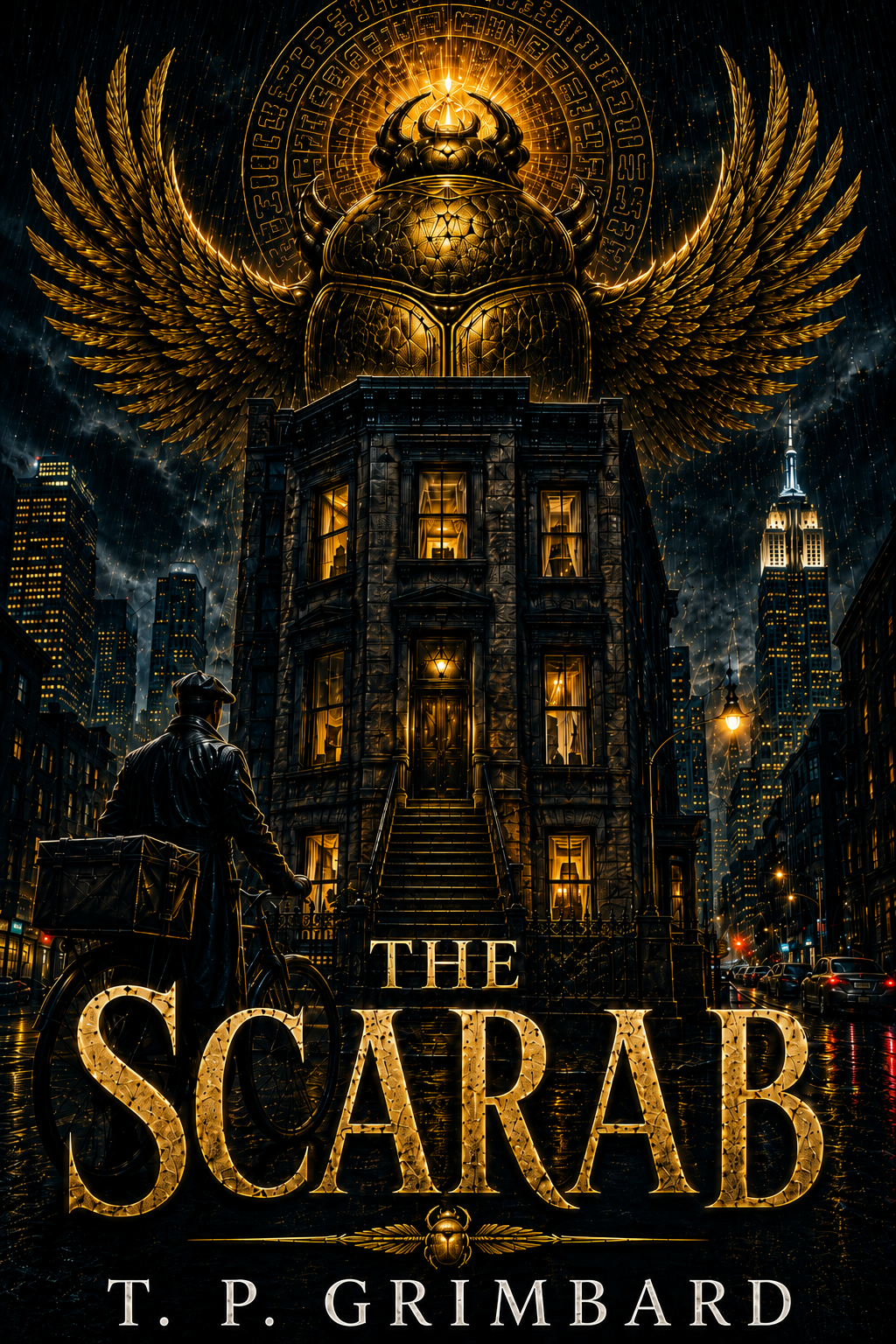
    For a Grimbard path, The Scarab is a route toward cursed-object suspense, while October 31 lets you sample multiple shades of seasonal dread in shorter sittings. Check the book descriptions before choosing; a collection is a different reading commitment from a single sustained novel. A useful experiment is to alternate an older Gothic chapter with one contemporary story, noting what each makes you wait to learn.

    An abandoned stone stair ending in an open autumn landscape at dusk

    Choose your route in five minutes

    If you have one evening, pick The Haunting of Hill House or We Have Always Lived in the Castle. If you have a weekend and want romantic suspense, pick Rebecca. If you want a long classic with a strong first-person voice, pick Jane Eyre. For monsters and assembled documents, pick Dracula. For a moral argument under storm clouds, pick Frankenstein.

    You do not have to finish every station in October. Two books with contrasting moods may teach you more about your taste than a checklist of ten. Keep a note of the moment the setting stops being background and begins to demand a decision. That is often the point where Gothic atmosphere becomes Gothic story.

    FAQ

    Does Gothic horror have to include a ghost? No. A secret, power imbalance, or obsession can haunt a book without a supernatural event.

    Are Gothic and dark fantasy the same? They overlap, but Gothic names a mode of atmosphere and buried history; dark fantasy usually gives greater room to an imagined or supernatural world.

    Which book should a newcomer try first? For a concise modern entry, start with The Haunting of Hill House. For a larger romantic mystery, try Rebecca.

    For a monthly dose of folklore and dark reading paths, join The Grimbard Press. If you want a book built for the season itself, explore October 31.

    Source notes: Library of America on Shirley Jackson; HarperCollins on Rebecca. Descriptions and reading guidance are editorial judgments, not claims about current pricing or availability.
  • The Fear of Being Buried Alive: Why Safety Coffins Haunted the Nineteenth Century

    The Fear of Being Buried Alive: Why Safety Coffins Haunted the Nineteenth Century

    The Fear of Being Buried Alive: Why Safety Coffins Haunted the Nineteenth Century

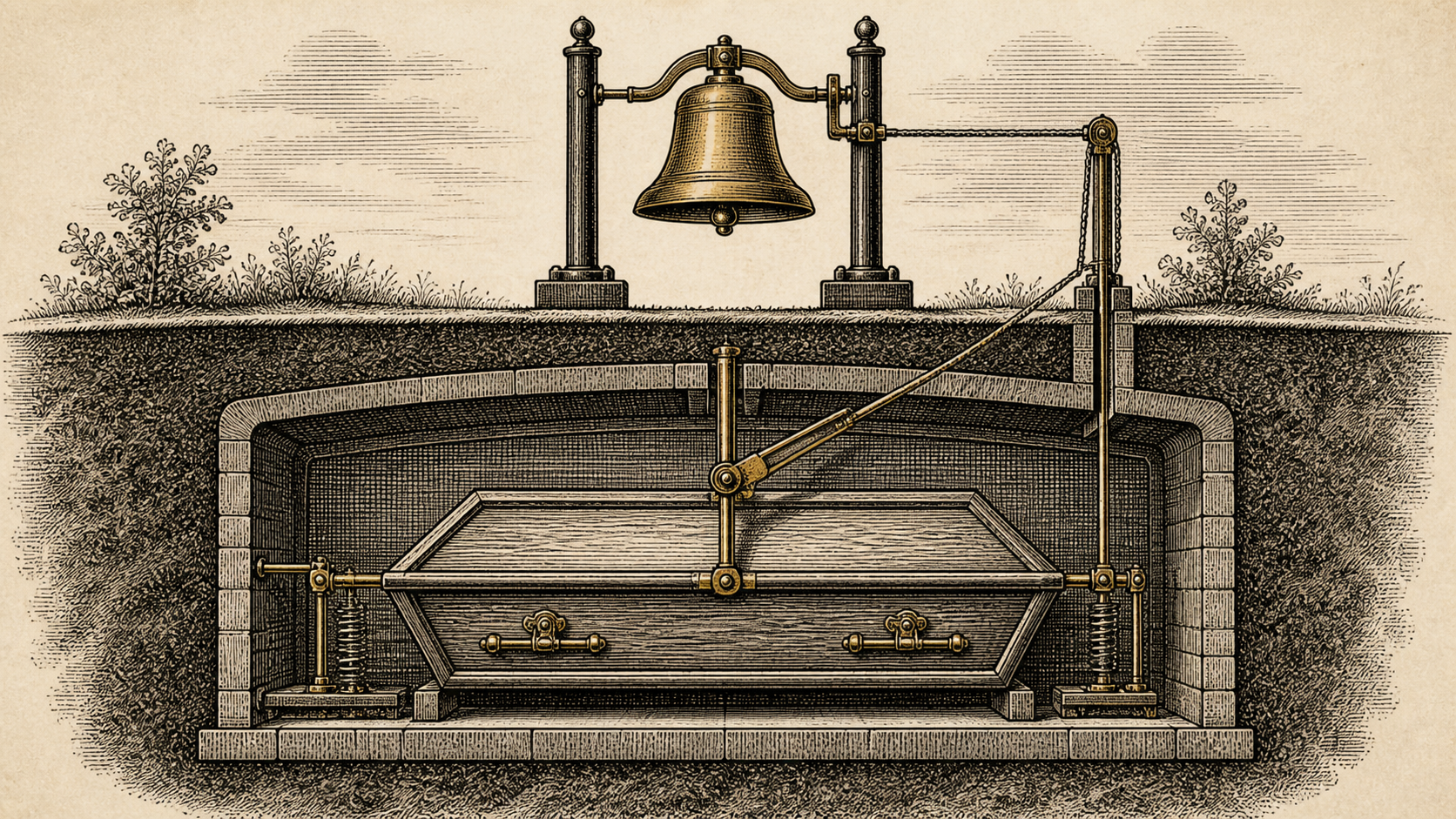
    A bell above a grave is a clean piece of horror design. Someone below pulls a cord. Someone above hears it. Between them is dirt.

    It is also easy to let that image do too much historical work. Safety coffins existed. They were patented, advertised, sketched, and argued over. They are evidence of an intense fear of premature burial. They are not, by themselves, evidence that graveyards were full of people saved by bells.

    The nineteenth-century fear of being buried alive grew from a genuine uncertainty: determining death was harder before modern diagnostic methods and before many people had reliable access to trained medical care. That uncertainty produced waiting mortuaries, proposed alarm systems, and a long afterlife in gothic fiction. The history is frightening because it shows how much terror can gather around a boundary people cannot confidently see.

    What “premature burial” means

    Premature burial means burial of a person who is still alive. The possibility has haunted many cultures, but it took a particular grip on nineteenth-century Europe and North America, where newspapers, medical debate, patent culture, and popular literature fed one another.

    In a 2016 history in History of Psychiatry, Marco Cascella notes that the Italian psychiatrist Enrico Morselli used the term taphophobia in 1891 for an extreme fear of being buried alive. The word is useful as historical vocabulary, but it should not be used casually to diagnose a reader who finds the idea upsetting. The fear needs no diagnosis to make sense. It places the body in the one location from which it cannot argue back.

    The central problem was apparent death. A body might be cold, still, faintly breathing, or hard to rouse. Nineteenth-century medicine had methods of observation, but not the certainty later readers tend to imagine. When the fear became public, the most memorable answer was mechanical: build a coffin that lets the occupant send a signal.

    The safety coffin was a solution to a nightmare

    Illustrated timeline showing apparent death, safety-coffin designs, and gothic fiction.
    Illustration: apparent death, safety devices, and gothic fiction belong to different kinds of evidence.

    The designs varied. Some used cords attached to bells. Some proposed breathing tubes, movable lids, flags, escape hatches, or mechanisms triggered by movement. A review in Forensic Sciences, Medicine and Pathology describes nineteenth-century security-coffin ideas that included alarms, pipes, and devices meant to allow survival until a rescue could occur.

    That catalogue is more unnerving than any one design. It turns the grave into a machine with user instructions. Yet the same review supplies the necessary restraint: these devices were answers to fear, and claims about their practical success require separate proof. A bell might be set off by swelling, decomposition, or shifting material. A patent drawing is not a rescue record.

    This distinction matters. Horror history is full of objects that become more dramatic every time they are repeated. The safety coffin is already dramatic enough. It shows that people could imagine the failure in precise, expensive detail.

    Waiting mortuaries and the need to know

    Some European communities tried another answer: delay burial and observe the recently dead until unmistakable changes appeared. The 2023 review “Premature burial” discusses holding mortuaries with resuscitation facilities, especially in continental Europe, as a response to uncertainty over death diagnosis.

    This is the less famous image, perhaps because it lacks the bell and the grave. It may be the more revealing one. A waiting mortuary admits that the frightening thing is not burial alone. It is the interval before anyone can honestly say the body has crossed the threshold.

    That interval is where gothic fiction lives. A locked coffin is frightening because it appears to settle a question permanently. A waiting room for the dead is frightening because it does not.

    Poe understood the architecture of the fear

    Illustration distinguishing a safety-coffin patent from evidence of a documented rescue.
    Illustration: a patented safety coffin does not prove a documented rescue.

    Edgar Allan Poe did not invent the fear, but he gave it memorable rooms to occupy. His 1844 story “The Premature Burial” arrived in a century already interested in apparent death and safety devices. Poe’s contribution was not medical explanation. It was enclosure: narrow space, darkness, awakening, the mind turning every sensation into proof that it is too late.

    That is why the trope survived advances in medicine. The literal risk can change while the symbolic fear remains useful. Being buried alive is fear of a false conclusion. Everyone else has decided the story is over. You are still inside it.

    The same pressure sits beneath curse narratives. In the history behind the mummy’s curse, the sealed tomb becomes a warning about disturbing the dead. Premature-burial horror reverses the direction: the living person is sealed away as if already dead. Both stories make a door carry more certainty than the people on either side possess.

    What the records do not let us say

    The careful version of this history leaves several satisfying claims on the floor.

    We cannot say that every safety-coffin patent was widely used. We cannot turn a rope-and-bell illustration into proof that someone woke beneath a cemetery. We cannot use exhumed remains, scratches, or a crooked body as a simple forensic answer centuries later. Bodies and graves change for many reasons.

    We can say that the fear was culturally powerful. Physicians, inventors, writers, and mourners treated apparent death as a problem worth worrying over. That is enough to explain why the image kept returning.

    Today, modern death determination is profoundly different from nineteenth-century practice, and the contemporary article in the source packet describes actual premature burial as rare where qualified medical care is available. This is history, not a reason to mistrust current medical professionals or to make decisions about death care from a horror blog.

    The bell is still ringing because the question is not

    The safety coffin endures because it offers a cruelly simple bargain: if you are alive, make a sound. The trouble is that the fantasy assumes someone is listening.

    That is the darker half of the story. The bell above the grave promises connection, but it also imagines a world in which rescue depends on being heard through the earth. The invention does not defeat helplessness. It gives helplessness a cord to pull.

    For fiction about death, rooms, and the presences that refuse their assigned category, There Be Monsters: Among the Dead is the natural next shelf. And if you like hauntings that migrate into modern systems, the ghost in the warehouse follows the fear after it leaves the graveyard.

    > Join The Grimbard Press and receive Dead Ship, a free illustrated Subscriber Archive Edition, along with future archive files and monster lore.

    FAQs

    Were safety coffins real?

    Yes. Nineteenth-century inventors patented and proposed coffins with alarms, breathing tubes, and escape mechanisms. Their existence documents concern about premature burial, not routine successful rescues.

    Why did people fear being buried alive in the nineteenth century?

    Death could be difficult to determine in some circumstances, and press stories, medical debate, inventions, and gothic fiction made the possibility culturally vivid.

    Did bells on graves actually save people?

    Popular stories often imply that they did, but a safety device or patent is not proof of a documented rescue. Claims about a specific event need a reliable contemporary record.

    Is premature burial still common?

    No. Modern medical practice has far more reliable methods for determining death. The historical fear should not be treated as a guide to present-day medical care.

    Sources

    – Cascella, “Taphophobia and ‘life preserving coffins’” – Khan et al., “Premature burial” – Medical History: “Buried alive”

  • The Scarab Is Out Today — T. P. Grimbard’s Debut Novel

    The Scarab Is Out Today — T. P. Grimbard’s Debut Novel

    The Scarab, T. P. Grimbard’s first novel, releases today on Amazon in Kindle ebook and 6×9 illustrated paperback.

    A courier ducks a storm and climbs through an open window into an old house in Flatbush. He leaves at dawn with no bruises, no memory of choosing to stay, and a certainty he can’t shake. Something old and patient has just decided he’s worth the wait.

    The Scarab hero banner artwork, a winged scarab motif

    What Is The Scarab About?

    The Scarab is a slow-burn occult horror novel told through fractured testimony — a courier, a private investigator, a hacker, and a handful of sources, each holding a piece of something none of them can prove and none of them can forget. No single narrator has the whole picture. That’s the structure the book runs on.

    Half a world from Flatbush, an archaeologist in Cairo dies under a wall that came down a little too conveniently — the same week she refused to let a corporation move faster than the truth. A private security firm starts asking questions it won’t explain. A woman in Manhattan with more power than she’s comfortable holding starts receiving things she never ordered. A fifty-five-year-old private investigator, sharper than the diagnosis she’s been ignoring, starts pulling a thread that was never meant to be found.

    Something has been keeping accounts for a very long time. It doesn’t take. It gives — hands its inheritance to whoever’s standing closest when the hour comes, whether they want it or not. Once you’re carrying it, there’s no putting it down.

    Illustration of the porch and open window where The Scarab begins

    Who Should Read The Scarab?

    The Scarab is built for readers who want dread that builds in silence and doesn’t explain itself, told across institutions instead of a single haunted house. If you liked the patient, testimony-driven horror of Silvia Moreno-Garcia’s Silver Nitrate or Tananarive Due’s The Reformatory, this book is aimed at the same reading experience.

    Three things define the book’s approach to horror:

    • Restraint over reveal. The threat is never fully explained on the page — the book trusts the reader to sit with what’s withheld.
    • Institutions as the real monster. The story is as much about what corporations, security firms, and private wealth do to bury the unbearable as it is about the entity at the center of it.
    • Colonial theft with a body count. The Cairo thread ties the supernatural inheritance directly to what gets looted, buried, and quietly re-buried by the people with the resources to make it disappear.

    Where Can You Buy The Scarab?

    The Scarab is available today on Amazon in Kindle ebook and 6×9 illustrated paperback, and it’s enrolled in Kindle Unlimited. Because it’s part of KDP Select, the ebook is Amazon-exclusive — it will not appear on Gumroad or any other storefront while enrolled.

    Format Where Price
    Kindle ebook Amazon $5.99
    6×9 illustrated paperback Amazon $16.99

    From Chapter One:

    “I stood in the front room with my back to the window I’d come through and waited for my eyes to adjust and listened the way you listen in a space when you need to know if it’s actually empty. There’s a quality to empty that isn’t just quiet — the air hasn’t had a reason to move recently. Apartments where nobody’s been for a while have it. This house had the opposite.”

    Who Is T. P. Grimbard?

    T. P. Grimbard writes horror and dark fiction for readers who like their dread slow and their explanations withheld. The name splits two instincts down the middle: the Bard, a lifelong tabletop storyteller who’s run more campaigns than can be counted, and the Grim, the part that can’t walk past a haunted house without going in. Research trips to genuinely unexplained places — cemeteries, ghost tours, one particularly bad night in Galveston — tend to end up in the work in ways that are only partly fiction.

    The Scarab is Grimbard’s first novel, following the short story collection There Be Monsters: Then and Now, its sequel There Be Monsters: Deep Down, and the standalone story Rabbit Season.

    If institutions quietly burying something unbearable is what hooked you, The Collected Strange Stories is a natural next read — a similar appetite for dread that comes from what a system chooses not to see.

    Get The Collected Strange Stories on Amazon

    New fiction, annotated classics, and a free welcome story land in your inbox when you sign up for the Grimbard newsletter.