Category: Books

  • How to Build a 31-Day Horror Reading Challenge You Will Finish

    How to Build a 31-Day Horror Reading Challenge You Will Finish

    Illustration of a candlelit October reading table with an open book, calendar, and autumn leaves

    To plan an October horror reading challenge, decide on a repeatable unit first: one story, one chapter, or fifteen minutes each night. Then choose a mix of books that fits your real calendar. Thirty-one nights do not require thirty-one novels, and missing one night does not ruin the month. The most successful challenge gives you somewhere easy to return.

    Here is a practical way to make the month feel festive without turning reading into unpaid work.

    Pick a unit smaller than your ambition

    “Read horror every day” sounds appealing until an ordinary Tuesday arrives with a late shift, dishes, and a phone full of messages. Make the daily minimum laughably achievable. One self-contained short story is ideal, but a chapter or ten pages can work. The minimum is a doorway, not a ceiling. On a free Saturday you can read much more.

    If you want a book built for this exact rhythm, October 31 contains thirty-one standalone tales, each beginning on Halloween night in a different time and place. The ebook is available on Amazon. You can read one a night, but the structure also lets you catch up without losing a plot.

    Make three lanes in your reading stack

    Use a short lane for crowded evenings: a story collection, novella, or chapter-based nonfiction. Use a long lane for weekends when you want to inhabit one world. Keep a comfort lane for nights when you want an eerie atmosphere but not the most punishing material on the shelf.

    The lanes solve different problems. A short story protects consistency. A novel provides sustained attachment. A gentler book lets you preserve the ritual when your nerves or attention are tired. Readers who prefer atmospheric horror can use our guide to starting horror without gore to set that third lane.

    Build a calendar with recovery built in

    Write down the dates when you know you will be busy: travel, school events, work deadlines, visitors, and Halloween plans. Place short pieces there. Save your longest reading sessions for open weekends. A challenge designed around an imaginary free month will fail against the first real one.

    Illustrated thirty-one-square October calendar with small icons for short stories, long reads, and rest days, no text

    It helps to plan a few buffer nights. A buffer can be a reread, an audio story during a walk, or a single page from a favorite collection. You are building a seasonal habit, not testing discipline. If you miss three days, begin again on the fourth. October will not check your attendance.

    Vary the kind of fear

    Thirty-one consecutive tales of the same intensity flatten each other. Alternate subgenres and settings: folk horror after a ghost story, a city story after a forest, a comic tale after an unforgiving one. Try a haunted-house novel, then a short story about a rule, then a researched history piece. Variety makes the month feel like a journey through horror rather than a march through one aisle.

    You can use our folk-horror reading guide as one starting point and the Grimbard books page to find a route by subject. If you already have unread books at home, begin there. A new list should not require a new purchase every day.

    Match format to energy, not status

    Audio counts if it helps you read. A novella counts. One story from an anthology counts. Even rereading a favorite in a different season can reveal a new detail. The only useful question is whether the format keeps you engaged.

    For comparison, a novel may build one dread across weeks while a collection gives you many complete arcs. Our anthology-versus-novel guide helps you choose by time and temperament. There is no prize for choosing the heaviest book when you have the lightest available evening.

    Give Halloween a purpose

    You can end with a favorite long novel, a one-night novella, or a small stack of stories read by candlelight. Choose in advance so October 31 feels like an arrival. If you are reading October 31 one story per night, save its title story for the date it names. If you are mixing books, reserve a story that feels ceremonial: a house, a warning, a visitor, a door you know should stay closed.

    Illustration of three distinct October reading stacks—quick night, weekend, Halloween finale—on a dark wooden table, no labels

    Invite a friend if conversation adds pleasure. You do not need a formal book club. A nightly message with one sentence—“That ending got me”—can make the challenge feel shared. If conversation drains you, keep it private. A reading ritual can be solitary without being lonely.

    A seven-day starter plan

    On day one, choose your daily minimum and put a book where you will see it. On day two, read one short story. On day three, sample the first chapter of a longer book. On day four, read a nonfiction piece about the folklore behind a story. On day five, take the easy lane. On day six, allow a longer session. On day seven, keep only the parts of the plan you enjoyed.

    This trial week tells you more than a beautiful thirty-one-day spreadsheet. You will know whether your chosen time works, whether the novel is too demanding, and whether you want more variety. Adjust before October becomes a performance.

    One useful adjustment is to label the books by effort, not prestige. Put a slim, immediately engaging book in your easy lane; place the more demanding one on a weekend when you can linger. If a title repeatedly makes you avoid the chair, swap it. The challenge is meant to help you discover a reading rhythm, not prove loyalty to a list you made in September.

    Keep a tiny record of what worked: date, title, and one sentence about the feeling it left. That note will make next October’s choices easier. It also preserves the best part of a short story, the image that followed you after you closed the book.

    Frequently asked questions

    How many books should an October challenge include?

    As many as fit your life. One collection with thirty-one stories can supply a nightly read, while one novel plus a collection gives you both continuity and flexibility.

    What if I miss a day?

    Continue on the next day. Catch up only if that sounds enjoyable. A challenge is a reading aid, not a debt.

    Should I read only horror in October?

    No. Dark fantasy, gothic fiction, folklore, and nonfiction can deepen the season. Mix them according to mood and intensity.

    What is a good daily reading goal?

    Choose one you can keep on a busy weekday: one story, one chapter, or a short timed session. You can always read more.

    The calendar is useful only if it leads you back to the page. Start tonight with one story. For more October reading routes and a free illustrated horror story, join The Grimbard Press.
  • The 31 Nights Challenge: One Story a Night Through October

    The 31 Nights Challenge: One Story a Night Through October

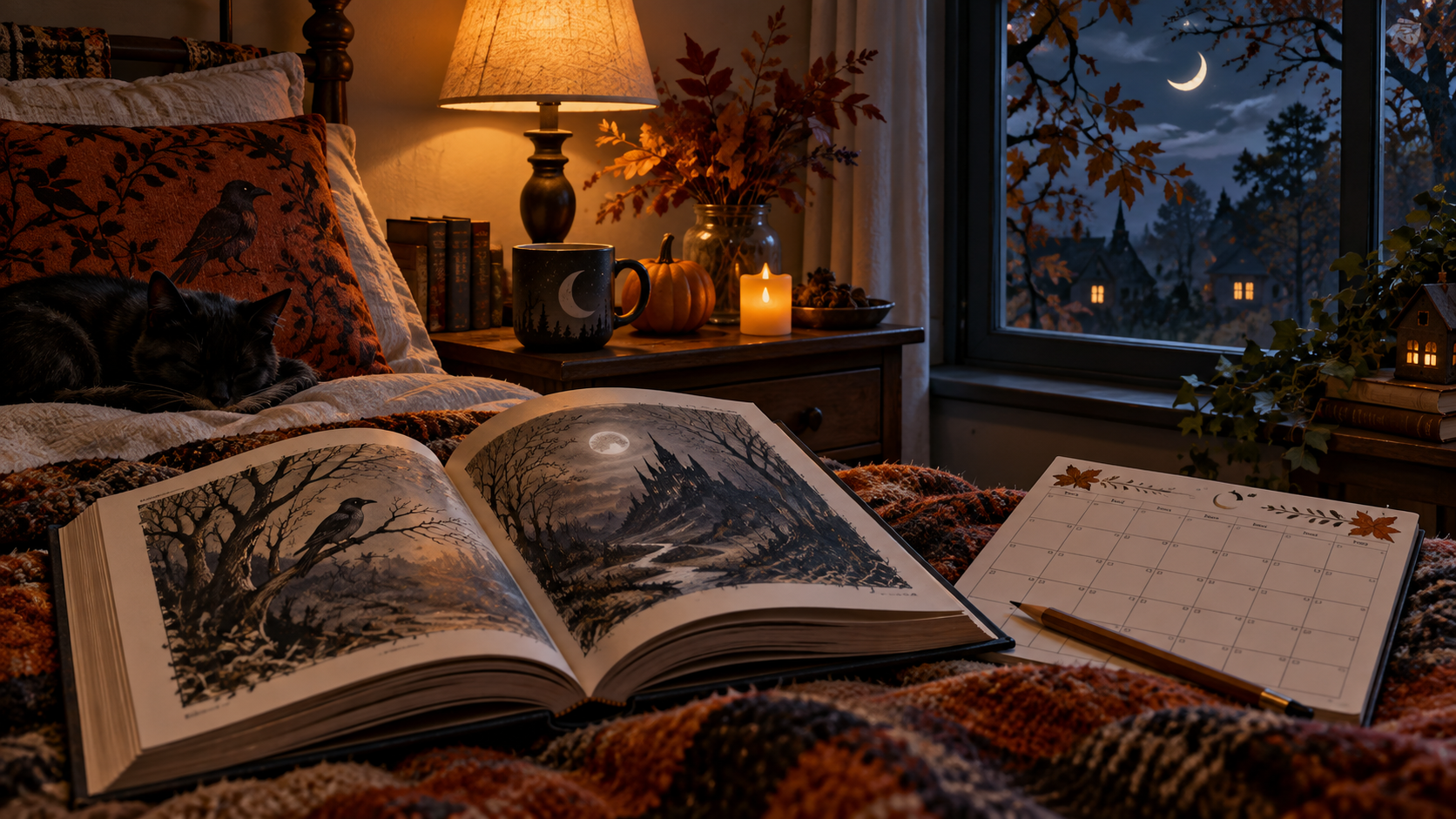
    Open storybook and blank calendar beside a bedside lamp, with October branches beyond the window

    Here’s the challenge. Starting tomorrow, October 1, read one story before bed every night. Thirty-one nights, thirty-one stories, and the last one lands on Halloween.

    Each story takes about ten to twenty-five minutes. That’s shorter than an episode of anything you’d watch instead.

    How it works

    1. Get the book. October 31 has exactly thirty-one stories, one per night. The ebook is $4.99 and free with Kindle Unlimited.

    2. Get the calendar. It’s a free printable with every night’s story, dateline, and reading time, and a box to cross off. Put it on the fridge. Get the calendar →

    3. Read the night’s story. In order is best. The book is built to build.

    4. Read the companion post. Every night I post a short piece here about the real folklore or history behind that night’s story, with no spoilers. Read it before the story for context or after it to find out what was real.

    5. Save the last one. Story 31 is the title story. Read it on Halloween, after dark.

    If you miss a night, double up. Nobody’s checking. Well, the calendar is.

    The 31 nights

    An October reading calendar held on a refrigerator with small notes

    Every story in October 31 takes place on October 31st. Only the year and the place change.

    Week 1

    • Oct 1 · In a Hand the Clerk Can Read · 1897, the Carpathian foothills · 12 min
    • Oct 2 · Two of Everything · Present day, a research station on the ice · 17 min
    • Oct 3 · Counting Them Out · 1948, County Clare · 9 min
    • Oct 4 · The Show Only Runs Once · 1954, a traveling carnival · 16 min
    • Oct 5 · Nine Lives, All Spent · 1653, Massachusetts Bay Colony · 18 min
    • Oct 6 · I Told You Three Times · Present day, an Aegean island · 16 min
    • Oct 7 · Wrong Girl, Wrong Door · 1975, rural Texas · 18 min

    Week 2

    • Oct 8 · A Little Trouble in the Walls · 1544, outside Hildesheim · 15 min
    • Oct 9 · Those Who Came After · 1923, an English estate · 23 min
    • Oct 10 · The Low Road · 1799, the Hudson Valley · 15 min
    • Oct 11 · Keep Your Hands Where the House Can See Them · 2003, Ohio · 19 min
    • Oct 12 · Short a Partner · 1833, New Orleans · 19 min
    • Oct 13 · He Walked Far Enough Away · 1918, Northern Ontario · 18 min
    • Oct 14 · Stingy Jack’s Lantern · The Irish countryside, and long before · 19 min

    Week 3

    • Oct 15 · Full Measure · 1974, rural Minnesota · 17 min
    • Oct 16 · He Keeps Good Time · A small town, any year · 17 min
    • Oct 17 · Cut the Lines · 1830s, the North Atlantic · 16 min
    • Oct 18 · Every Door in the House · 1962, an English manor · 22 min
    • Oct 19 · Ground Worth More Than Food · 1996, South Texas · 17 min
    • Oct 20 · Stone That Wasn’t Praying · 1400s, a French cathedral town · 16 min
    • Oct 21 · Everything Wants Something Back · Present day, New England · 18 min

    Week 4

    • Oct 22 · A Coat That Did Not Fit · Victorian London · 22 min
    • Oct 23 · Say It Again, Slow · 1994, Louisiana bayou country · 16 min
    • Oct 24 · The One That Came Back Instead · 1810, the Welsh hills · 16 min
    • Oct 25 · An Appointment Without a Date · 1665, London · 19 min
    • Oct 26 · It Trades For It · 1950s, a New England fishing village · 19 min
    • Oct 27 · A Thing Fed Late · 1986, Nebraska · 16 min
    • Oct 28 · Not Ready for the Word · 1904, Prague · 18 min

    The last three

    • Oct 29 · Not Going Anywhere This Time · 1970s, an American suburb · 19 min
    • Oct 30 · Whose · 1931, Bavaria · 20 min
    • Oct 31 · October 31 · Present day, a small town · 26 min

    Why a story a night works

    October is supposed to be the scary month. For most of us it turns into a month of meaning to watch something frightening and ending up rewatching the same three movies.

    A story a night fixes that. It’s short enough to fit around a workday, and building a habit is part of the pleasure. By the third week you’ll be looking forward to that last half hour before bed. By the last week you won’t need the calendar to remind you.

    It also works well read aloud. Story 3, Counting Them Out, runs about nine minutes and is the best one to try that with.

    Read along with other people

    If you post about it, tag the night: #31NightsOfOctober. Tell me which story got to you. I’ll share favorites on the blog and on Facebook, and I read every reply.

    The rules

    1. One story a night.

    2. Read it after dark if you can.

    3. If a story tells you not to answer, don’t answer.

    4. Save the last one for Halloween.

    Get the free 31 Nights calendar →

    Get October 31 on Amazon →

    Night 1 starts tomorrow. It’s a farmhouse in the Carpathian foothills in 1897, and a boy is throwing stones at a doctor’s shutters.

    T. P. Grimbard

    —

    Tomorrow night: What Was a Strigoi? Romania’s Restless Dead Before Dracula

  • Why Every Story in October 31 Happens on the Same Night

    Why Every Story in October 31 Happens on the Same Night

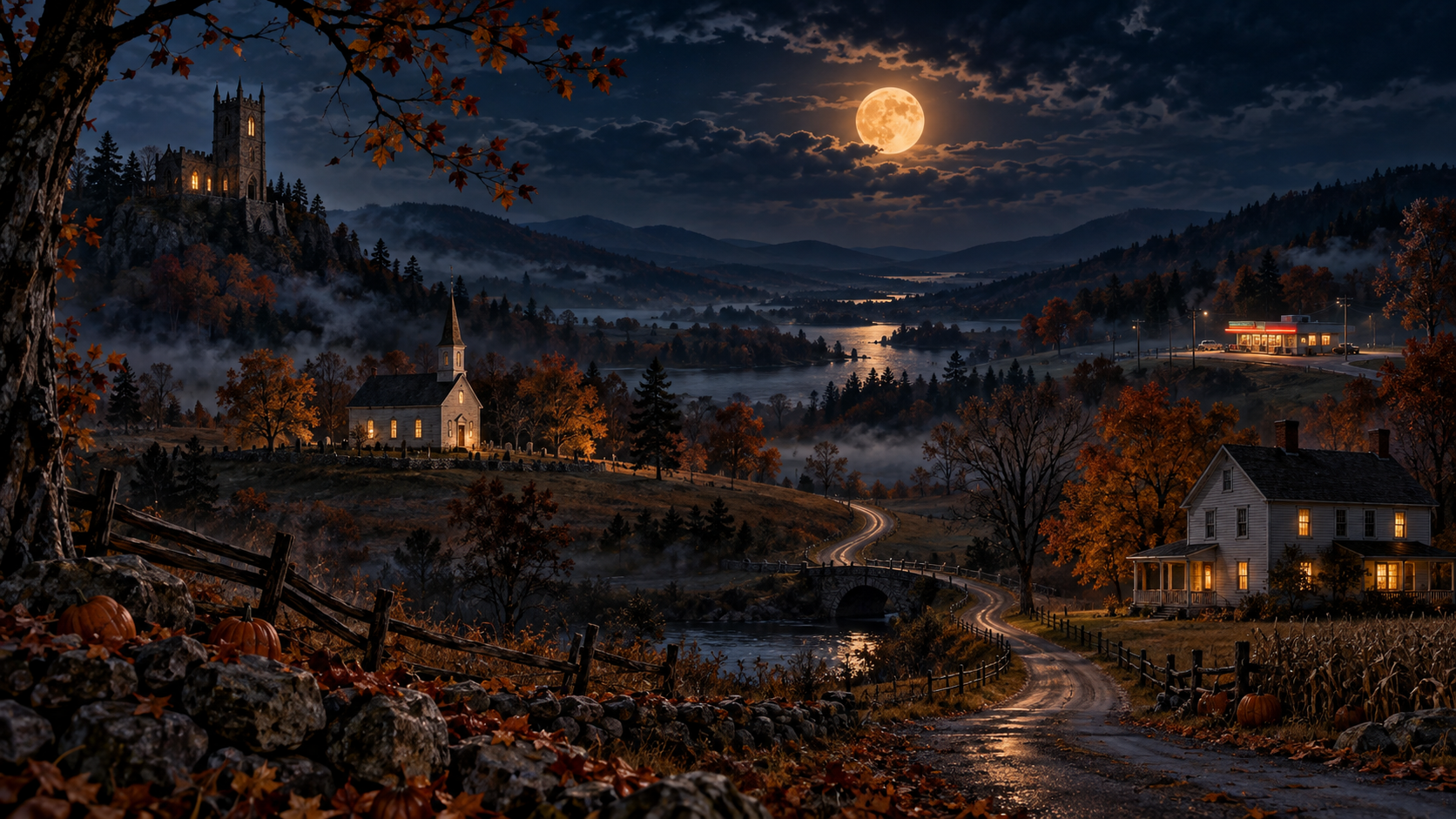
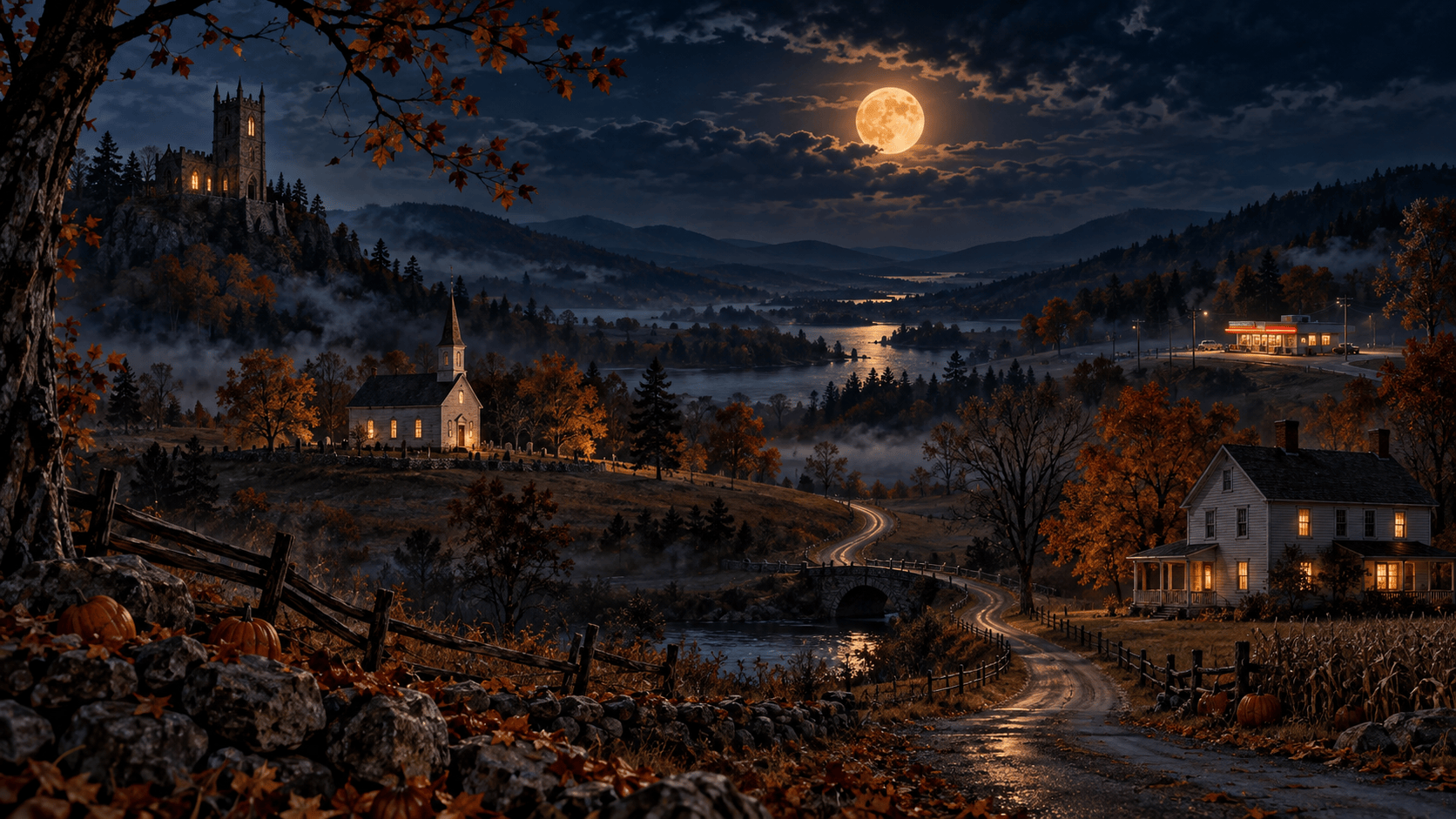
    Moonlit October valley connecting a medieval church, New England meetinghouse, farmhouse, and diner

    When I started October 31, I gave myself one rule: every story had to take place on the last night of October. Not the week of Halloween, and not “around the harvest.” The date, every time, printed at the top of the story like the heading on a field report.

    People have asked why. The short answer is that it’s a very old night, and it’s been a dangerous one for longer than anyone has called it Halloween.

    The night was busy long before the name

    In Ireland and Scotland, the night of October 31 opened Samhain, the turn from harvest into winter. It was understood as a hinge in the year, a night when the boundary between this world and the other one wore thin. Things crossed. People disguised themselves, kept fires, set food out, and thought hard about who they let through the door.

    The church laid its own calendar over the same days. November 1 became All Saints’ Day, or All Hallows. The night before it was All Hallows’ Eve, which is where Halloween comes from. November 2 is All Souls, the day for praying for the ordinary dead. For centuries, across Catholic Europe, the end of October was already the start of a season about the dead.

    Other things happened on that date too. On October 31, 1517, Martin Luther is said to have posted his ninety-five theses in Wittenberg, and Protestant countries still keep it as Reformation Day. In Mexico, the Days of the Dead begin as October ends. Different traditions, different reasons, and yet everyone seems to agree that the end of October is when you turn to face the dead.

    What the rule forced

    Writing thirty-one stories on the same date did something I didn’t expect. The date is constant, so everything else has to change. The century, the country, the language, the danger. Every story has to answer the same question differently: what does this night mean here, to these people?

    In 1653, in a Puritan village in Massachusetts Bay, the answer is nothing, officially. The Puritans didn’t keep saints’ days, so it’s an ordinary weekday. But a meetinghouse bell is ringing that isn’t the Sabbath ring, and a girl has to decide whether to walk out and watch.

    In 1665 London it’s the plague year, and the date means only that the weekly bill of the dead has come around again.

    In the 1830s it’s a date pressed into a whaling captain’s private chart, one he has been sailing back toward for nine years.

    In 1996 it’s a Thursday on a South Texas ranch, and the only thing anyone cares about is the third dead goat.

    In a few stories the date is the whole point: the banshee, Stingy Jack, the carnival that only runs one night a year. In others, the characters don’t even notice it’s October 31 until something makes them. That was the fun of it. Sometimes the date is the danger, and sometimes it just shows up on the calendar in the kitchen.

    The warnings are the thread

    Samhain table with candles and autumn fruit

    What ties the stories together is the thing the whole There Be Monsters series is built on: the old warnings.

    The book opens with a page called “The Warning.” Part of it reads:

    > The old warnings were rarely elegant. Do not answer. Do not look. Leave before dark. Feed it first. Count them twice. Keep your hands where the house can see them.

    >

    > They survive because somebody, somewhere, came home frightened enough to tell the next person what had worked.

    Every story is about one of those rules and the person who has to decide whether it’s true. A country doctor who trained in Vienna and doesn’t believe in the valley’s precautions. A woman in a 1544 household who set the bowl down wrong. A trapper who knows his partner always made a point of being under a roof with a fire going before dark on the last night of October, and never asked why.

    On October 31 the rules are strictest, so it’s the best night to find out who breaks them.

    Why thirty-one, and why in order

    Thirty-one stories, one for every night of the month. You can read October 31 in any order you like. Every story stands alone. But the order isn’t random. The early stories are quieter and the pressure builds through the month. The last story is the title story, set in the present, in a small town, and it’s the one where all the warnings in the book begin sounding at once. It’s meant to be read on Halloween.

    That’s what the 31 Nights challenge is: read one story each night in October and finish on the thirty-first. There’s a free printable calendar with every night’s dateline, and I’ll post a companion piece here for each story covering the real history or folklore behind it. Get the calendar →

    The date is the same for everyone

    That’s what I like most about the rule. Every character in the book, from the 1400s stonecutter to the waitress in the diner tonight, is standing on the same night of the year. None of them know about each other. All of them are listening for something.

    This year you’ll be standing on it too.

    Get October 31 on Amazon → · Free with Kindle Unlimited

    T. P. Grimbard

    —

    Previous: The Banshee Doesn’t Scream, She Keens · Next: Witches’ Familiars: Cats, Courts, and Massachusetts Before Salem

  • October 31 Is Out: Thirty-One Warnings for the Darkest Night

    Cover of October 31, a There Be Monsters anthology of Halloween folk-horror stories

    Get October 31 on Amazon →

    Ebook $4.99 · free to read with Kindle Unlimited

    October 31 is live.

    It’s thirty-one stories, all of them set on the same night. The earliest is set in a French cathedral town in the 1400s, and the last one happens tonight. In between there’s a whaling ship, a plague year, a Prague attic, a trapline in the Ontario bush, a Louisiana funeral home, a Nebraska farm with a letter on the kitchen table that nobody wants to open.

    Every story runs on one idea. The old warnings (do not answer, leave before dark, feed it first, count them twice) were not superstition to the people who made them. They were instructions. Someone came home frightened enough to tell the next person what had worked. The stories in this book follow the people who have to decide, on the worst night of their lives, whether to believe them.

    Read the opening

    This is how the first story begins. It’s the page that shows up in Amazon’s Look Inside, so if it works for you, the rest of the book will.

    > In a Hand the Clerk Can Read

    > October 31st, 1897 — a farmhouse in the Carpathian foothills.

    >

    > The boy who came for Dr. Emil Coțofană did not knock. He threw stones at the shutters until one split, and by the time Emil had the window open he was already shouting up, winded. The bride would not wake right, and Vasile Petrescu was tearing the house apart after somebody who knew what to do.

    >

    > Emil dressed in the dark rather than spend a match and took up his father’s bag: lancets, quinine, the brown bottle of carbolic he had carried back from Vienna and never once opened here, because nobody in this valley trusted a wound cleaned with anything that did not smell of church.

    >

    > At the coat pegs he glanced at the calendar without meaning to, and the thought that arrived was not a physician’s thought. It was one flat word.

    >

    > Again.

    >

    > He could not have said what he meant by it. He put his hat on and went out and did not examine it, which was the most characteristic act of his professional life.

    The valley knows something Emil has spent nine years trying not to know. The story is about what happens when a trained man is the only one in the room who hasn’t read the rules.

    Who this book is for

    • You like horror that builds instead of horror that splatters.
    • You read the footnotes. There’s a Note on Sources at the back that says what’s recorded history, what’s folklore, and what I made up.
    • You want something to read one piece at a time. Stories run from about ten minutes to twenty-five.
    • You already know that the scariest word in a ghost story is usually again.

    If you want gore, this isn’t your book, and I’d rather tell you now than find out from a review.

    What’s in it

    Banshee, strigoi, changeling, golem. A kobold behind the hearthstone. A carnival that takes half your ticket. Stingy Jack and his lantern. A chupacabra panic on a South Texas ranch in 1996. A haunted doll bought for four dollars at an estate sale. A boarding house in Victorian London where someone is being fed on, and a maid who knows exactly where to put the salt and iron, and where to leave a gap.

    Each story stands alone. Read in order, they move toward the title story, the thirty-first, where all the warnings start sounding at once.

    Read it one night at a time

    Starting October 1, I’m running the 31 Nights challenge: one story a night through October, ending with the title story on Halloween. There’s a free printable calendar with every night’s dateline so you can track where you are. Get the calendar →

    I’ll also be posting a companion piece here for each story, covering the real folklore or history it’s built from, with no spoilers. The first one goes up tomorrow: the Irish legend of Stingy Jack, and why the jack-o’-lantern was never about pumpkins.

    Formats

    The ebook is out today and enrolled in Kindle Unlimited, so if you subscribe, it’s free to read. The paperback and hardcover are on their way for anyone who wants a copy on the shelf or plans to give one as a gift before Halloween. I’ll post here when they’re live.

    One ask

    If you read it, leave a review, even two lines. For a new book, reviews decide whether Amazon shows it to anyone else. An honest two-star review helps more than silence does.

    Get October 31 →

    Every warning was true once.

    T. P. Grimbard

    —

    Also in There Be Monsters: Then and Now · Deep Down · Among the Dead

  • 31 Stories, One Night: October 31 Is Coming

    Cover of October 31, a There Be Monsters anthology of Halloween folk-horror stories

    Here it is.

    October 31 is the next book in the There Be Monsters series, and it goes live tomorrow morning. Thirty-one stories. Every one of them takes place on the same date.

    That was the rule I wrote under. No story could happen on October 30 or November 1. Every account had to start on the last night of October, in whatever century and whatever country the story belonged to. Some are set on nights that nobody at the time would have called Halloween: a plague-year London parish, a medieval French cathedral town, a Puritan village where the word would have gotten you questioned. The date is the same. The people keeping it are not.

    What’s inside

    Each story opens with a dateline, the way a field report would. A few of them:

    • October 31st, 1897. A farmhouse in the Carpathian foothills. A country doctor is fetched in the dark for a bride who will not wake right.
    • October 31st, 1653. A village in the Massachusetts Bay Colony. The meetinghouse bell is ringing, and it isn’t the Sabbath ring.
    • October 31st, 1918. A trapline north of Hearst, Ontario. The first storm came early, and the man who knew the rules of the bush is gone.
    • October 31st, 1996. A ranch in South Texas. The third goat turned up dead on the tank dam, and that one got the sheriff’s office to send a deputy.
    • October 31st, present day. A diner in a small town. Hoofbeats cross an empty intersection after closing.

    There are banshees and changelings, a golem in a Prague attic, a house-spirit behind a German hearthstone who keeps careful count of what he is owed. There’s a carnival that only runs once. There’s a clock that someone has wound every Wednesday for longer than most marriages last.

    What it’s like to read

    This isn’t a gore book. If you’ve read Then and Now or Deep Down, you know what to expect: slow dread, real history, and people making practical decisions after the impossible has already walked in. The monsters come from the folklore our great-grandparents took seriously. Each one has rules. Most of the horror comes from someone deciding whether to follow them.

    The book closes with a Note on Sources that says where each tradition comes from and what I invented. Some of these beliefs belong to living cultures, and I’d rather be honest about the line between the record and the story than pretend there isn’t one.

    Why thirty-one

    One for every night in October. Read one before bed and you finish the book on Halloween. The last story is the title story, and it’s the one where every warning in the book starts sounding at once. Save it.

    I’ll be posting a companion piece here for every story through October: the real legend or piece of history behind it, without spoilers. The first few go up this week. Start with the jack-o’-lantern on Thursday. It was never about pumpkins.

    Where this sits in the series

    If you’re new here: There Be Monsters is an anthology series built on one line, every warning was true once. Each book follows ordinary people far enough past certainty to find out why a rule, a superstition, or a story existed in the first place.

    Then and Now paired horrors across time, the old version and the modern echo. Deep Down went below the water and under the ground. Among the Dead was about the dead who refuse to stay where the living put them. October 31 turns the series toward the night itself.

    You don’t need to have read the others. Every book, and every story, stands alone. But if you’ve been reading since the first one, you’ll recognize the voice, the datelines, and the kind of person who ends up alone in the dark trying to remember what their grandmother said.

    Why the datelines

    Every story opens the same way: October 31st, a year, a place. It’s the heading on a field report, and it does a job. Before the first sentence you already know where you’re standing, what century it is, and what the people around you are likely to believe. The dateline puts you in the room. The story makes you want to leave it.

    Tomorrow

    October 31 releases tomorrow in ebook, with print to follow. I’ll post the link here at 10 AM, along with the opening of the first story.

    If you want to read along with other people, the 31 Nights challenge starts October 1: one story a night, with a free printable calendar that tracks each night’s dateline. Get the calendar →

    Every warning was true once.

    T. P. Grimbard

    —

    Also in the series: Then and Now · Deep Down · Among the Dead

  • October 31 Arrives September 23: A Folk-Horror Story for Every Night

    October 31 Arrives September 23: A Folk-Horror Story for Every Night

    A candlelit writing desk with a black notebook, autumn leaves, and an October calendar

    If you are looking for new folk horror books for Halloween 2026, October 31 arrives Wednesday, September 23. It is the newest volume in the There Be Monsters series: thirty-one standalone horror stories, each beginning on October 31 in a different year and place.

    The dates range across centuries. The people in these stories do not share a country, a religion, or even a common idea of Halloween. What they share is the moment when an inherited warning stops sounding quaint.

    Somebody hears the hoofbeats that were supposed to remain a story. Somebody brings home the wrong object from an estate sale. Somebody discovers that the household rule everyone mocked was not designed to control the living.

    That is the promise of the book: every warning was true once.

    **Get October 31 on Amazon →**

    Want the release news, new stories, and reading-room notes delivered before the season outruns you? Join the Grimbard mailing list →

    The rule behind all thirty-one stories

    Every story had to begin on October 31. That restriction turned out to be less limiting than it sounds.

    Halloween is not a single, frozen tradition. The date gathers customs, church calendars, harvest practices, migration, commerce, family habits, and stories that have changed whenever people carried them somewhere new. In one century, October 31 is a vigil. In another, it is an ordinary working night. In another, children are wearing plastic masks while an older rule waits behind the modern one.

    That allowed the book to move through very different kinds of darkness without abandoning its central shape. One account opens in a Carpathian farmhouse in 1897. Another begins in a Massachusetts village in 1653. There is a North Atlantic whaling ship, a plague-year London parish, a South Texas ranch in 1996, and a modern small-town diner after closing.

    The date stays fixed. Everything surrounding it changes.

    The result is not a single continuous novel. It is a collection of complete stories linked by a night, a field-report structure, and the idea that folklore often preserves a practical instruction inside the supernatural one.

    What kind of folk horror is inside?

    The book ranges beyond the familiar image of an isolated village and a harvest ritual. Folk horror can grow anywhere a community inherits rules about place, behavior, obligation, or danger.

    Some stories deal with recognizable beings: banshees, changelings, a strigoi, a golem, a household kobold, and the thing modern witnesses called the chupacabra. Others begin with customs that seem smaller: stopping a clock after a death, leaving payment for a favor, refusing to carry a particular object across a threshold, or remembering which words should never be spoken at sea.

    There are also stories built from historical pressures rather than a single named monster. Epidemic years change how a cemetery operates. Economic collapse changes what a scarecrow means to the person looking across a failing field. A new technology or popular film can revive an older fear and give it a different vocabulary.

    The supernatural elements are fiction. The beliefs, places, occupations, and historical tensions underneath them have been treated as seriously as the stories allow.

    That distinction matters. Folklore is not an unlimited box of atmospheric props. Some traditions belong to living communities. Some old beliefs were used to harm disabled people, religious minorities, grieving families, or anyone inconveniently different. A horror story can acknowledge that history without surrendering its mystery.

    The book ends with a Note on Sources explaining where the traditions came from, which details are documented, and what was invented for the fiction.

    How dark is October 31?

    Seven weathered story cards arranged in a circle beside a candle

    This is a book of dread, consequence, and close encounters with the impossible. It is not built around a contest to produce the most gore.

    Violence occurs, and some of the history behind the stories is grim. But the central pleasure is the instant when a sensible person realizes the rule was accurate. The characters still have to decide what to do with that knowledge. They can follow the warning, misunderstand it, exploit it, or decide that it no longer applies to them.

    Most of the terror lives in that decision.

    Readers who enjoy haunted history, regional legends, old houses, strange records, dangerous landscapes, and supernatural rules will find several ways into the collection. Readers who prefer atmosphere to graphic excess can approach it without being promised a bloodless book or ambushed by a book interested only in spectacle.

    Three ways to read the book

    You can read October 31 straight through, but the structure supports three different routes.

    Read one story every night in October

    The obvious method is also the one the book was designed to reward. Begin on October 1, read one story before bed, and arrive at the title story on Halloween.

    Each story opens with a dateline, so the month becomes a journey through changing places and periods rather than a sequence of interchangeable scares. The stories are standalone, which means missing a night will not break a larger plot. You can catch up without rereading half a novel.

    Follow the folklore

    Readers interested in belief and tradition can move through the collection by subject: restless dead, household spirits, protective materials, death customs, regional monsters, and warnings attached to particular landscapes.

    The companion articles appearing here through October will examine the real history and folklore behind those stories without spoiling them. They are designed to give readers more than a promotional summary. Each one answers a question the fiction raises: what a strigoi was before Dracula, why sailors kept rules that looked irrational on land, or how newspapers assembled the mummy’s curse from unrelated events.

    Build a single-night Halloween stack

    Not everyone wants a month-long challenge. Choose several stories by length or theme and make a Halloween-night reading stack. Begin with a historical account, move to a regional legend, and save the title story for last.

    That approach turns the anthology into something closer to a private late-night broadcast: different voices reporting from the same date, each unaware of what is happening elsewhere.

    Where the book fits in There Be Monsters

    October 31 stands alone. You do not need to read the earlier There Be Monsters volumes first.

    The series is connected by method rather than a continuing cast. Each volume takes old warnings seriously enough to ask why they survived. Then and Now pairs older horrors with modern echoes. Deep Down moves underground and below the waterline. Among the Dead follows the dead who refuse the arrangements made by the living.

    This volume turns toward Halloween itself—not only the modern holiday, but the older fears, obligations, and boundary nights gathered around it.

    New readers can begin here. Returning readers will recognize the datelines, the evidence-minded approach, and the kind of practical person who ends up confronting something no practical worldview prepared them for.

    You can also explore the complete There Be Monsters series or use the Grimbard Start Here page to choose a book by subject.

    The release and the October readalong

    October 31 releases in ebook on Wednesday, September 23, with print to follow. The Amazon page is live now.

    **Get October 31 on Amazon →**

    The 31 Nights readalong begins October 1. A free printable calendar tracks each night’s story and dateline. It is optional; the stories work in any order and at any pace. But if you enjoy giving October a structure, this one ends exactly where it should: with every warning sounding at once.

    Frequently asked questions

    What is October 31 by T. P. Grimbard about?

    October 31 is a collection of thirty-one standalone horror stories. Every story begins on October 31, but the settings span different centuries, countries, occupations, and folklore traditions.

    Is October 31 a novel or a short-story collection?

    It is a short-story anthology. The stories share a date, a field-report style, and the There Be Monsters approach, but each has its own characters and complete plot.

    Do I need to read the other There Be Monsters books first?

    No. Every volume and every story stands alone. Readers familiar with the series will recognize its methods and themes, but October 31 is also an entry point.

    Is October 31 extremely graphic?

    The book contains danger, death, and dark historical material, but it emphasizes atmosphere, folklore, consequence, and slow dread rather than continuous graphic violence.

    Can I use the book for an October reading challenge?

    Yes. The collection contains one story for every night in October. Reading one per night leads directly to the title story on Halloween.

    Thirty-one stories. One date. More warnings than anyone should hear at once.

    October 31 arrives September 23.