
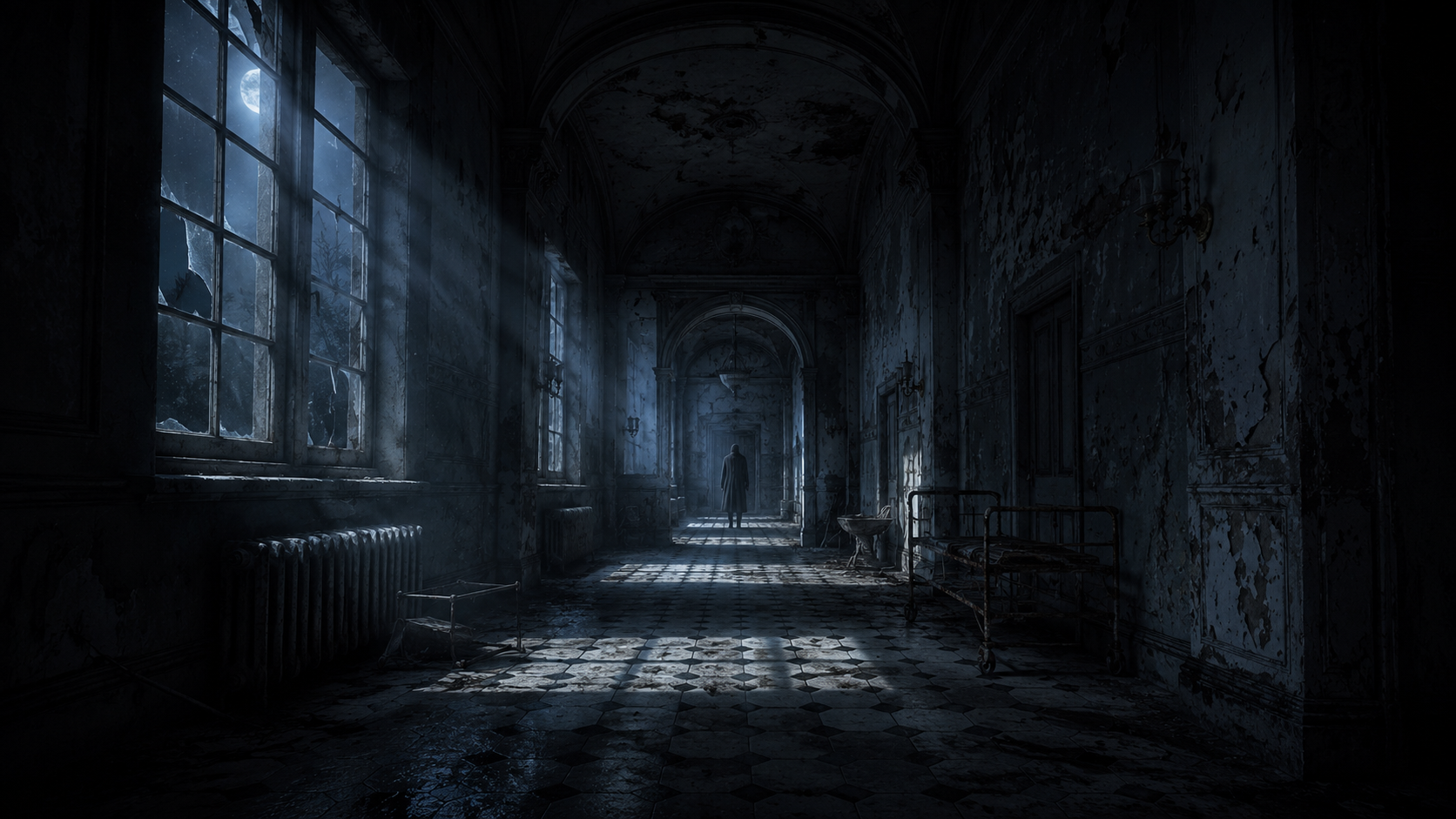
My partner and I have a tradition when we travel. Before we book anything, we look up what died there.
Not morbidly — or not only morbidly. It’s more that the historical weight of a place interests us, and that weight is usually attached to the bad things. The flood. The fire. The crime that nobody quite got to the bottom of. The building that used to be something else before it was what it is now.
We’ve done ghost tours in a dozen cities. We’ve walked through cemeteries at hours that made the groundskeepers nervous. We’ve stood in rooms where, by every account we could find, something happened that the people who lived through it couldn’t explain.
I want to tell you what that actually feels like — not what the tour guides say it feels like, and not what the skeptics say it feels like. What it actually feels like, from someone who pays attention for a living.
The First Thing Is the Cold
Not in the “cold spot” paranormal sense, though those are real enough. The first cold is the one you feel before you know why.
We were in a 19th-century hotel in Savannah — I won’t name it because Savannah has so many haunted hotels that naming one feels like endorsing a TripAdvisor entry — when I walked into a hallway on the third floor and stopped. My partner, two steps behind me, also stopped.
Neither of us said anything for a moment. Then she said, “Do you feel that?”
I did. Something in the air pressure, maybe. Something in the way the light behaved. There was no visible reason for either of us to stop.
The room at the end of that hallway, we found out later, was the one.
I’m not making a supernatural claim. I’m making an observation: human beings have threat-detection systems that are very old and often accurate, and old buildings that held bad events have a way of triggering them in people who aren’t defended against them. Whether that’s atmospheric or architectural or something genuinely paranormal is a question I don’t have a confident answer to.
What I do have is the memory of stopping in that hallway.
What the Tour Guides Know
Ghost tour guides are, almost universally, the most interesting people in any city.
They are amateur historians who became professional storytellers through necessity — nobody hires you to just stand on a street corner and recite municipal history. You need the ghost. But to get the ghost right, you have to get the history right. The haunting is the hook; the history is the substance. The best guides understand that the history is scarier than the ghost.
The guide who walked us through a preserved antebellum district in South Carolina didn’t dwell on the apparition sightings. She spent forty minutes on the documented history — the people who died there, the records that survive, the gap between what the official accounts say and what the oral tradition preserved. By the time she got to the story of what people claimed to see in the third-floor window, she didn’t need to sell it.
The thing had weight.
What the Skeptics Get Half Right
Skeptics are correct that most people on ghost tours experience what they came expecting to experience. Priming is real. If you tell someone a room is haunted and then dim the lights, you will generate phenomenological reports of haunting. This is not controversial.
What the pure debunking stance misses is that “you experienced what you came expecting to experience” doesn’t fully explain every account, and it doesn’t explain why the content of those accounts is so consistent across time, culture, and witness.
Recurring stories deserve a second look, but they are not automatically proof of a haunting. A repeated account may reflect a well-known local narrative, a striking feature of a room, or details passed between visitors. The useful question is not “can this be proven supernatural?” but “what is documented, what is reported, and what might have shaped the report?”
I hold those categories loosely. I can value an unexplained experience without treating it as evidence for a single explanation.
Why We Keep Going
The honest answer is that visiting these places is a form of paying attention to the dead.
History has a way of becoming abstract — names and dates and events compressed into summaries that carry no weight. Standing in the room where something happened does something that reading about it does not. The scale comes back. The reality of it.
I write horror about places. The specific texture of a room, a hallway, a ridge at dusk. I can’t generate that texture from research alone. I need to stand somewhere and let it do what it does.
My partner comes because she finds history genuinely moving, and because she has, on two occasions, experienced things she hasn’t found a satisfying explanation for. She isn’t frightened by those experiences. She finds them interesting. It’s one of the things I like most about her.
The cold in the hallway. The woman in gray. The man on the ghost tour who looked at you like you’d asked about roads.
These are not the same kind of evidence. But they’re all evidence of something. The places hold what happened in them, one way or another.
I’d rather go look than not.
Writing about haunted places and folk horror — join the Grimbard list for creature features, dark tourism notes, and new fiction: Join the Grimbard list
How to visit a haunted place well
- Start with the documented history, not the ghost story. A good local museum, archive, or historical society is more useful than a viral list.
- Respect the setting: cemeteries, memorials, private homes, and sites of violence are not props or after-hours attractions.
- Notice conditions before interpreting them. Light, noise, suggestion, fatigue, and unfamiliar architecture can all change what a place feels like.
- Leave room for uncertainty. “I do not know” is more interesting—and more honest—than forcing an experience into belief or disbelief.
If you are drawn to the way history, place, and an old story reinforce each other, read what makes folk horror different and browse the Monster Lore archive.