Category: Dark Reflections

Essays and meditations on horror, darkness, and the human condition.

  • What Makes Folk Horror Different From Regular Horror

    What Makes Folk Horror Different From Regular Horror


    The Wicker Man was released in 1973. It’s about a Scottish police officer who travels to a remote island to investigate a missing girl and finds a pagan community that practices ancient ritual. The ending is one of the most famous in horror cinema.

    It is also, by any conventional horror standard, almost free of scares. There are no jump cuts. The creature doesn’t appear. The violence, when it comes, is ritualized and communal rather than stalker-driven. For most of its runtime, it operates more like a mystery film than a horror film.

    And yet it is genuinely disturbing in a way that most horror films aren’t. The dread builds continuously and comes from somewhere that’s hard to name.

    That somewhere is the folk horror mechanism. Understanding it changes how you watch these films, how you read the fiction, and — if you write in the genre — how you build the thing.


    The Definition People Get Wrong

    Folk horror is not “horror set in a rural area.” That’s the most common misconception, and it produces bad readings of both what counts as folk horror and what the genre is actually doing.

    Horror set in rural areas can be any number of things — slasher film, creature feature, survival horror, hillbilly horror. Rural setting is a container. Folk horror is a specific content type within that container, and it can exist in urban settings if the conditions are met.

    What folk horror actually requires is this: a community with an internally coherent belief system or set of practices that an outsider does not share, whose beliefs turn out to be operative — meaning things work the way the community believes they do, not the way mainstream rational culture believes they do — and a collision between the outsider’s disbelief and the community’s knowledge.

    The horror in folk horror is not the monster. The horror is the revelation that the people you dismissed as backwards were right, and the framework you brought with you is insufficient, and you are now inside a system whose rules you don’t understand.


    The Visitor Is the Problem

    The structural move that almost all canonical folk horror makes is the same: an outsider enters a community, disbelieves the community’s practices, and pays for the disbelief.

    This structure is doing specific cultural work. It is not saying that all rural communities have secret rituals. It is saying something more uncomfortable: that mainstream modern culture has an arrogance about knowledge, a particular confidence that rational materialism has settled the questions that older traditions kept open, and that this confidence has costs.

    The visitor in The Wicker Man is a Christian who believes paganism is superstition. The horror is that the paganism works. The visitor in Midsommar is a grief-numbed American who believes she can observe Swedish folk practice as an anthropological curiosity. The horror is that the practice is not a curiosity.

    In both cases, the visitor’s certainty is not just wrong. It is the mechanism of their destruction. They cannot protect themselves against what they don’t believe in.


    The Community Is Not the Villain

    This is the distinction that separates good folk horror from exploitation horror wearing folk horror’s clothes.

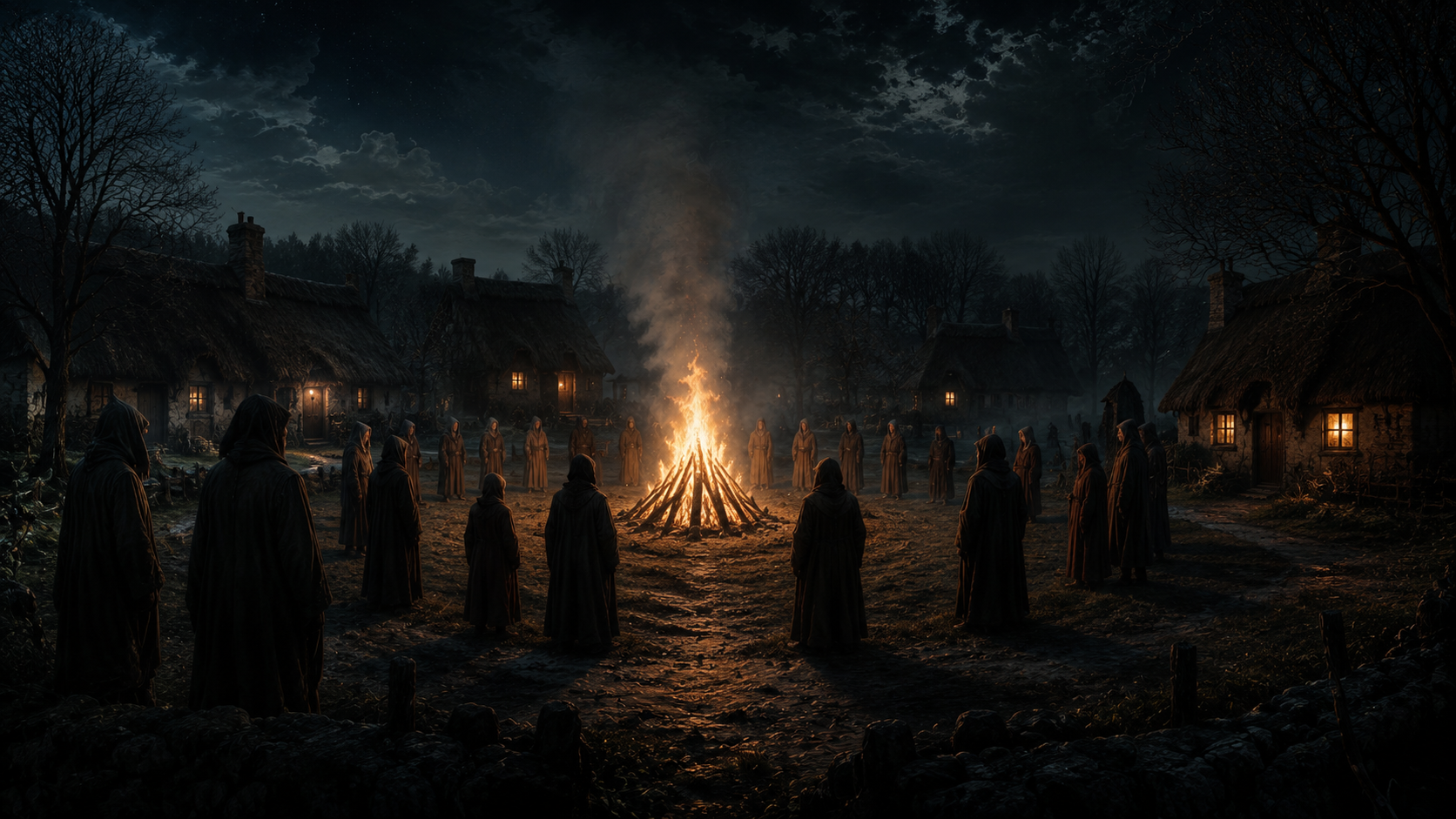
    In genuine folk horror, the community is not acting out of malice toward the visitor, or not primarily. They are following their own logic, honoring their own obligations, operating within a coherent moral system that simply does not have a place for the visitor’s survival. The wickerman is not built out of cruelty. It is built out of need — agricultural necessity, the logic of sacrifice and reciprocation that the community has tested over generations and found to be real.

    The horror is not that these people are evil. The horror is that they are right by their own lights, and their lights illuminate something real, and the visitor could not see it.

    Exploitation films that use rural or folk settings to portray communities as simply barbaric or degenerately violent are not folk horror. They are using the aesthetic of folk horror to deliver a different, less interesting product: the fantasy of urban sophistication versus rural savagery, where the urban viewer never has to question their assumptions.

    Real folk horror asks the viewer to consider that the community’s assumptions might be the accurate ones.


    The Specific Dread It Generates

    Folk horror’s dread is epistemological, which is a fancy way of saying: it makes you uncertain about what is real.

    Most horror generates dread through threat. Something wants to hurt you. The threat is identifiable and external. Your survival depends on avoiding or defeating it.

    Folk horror generates dread through the possibility that your entire framework for understanding the world is wrong. Not that something dangerous is out there — but that you’ve been operating on false assumptions about what “out there” contains, and the people who live closer to it have always known better.

    This is a harder dread to shake because it doesn’t have a survival strategy. You can’t defeat it. You can’t outrun it. You can only revise everything you thought you knew.

    That’s what the best folk horror leaves you with. Not the image of something terrifying. The discomfort of uncertainty.


    Writing It

    If you’re writing folk horror, the single most important thing you can do is commit to the community’s logic. Not endorse it. Not explain it away. Commit to it — meaning, within the story’s reality, the community is right. The rules work. The practices produce the outcomes they’re designed to produce.

    The moment you equivocate — the moment you give the reader an out by suggesting maybe it’s all in the visitors’ heads, maybe it’s mass hysteria, maybe there’s a rational explanation — you’ve written a different story. You may have written a fine story. But you’ve left folk horror’s specific territory.

    The wicker burns. The ritual works. The visitor was wrong, and now they know it, and it’s too late.

    That’s the genre. Stay in it.


    If you’re reading this as a writer looking to work in the genre, some of my folk horror is in There Be Monsters: Then and Now — including “Rabbit Season,” which runs on exactly the rule-based logic described above.

    Join the Grimbard list for craft posts, folklore, and new fiction.

  • Horror Belongs in Summer

    Horror Belongs in Summer


    Every October, the internet rediscovers horror. Watch parties. Recommendation threads. The seasonal horror content machine cranks up and runs for thirty-one days and then it’s November and everyone moves on.

    This is a problem.

    Not because October horror is bad — it isn’t, most of it is great — but because October is actually the second best season for horror, and we’ve collectively agreed to pretend the best one doesn’t exist.

    Summer is horror’s natural home. It always has been.


    The Evidence

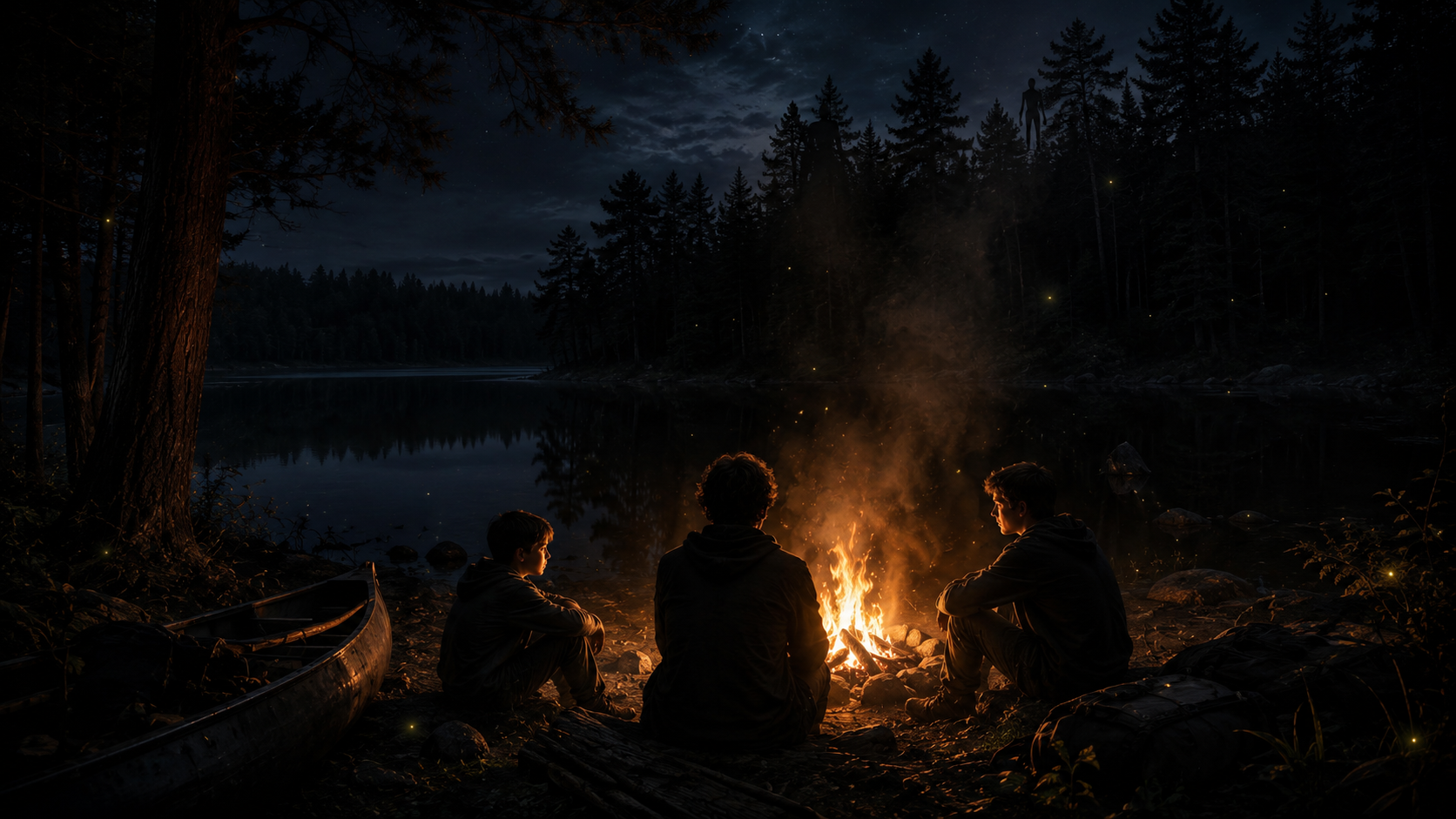
    The original campfire story is a summer artifact. It happened because people were outside after dark, away from civilization, with nothing but firelight between them and the woods. The campfire story doesn’t exist in winter; in winter you go inside. The original horror experience is a summer experience.

    The modern slasher film was invented by summer. Camp Crystal Lake is in July. The beach in Jaws is Fourth of July weekend — not accidentally. Steven Spielberg understood that a holiday crowd on a summer beach is a specific kind of vulnerability: relaxed, exposed, nowhere to go, trusting the water the way you only trust it when the weather is good.

    The heat does something to the logic of horror that cold doesn’t. Cold is a direct threat — it kills you through the obvious mechanism of cold. Heat is stranger. It warps. Things that seem reasonable in seventy-degree weather become genuinely unstable in ninety-degree weather. The edges of things get soft. The sensible explanations feel less solid. People do things they would never do in October.

    There’s a reason the Gothic tradition has a whole sub-category of sun-drenched horror. The English countryside in summer is terrifying in ways the English countryside in winter is not.


    The Specific Texture of Summer Dread

    The horror that summer makes possible is different from the horror that autumn makes possible.

    Autumn horror is about endings — the dying of the light, the thinning of the veil, the approach of winter. It’s structurally melancholy. The threat comes from the dark.

    Summer horror is about the wrong thing happening in the light. The swimmer who doesn’t come back. The cabin that’s always been fine before. The trail you’ve hiked every year since you were a kid that feels, this year, different. The body at the bottom of the lake that the clear water makes visible.

    Seeing the threat is, in some ways, more disturbing than not seeing it. The darkness in October gives horror somewhere to hide. The July sun doesn’t. When something is wrong in summer, it’s wrong in full light. And that is a specific, underappreciated kind of awful.


    What to Read This Weekend

    If you’re looking for summer horror specifically — the kind that fits this particular season — here’s where I’d point you.

    Jaws the novel (not just the film) holds up. Peter Benchley was writing about a specific community in a specific summer, and the book has a texture the film, great as it is, doesn’t quite replicate.

    Shirley Jackson’s “The Lottery” is technically a June story, and rereading it in summer hits differently than reading it in October.

    For something more recent, anything by Paul Tremblay that happens outdoors. He understands what sunlight does to a threat.

    And if you want something short: find the campfire story someone in your family tells. The one that got passed down. The one that’s probably not entirely true but nobody can say for certain that it isn’t.

    Those are the best summer horror there is.


    The Campfire Is Still There

    I write horror the way the campfire story works: specificity, a rule that something violated, consequences that feel inevitable in retrospect. You can read them in October — plenty of people do. But I wrote most of them in the summer, sitting somewhere warm, thinking about the specific wrongness that the light reveals.

    The best horror seasons are the ones you’re actually in.

    This is one of them.


    There Be Monsters: Then and Now — thirteen creature and folk horror stories. Good for campfire. Good for the Fourth.

    Get on the Grimbard list for the folklore and fiction that feeds this corner of horror.

  • Why Appalachian Horror Hits Different

    Why Appalachian Horror Hits Different


    There’s a scene I keep coming back to, not from any book or film, but from a conversation I had with an older man at a ghost tour in western North Carolina a few years back. He’d lived in the same holler his whole life. Someone on the tour asked him if he believed in the things we’d been hearing about — the lights in the woods, the shape that walked the ridge at night.

    He looked at them the way you look at someone who’s just asked if you believe in roads.

    “Believe in it,” he said. “I’ve seen it.”

    That exchange is, in miniature, what Appalachian horror is. Not atmosphere. Not aesthetic. Witness.


    The Geography Does Something

    Mountains do specific things to human psychology over generations. They cut off. They contain. They create what sociologists call “geographic isolation” but what feels, from inside it, more like the world forgetting you exist.

    The Appalachian range runs roughly 1,500 miles from Alabama to Newfoundland, with the densest cultural concentration in a band stretching from northern Georgia through West Virginia. The settlements that took hold there in the 18th and 19th centuries were often cut off from the nearest towns by terrain that made travel genuinely dangerous for significant portions of the year.

    That isolation does two things that matter for horror.

    First, it concentrates tradition. The oral histories, the rules, the stories that would have diluted over generations in more connected communities stayed intact. Practices that died elsewhere survived. Beliefs that modernized away in cities held their shape in places where modernity arrived late and partially.

    Second, it means the community becomes the authority. When there’s no external institution to appeal to — no sheriff an hour away, no hospital, no court — the community develops its own mechanisms for managing fear, conflict, and the things that happen in the dark that nobody has a good explanation for.

    Both of those conditions produce folklore with teeth.


    The Things That Live Here

    Appalachian folk horror has a specific creature catalog, and what’s striking about it is how local it is. The Wampus Cat. The Tailypo. The Bell Witch — not a ghost so much as a presence, a force, something that understood the Bell family well enough to hate them specifically. The Booger. The Raw Head. These aren’t imports. They’re not Greek mythology dressed in new clothes. They grew from this place.

    They’re also not uniform. The Tailypo legend varies significantly from county to county. What the creature wants, what it looks like, whether there’s any way to survive encountering it — these change based on who’s telling it and where. That variability is a sign of living tradition. Dead traditions calcify. Living ones adapt.

    The Wampus Cat is a good example. In some versions it’s a pre-contact shapeshifter, a woman transformed by the Cherokee as punishment for witnessing a sacred ceremony. In others it’s simply a mountain lion that has been wrong for too long, something that started natural and became something else by accumulation of wrongness. The two versions are doing different cultural work, but they share an anxiety: things here can change into what they are not, and you won’t know until it’s too late.


    What Hollywood Gets Wrong

    Most Appalachian horror films make the same mistake. They treat the mountains as backdrop for urban people to suffer in. The locals are either villains or props. The horror is generated by the gap between the sophistication of the protagonists and the otherness of the place.

    This is not Appalachian horror. It’s tourism horror — horror about what happens when you leave your comfort zone. The mountains are incidental.

    Real Appalachian horror is horror about the place — the way the land holds memory, the way communities deal with what they can’t explain, the way the isolation creates both tight bonds and the kind of silence that lets bad things persist. It’s the difference between a story set in the mountains and a story that could only be set in the mountains.

    The gold standard is still the oral tradition itself. Second to that, look at what writers like Ron Rash and Wiley Cash do with the region in their fiction — not explicitly horror, but working with the same raw material.


    Why It’s Having a Moment

    Appalachian horror has been mainstream-adjacent for a few years now, and I don’t think that’s coincidental. We’re in a cultural moment when a lot of people are asking questions about what gets preserved, what gets lost, what survives in communities that were cut off or overlooked, and what that survival cost.

    Appalachian folk tradition has answers to those questions. They’re not comfortable answers. They’re the kind of answers that involve the lights in the woods and the shape on the ridge and the old man who looks at you like you asked about roads.

    But they’re real answers, from people who were paying attention.

    That’s what the best horror has always been.


    My fiction lives in this territory — folk horror, creature stories, the kind of dark that grows in isolated places. There Be Monsters: Then and Now collects thirteen of them. Start there.

    For more folklore, regional legends, and the horror that feels like it came from somewhere — get on the list.

  • What Horror Knows About Fathers That Hallmark Never Will

    What Horror Knows About Fathers That Hallmark Never Will

    Father’s Day is a greeting card holiday pretending to be a human one.

    The cards show men grilling. Men fishing. Men asleep in recliners with the game on. The language is warm and rounded and careful, the way language gets when people are trying not to say the complicated thing. Best dad ever. My hero. The man, the myth, the legend. All of it true, maybe. None of it the whole picture.

    Horror knows the whole picture.

    The best horror fiction has always understood that fathers — really understood them — in a way that no greeting card company has the stomach to. The genre has given us Jack Torrance and his typewriter. Ray Molina sitting in a motel room at two in the morning, listening to his son sleep while something tapped from under the floor. Abel Crowder at a church table with his hands flat and his face the color of old lard, carrying sixty years of a dead man’s name — that last one from my own collection, There Be Monsters: Then and Now. Fathers who loved fiercely and held on too long. Fathers who sealed something up and told the children not to touch it. Fathers who stayed when every instinct told them to run — and fathers who ran when they had no other answer.

    That’s not a condemnation of fatherhood. That’s the truth of it. Fathers carry things. The good ones, the bad ones, the ones doing their best in a house that slopes and a life that costs more than they planned for. Horror just won’t let them put it down.

    This Father’s Day, we’re celebrating that.


    A Father’s Day Short Read — Out Today

    To mark the occasion, I’m releasing a brand new short horror story written specifically for Father’s Day. It’s the kind of story that gets at what the holiday actually is about: the things fathers protect their children from, the things they can’t, and the weight that passes between one generation and the next whether anyone meant it to or not.

    The Father’s Day Card is available right now on Gumroad.

    It’s a short read — written to finish in one sitting, ideally tonight. Consider it a different kind of Father’s Day gift. One that takes the holiday seriously.


    Gifts for the Horror Dad in Your Life

    If the father you’re celebrating has a shelf of paperbacks with broken spines and dog-eared pages, or a watchlist three seasons deep, or a habit of finding the one horror podcast nobody else has heard of yet — here’s what to get him.

    These are not the obvious picks. Skip the gift baskets.


    For the Dad Who Reads

    A collection he hasn’t found yet.

    The horror canon is deeper than most people go. Stephen King is the obvious entry. Shirley Jackson is the obvious next step. After that, things get interesting. If your dad has read The Haunting of Hill House and We Have Always Lived in the Castle and is looking for the next thing, point him toward Thomas Tryon’s The Other, which came out in 1971 and still has no business being as unsettling as it is. Or toward Robert Aickman’s strange stories, which are the closest thing to reading a half-remembered dream that the genre has ever produced.

    The Other by Thomas Tryon

    The Collected Strange Stories by Robert Aickman

    For the dad who prefers his horror American and rural and steeped in the kind of dread that comes from knowing a place too well, Laird Barron is the name most horror readers get to too late.

    The Beautiful Thing That Awaits Us All by Laird Barron

    And if he’s the kind of reader who wants something new rather than catching up on the canon — something he won’t find recommended everywhere else — my own collection There Be Monsters: Then and Now is linked horror stories set across generations of the same family. Abel Crowder, from the opening of this post, has his story here. It’s the kind of book that rewards a slow read and a quiet house.

    There Be Monsters: Then and Now by T. P. Grimbard


    For the Dad Who Watches

    Something he won’t forget.

    Before the screen: the right pair of headphones. Horror audiobooks and horror podcasts are a different experience through speakers than through something that actually isolates you. The Sony WH-1000XM5 is the standard recommendation for a reason — noise cancellation good enough to make the rest of the house disappear, sound detail that rewards a narrator who knows what they’re doing, thirty hours of battery so he’s not hunting for a cable halfway through something good.

    Sony WH-1000XM5 Wireless Noise-Canceling Headphones

    The Wailing (2016) is the best horror film of the last decade that most people outside the genre haven’t seen. A small-town detective, a sick daughter, a stranger in the woods. It runs two and a half hours and earns every minute. Your dad will be thinking about the ending for days and won’t be able to explain why he can’t stop.

    For something domestic and slower and deeply wrong in the way only the best slow-burn horror is, Hereditary holds up. If he hasn’t seen it, that’s the gift.

    If he has seen both and is looking for something older: Don’t Look Now (1973). Grief and fathers and the things we think we see when loss has rewired us. There’s a reason it’s still on every serious horror list fifty years later.


    For the Dad Who Has Everything

    A piece of the shelf.

    If your dad is a serious reader and collector, signed or limited editions from small press horror publishers are the gifts that end up displayed rather than buried in a pile. Cemetery Dance Publications puts out limited hardcovers of major titles with author signatures. Subterranean Press does the same. First editions of classic horror — real ones, not reprints — can be found through AbeBooks for less than people expect.

    Cemetery Dance Selected Fiction by Stephen King

    For something more affordable: a leather bookmark, a quality reading lamp, a Moleskine journal for a dad who writes in the margins of everything he reads. These are small things. The right small things matter.

    Moleskine Classic Hardcover Notebook

    BenQ e-Reading LED Desk Lamp


    For the Dad Who Creates

    Tools for the work.

    If your dad writes, or has a story he’s been meaning to get down, or keeps a notes app full of opening lines and goes quiet when you ask about it — get him something that treats the work seriously. A dedicated writing app license. A year of a craft newsletter. A copy of Stephen King’s On Writing, if he doesn’t have one, which remains the most honest book about writing that anyone has produced without meaning to write a book about writing.

    On Writing by Stephen King

    And if he’s ready to go from the notes app to the page, the single best thing you can give is time. Uninterrupted hours. The kids handled, the house quiet, the expectation removed. That’s free. It’s also the rarest thing most writing fathers have.


    The Part the Card Gets Wrong

    Father’s Day cards suggest that fatherhood is something you’ve already done. Past tense. A record to celebrate.

    Horror knows it’s ongoing. Something you carry into every room. Something that waits under the floor of wherever you are and taps until you deal with it, and the men who do well by their children are not the ones who sealed it up and put six screws in and hoped it would stay quiet. They’re the ones who eventually picked up the drill.

    Happy Father’s Day to the ones still holding it.


    The Father’s Day short story is available today only on Gumroad. Grab it here: The Father’s Day Card

    All book links are affiliate links. If you buy through them, a small commission comes back to support this site at no cost to you.