Tag: abandoned places

  • Why Abandoned Places Feel Haunted Before Anything Happens

    Why Abandoned Places Feel Haunted Before Anything Happens

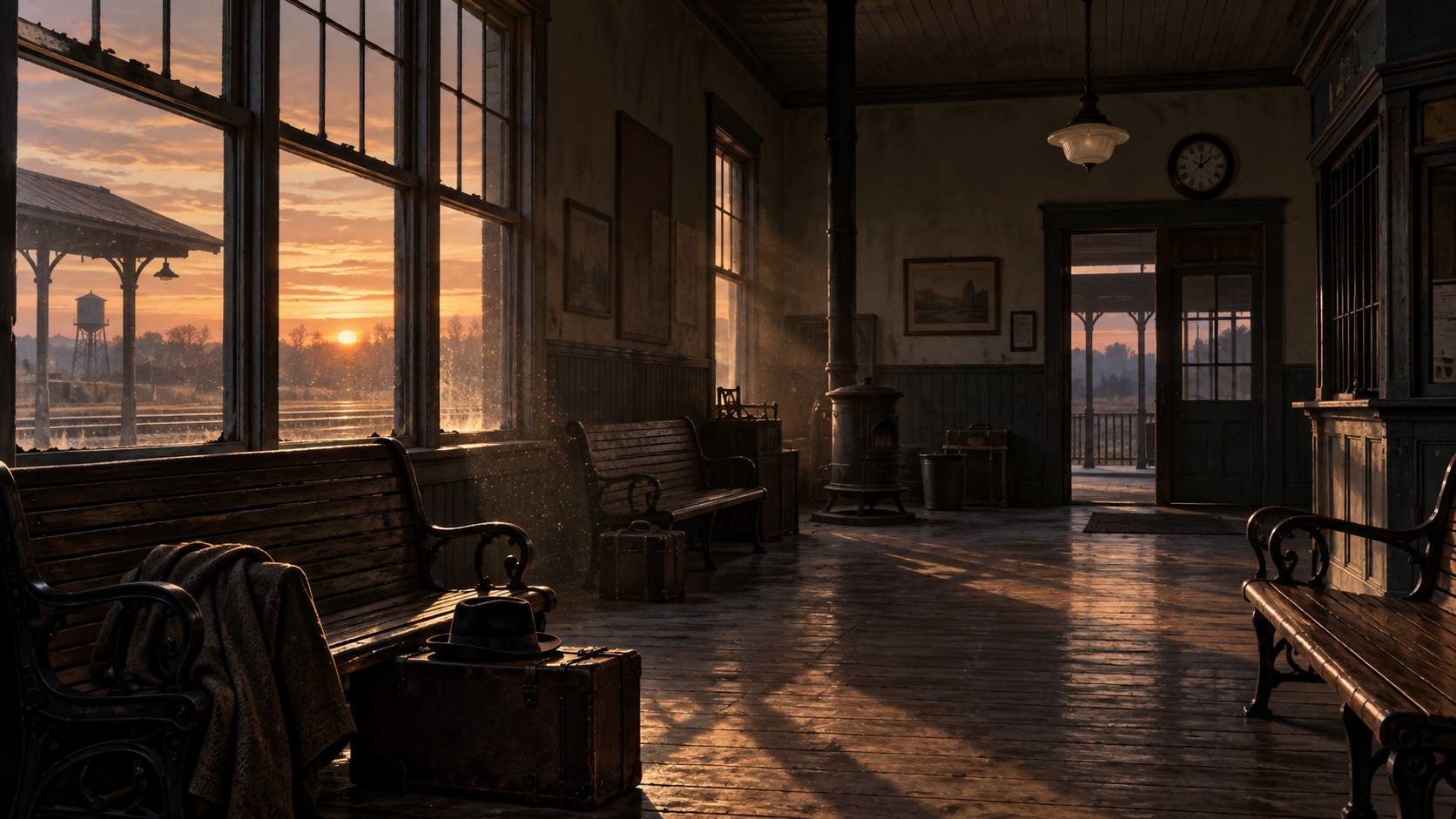
    A deserted railway waiting room at dusk, dust in the last window light

    Abandoned places feel haunted because they violate a familiar expectation: a room built for people is suddenly missing them, while the evidence of their presence remains. A chair faces a table. A calendar hangs where somebody once checked a date. Wind moves through a corridor that was designed to be quiet. Your mind supplies the absent occupants and begins asking why they left. No ghost has to appear for that question to feel urgent.

    This is not proof of a paranormal event, and there is no single scientific mechanism that explains every uneasy visit. It is a useful way to describe an experience many people recognize. Architecture gives us clues about human activity; decay scrambles them; uncertainty invites a story.

    The building still tells you what should be happening

    A school corridor implies bells, footsteps, and children changing rooms. A hotel desk implies a person ready to answer a question. An empty factory implies machinery that should be loud enough to drown out thought. When the building keeps its shape but loses its routine, expectation and reality no longer match.

    That mismatch is more effective than simple darkness. An empty field at night may be frightening, but it does not present the same precise absence. A place designed for occupancy seems to be waiting for someone. Even if you know its closure was ordinary—costs, relocation, redevelopment—the rooms can make the absence feel personal.

    This is why an abandoned site in a story should not be described only as “creepy.” What was it for? What behavior did it organize? Show the reader the missing action. A row of numbered hooks with no coats can do more work than a paragraph about shadowy energy.

    Traces make strangers feel almost present

    The most powerful objects are usually ordinary. A cup, a handwritten sign, a worn stair tread, or an outline left by a removed picture tells us somebody used the place repeatedly. These are traces, not messages. We do not know the person, but the object helps us imagine a gesture: the cup lifted, the stair climbed, the picture straightened.

    The temptation is to invent a complete biography from one clue. That is good fuel for fiction and poor historical method. A child’s shoe does not tell you why a building closed. An unmade bed does not prove a sudden flight. If you are writing about a real site, separate what records establish from what your imagination proposes. If you are writing fiction, use the gap deliberately; make the reader aware of how little the protagonist actually knows.

    A dusty table with one intact teacup and a square of unfaded wallpaper

    Silence changes the scale of small sounds

    People often describe an abandoned building as silent, but the silence is full of low-level activity. Water drips. Metal expands or contracts. Leaves scrape a broken pane. A distant vehicle sounds closer through open rooms. Because there is no ordinary human activity to absorb those noises, each one seems to ask for an explanation.

    In a horror scene, the strongest sequence is often simple: establish a repeated sound, let the character explain it, then change one part of the pattern. A drip stops when the character enters. A door taps three times after the wind dies. The reader is frightened by a failed explanation, not necessarily by volume.

    For another look at how stories exploit incomplete sensory evidence, read why forests feel scarier at night. The setting differs, but the practical question is the same: how much can you know from limited cues?

    Decay lets two times occupy one room

    A ruin is a visible disagreement between past purpose and present condition. Wallpaper still marks a home; moss now crosses the floor. A sign still promises a service; the business is gone. That double exposure makes it easy to imagine a past scene running underneath the present one. Gothic stories have relied on this effect for centuries, but modern offices, malls, and transit stations can produce it too.

    The effect is not merely nostalgia. A building can preserve evidence of exclusion, labor, failed promises, or environmental damage. The question “Who lived here?” should sometimes become “Who worked here?” or “Who was not allowed in?” History gives the atmosphere weight. A generic ruin can feel decorative; a place with a documented use can become morally difficult.

    Our Gothic reading path explores how fiction turns architecture into pressure. For a Grimbard route through places whose boundaries seem unreliable, browse the Lost Boundary Archive.

    A long empty hallway where daylight reveals layers of paint and water damage

    How to appreciate a ruin without entering it

    The romance of abandoned places must not obscure their real risks. The National Park Service warns that abandoned mine sites may contain unstable structures, hidden shafts, unsafe water, and dangerous air. Other derelict buildings can present different structural, environmental, or legal hazards. Do not enter a closed site for a photograph or a story prompt.

    There are safer ways to study the effect. Visit a publicly accessible historic site, take a guided tour, use a local archive’s photographs, or observe a building from a lawful public viewpoint. Read municipal or preservation records before deciding what happened there. The facts may be less sensational than a ghost story and more compelling.

    If you are a writer, make a field note in three columns: what you can see, what you can reasonably infer, and what you are inventing. That division protects real people’s histories while leaving plenty of room for fiction. It also gives your imagined haunting a stronger foundation: the reader senses where the evidence ends and dread begins.

    For readers, the same exercise changes how you look at photographs of deserted sites. Ask when the photograph was made, who owns the property, and what might have been moved out of frame. A dramatic image can be an invitation to research, but it is not a complete history. That little pause makes the eventual story you tell about the place more interesting and more honest.

    FAQ

    Does feeling haunted mean a place is paranormal? No. An uneasy feeling can arise from expectation, unfamiliar sounds, traces of former use, and uncertainty. It does not settle a supernatural question.

    Why are abandoned schools and hospitals especially unsettling? They are buildings with strong expectations of routine, care, and human presence. Their emptiness is therefore unusually legible.

    Is it safe to explore abandoned buildings? Do not assume so. Access may be prohibited, and deterioration can conceal serious hazards. Choose authorized visits and public archives instead.

    For more grounded explorations of eerie places, join The Grimbard Press. If you want the unsettling place to cross fully into fiction, explore the Grimbard books.

    Source: U.S. National Park Service, abandoned mineral lands hazards and safety. The article’s psychological framework is interpretive, not a clinical diagnosis.
  • Why Are Abandoned Amusement Parks So Scary?

    Why Are Abandoned Amusement Parks So Scary?

    Why Are Abandoned Amusement Parks So Scary?

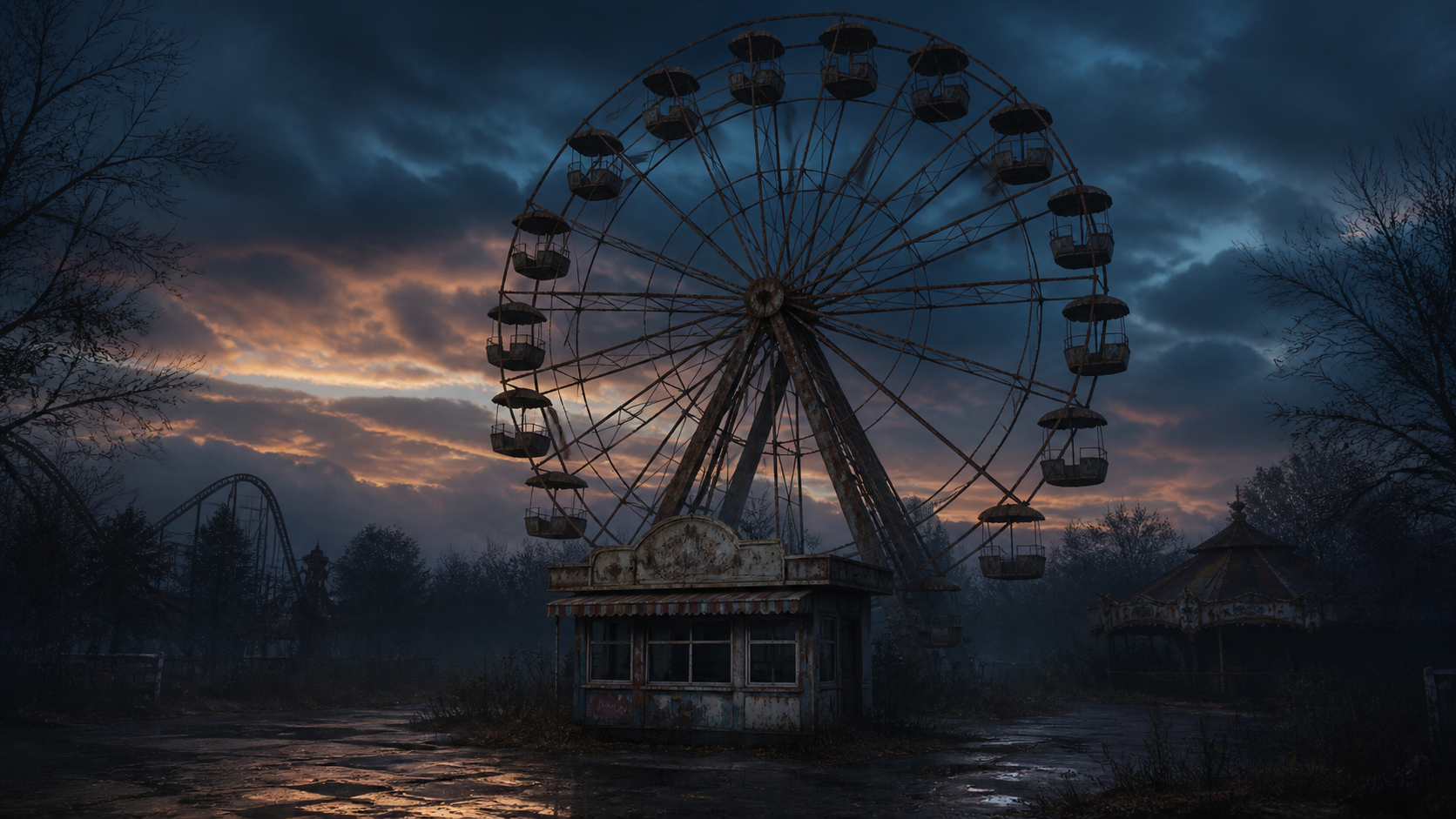
    The Ferris wheel is still there. That is the problem.

    If a building disappears, the mind can file it away as a finished thing. An abandoned amusement park refuses that convenience. Its gates remain shaped for arrivals. Its paths still lead toward rides. A ticket booth may stand with its little window intact, waiting for a hand that will never slide money beneath it. Everything speaks the language of a crowd, and there is no crowd to answer.

    Abandoned amusement parks feel scary because they are designed to manage pleasure in public. They depend on motion, noise, queues, bright paint, staff, and the shared understanding that the machinery is being watched. When the people and the supervision vanish but the rides remain, familiar signals turn inside out. The place looks like it has kept performing after its audience left.

    That response does not mean a closed park is haunted, cursed, or even dangerous. Many have ordinary histories of changing travel patterns, money, maintenance costs, and redevelopment. The fear comes from the mismatch between what the place promises and what it now shows.

    An amusement park is a machine for being together

    The first American parks were not invented as ruins. The National Park Service’s history of Glen Echo describes the rise of trolley and mechanical amusement parks as places where urban visitors could exchange routine for managed leisure. The rides mattered, but so did the contract surrounding them: someone sold the tickets, checked the restraints, played the music, swept the midway, and stood nearby when a child wanted to go home.

    That contract is almost invisible while a park is alive. A carousel is painted as if it emerged fully formed from childhood. A roller coaster announces danger, then proves that danger has been measured down to bolts, brakes, and height restrictions. The visitor is allowed to feel afraid because the institution has made fear safe.

    Remove the institution and the ride changes meaning. The roller coaster no longer says, you will be returned to the platform in two minutes. It says, someone once trusted this structure with their body. That is a much darker sentence.

    This is why a rusting Ferris wheel can carry more dread than an empty office block. Offices are made for work and can look merely vacant when work stops. A Ferris wheel is made for people looking outward together, for small screams, photos, and the ridiculous certainty of being brought back down. When it is still, it preserves the shape of enjoyment without any enjoyment inside it.

    Childhood symbols do not age politely

    Illustration comparing the social cues of a busy amusement park with an empty one.
    Illustration: a busy amusement park and an empty one use very different social cues.

    Parks borrow from childhood even when their customers are adults. They use exaggerated scale, cartoon faces, colored lights, animal figures, sweets, music that repeats without consequence. Those things work because they assume a protected world. A mascot head looks harmless when an employee in a visible costume walks beside it. It feels wrong when it appears abandoned in a damp storage room, because the social frame has dropped away.

    Decay adds another pressure. Nature does not understand the theme. Vines ignore the painted border. Rain takes the bright surface off a sign. A ride that was meant to move becomes a fixed object among weeds. The result is not simply “old.” It is two different calendars occupying one place: the park’s perpetual summer and the years that have actually passed.

    That clash can be poignant rather than frightening. Closed parks are often tied to local jobs, family rituals, and complicated histories. The National Park Service’s broader recreation theme study is a useful corrective to ruin-porn: these sites can be historic places worth interpreting and preserving, not just backdrops for a spooky photograph.

    Horror begins when the camera forgets that human history. It turns every empty ride into proof of catastrophe. Real places deserve more care than that.

    The fear is uncertainty with a painted face

    Psychology does not need to declare an abandoned park inherently terrifying to explain why it can unsettle us. Research on anxiety and uncertain threat, including a 2024 review by Blanchard and Canteras in Neuroscience & Biobehavioral Reviews, describes uncertainty as a condition that can intensify defensive attention. An empty park gives the eye plenty to monitor and very little to resolve. Is that building maintained? Is the floor sound? Is someone supposed to be here? Why does this scene look prepared for a crowd?

    The visual cues are contradictory. A ride promises movement but does not move. A pathway asks to be followed but leads nowhere useful. A sign offers instruction but has lost the world in which the instruction mattered. Horror loves that kind of incomplete command. It puts the reader in a place that still has rules, then removes the person who could explain them.

    That is also why abandoned parks make such efficient settings for fiction. They come with a ready-made map: entrance, midway, food stand, queue, exit. A writer can corrupt each familiar stop with minimal explanation. The terror does not require a monster behind every game booth. It may only require the ride attendant’s recorded voice to start speaking again.

    Do not confuse an empty park with permission

    Illustration separating abandoned-park atmosphere from real access and safety risks.
    Illustration: visual decay is not the same as permission to enter or a safety assessment.

    Images of closed parks can make access look casual. It is not. Abandoned property can be structurally unsafe, contaminated, protected, occupied, or subject to trespass law. Sites attached to disasters carry further obligations; they are not generic stages for someone else’s thrill.

    The better encounter is often a documented history, a preservation effort, or a photograph made with permission. Look long enough and the real stories are usually stranger than the fantasy of sneaking through a gate. A park may have closed because a rail line changed, because a town’s recreation moved elsewhere, because a storm rearranged the economics, or because maintenance outlasted the revenue. None of those explanations cancels the atmosphere. They give it weight.

    The park keeps its part of the bargain

    My own rule for this setting is simple: the strongest abandoned amusement-park horror does not treat decay as a monster costume. It treats the park as a promise that cannot admit it has failed.

    The loudspeaker still has a voice. The turnstile still knows the direction of entry. The little painted horses still face the same way. The absence becomes frightening because the machinery has retained its manners.

    That is the horror of a place built for joy. It has not become evil. It has become unanswered.

    If places that keep their rules after closing time are your kind of horror, On the Clock, After Dark follows the dread that begins when an ordinary job refuses to end at the door. For a different kind of recovered place, The Backrooms are just a warehouse that won’t end follows the terror of architecture stripped of purpose; lighthouses make a useful contrast, built to remain awake on behalf of people far away.

    > Join The Grimbard Press for Dead Ship, a free illustrated Subscriber Archive Edition, plus future dispatches on strange places and the things built to outlast us.

    FAQs

    Why do abandoned amusement parks feel more unsettling than other empty buildings?

    They retain cues for crowds, safety, motion, and childhood pleasure. When those cues remain without people or maintenance, the mismatch makes the site feel like an interrupted public ritual.

    Are abandoned amusement parks always dangerous?

    Not automatically, but closed property can have unstable structures, environmental hazards, security risks, and legal restrictions. Do not treat a photograph online as evidence that a site is safe or open to visitors.

    Why are Ferris wheels especially creepy when abandoned?

    A Ferris wheel is designed to move people visibly through open space and return them safely to the ground. Its stillness preserves the expectation of motion while denying it.

    What makes abandoned amusement parks useful in horror stories?

    They provide familiar routes, visible rules, and objects associated with protected fun. A story can make those expectations fail without needing to explain an entirely new world.

    Sources

    – National Park Service: Amusement Park Days at Glen Echo – National Park Service: Recreation National Historic Landmark Theme Study – Blanchard and Canteras: Uncertainty and anxiety