Tag: urban legends

  • Folklore vs. Urban Legend: What’s the Difference—and Why Both Still Spread?

    Folklore vs. Urban Legend: What’s the Difference—and Why Both Still Spread?

    An urban legend is a kind of folklore. The difference is not that folklore is old and urban legends are false.

    Folklore is a practice, not a museum shelf

    That is why the distinction matters to horror readers. A monster does not need to be ancient to be folklore. It only needs to become portable.

    Folklore is a practice, not a museum shelf

    People sometimes use “folklore” to mean old stories from a rural past: fireside tales, ruined castles, a creature in a wood that no longer exists. Folklorists use the word more broadly. Folklore is what groups make and carry together. It happens in offices, schools, online communities, military units, families, and neighborhoods as readily as it happens in a village.

    That does not make every repeated opinion folklore. A piece of folklore develops a recognizable form. It can be told again. It has a pattern people know how to complete. “Do not answer the voice outside after midnight” is more than a sentence once it has acquired consequences, variants, and a listener who knows not to test it.

    The useful question is not, “How old is this story?” It is, “What work does the story do for the people who repeat it?”

    Some stories teach caution. Some help people laugh at embarrassment before it happens to them. Some make a private fear public without asking anyone to confess it directly. Some turn a messy uncertainty into a creature with a face, a habit, and a place to stand.

    That last function is especially durable. What monsters represent in folklore is often less about a beast than about the boundary around a community: who belongs, what behavior crosses a line, and what happens after the warning is ignored.

    An urban legend wants to be believed for five minutes

    Urban legends usually arrive in a more realistic costume. They are often set in ordinary places and told with contemporary details: a specific brand, a particular road, a relative’s workplace, a screenshot, a photo that has been cropped just enough to keep the uncertainty alive.

    They also tend to favor what folklorists call a “friend of a friend” frame. The teller may not claim direct experience. That distance is not a weakness. It is a device. The story is close enough to matter and far enough away that the listener cannot easily check it.

    The Black-Eyed Children legend is a useful example. Its best-known modern form grew through late twentieth-century and internet-era retellings, not through a medieval village tradition. Yet its force comes from older patterns: a child at the door, hospitality turned dangerous, the threshold that cannot be crossed without permission. Read how the Black-Eyed Children urban legend learned to knock for the history of that particular story. The point here is that modern circulation did not make it less folkloric. It gave the legend a new route.

    An urban legend can be entirely invented, partly based on a real event, or built from several unrelated reports. Its factual status is not its defining feature. A legend is not a police report with worse paperwork. It is a story that asks: could this happen here?

    Why these stories spread even after correction

    Correction and circulation do not always move at the same speed. A factual correction has to explain dates, sources, context, and uncertainty. A legend has to make a clean impression.

    The story is shorter. It arrives ready for retelling. It offers the listener a role: the person cautious enough to warn someone else.

    That does not mean people who share legends are foolish. Most people are not conducting a field study when they repeat a story at midnight. They are signaling concern, amusement, identity, or the particular thrill of passing along a door that ought to stay closed.

    Digital platforms intensify the old process because images and captions travel together. A rumor can borrow the authority of a map pin, a grainy video, or an anonymous account that sounds official. But the basic movement is older than the feed: witness, retelling, embellishment, correction, new retelling.

    Folklore survives because it can accept the correction and keep the feeling. A story about a vanished hitchhiker can lose one location and gain another. A local ghost can move from a bridge to a highway exit. The name changes because the need for the story remains.

    The difference in one sentence

    Folklore is the broad set of traditions groups make and share. An urban legend is one modern form of folklore, usually told as a plausible warning about ordinary life.

    The line is useful, but it should not become a wall. Folklore is still being made around you. It has simply learned to carry a phone.

    When a story becomes a monster

    Horror understands something the fact-check rarely needs to say: a story can reveal a fear even when it does not document an event.

    The monster may not be the point. A monster gives the fear a body small enough to carry from one person to another. That is why the best legends do not end when a skeptic names the likely explanation. The explanation answers one question. The story is still asking another.

    If you like folklore that changes shape as it moves between centuries, There Be Monsters: Then and Now begins there: with creatures whose danger is tied to what people need them to mean.

    Follow the next warning. Join The Grimbard Press and receive Dead Ship, a free illustrated Subscriber Archive Edition, plus new monster lore and recovered stories.

    FAQs

    Is an urban legend the same as a myth?

    Not exactly. A myth often concerns sacred, cultural, or cosmological questions. An urban legend usually presents itself as a plausible modern incident. The categories can overlap in how they function, but they make different claims about setting and belief.

    Are urban legends always false?

    No. Some borrow from real events or recognizable dangers. Their defining feature is their patterned retelling, not a guaranteed factual status.

    Can internet stories become folklore?

    Yes. A story can become folklore when communities adapt, repeat, and recognize it beyond one original post or author.

    Why do scary legends use ordinary settings?

    Ordinary settings reduce distance. A monster in an inaccessible castle is contained. A stranger at an apartment door, a store parking lot, or a school hallway is not.Read What monsters represent in folklore for a related guide.

    Abstract early-internet message-board blocks in a dark room; no readable text.
  • Black-Eyed Children: How a 1990s Internet Legend Learned to Knock

    Black-Eyed Children: How a 1990s Internet Legend Learned to Knock

    Black-Eyed Children: How a 1990s Internet Legend Learned to Knock

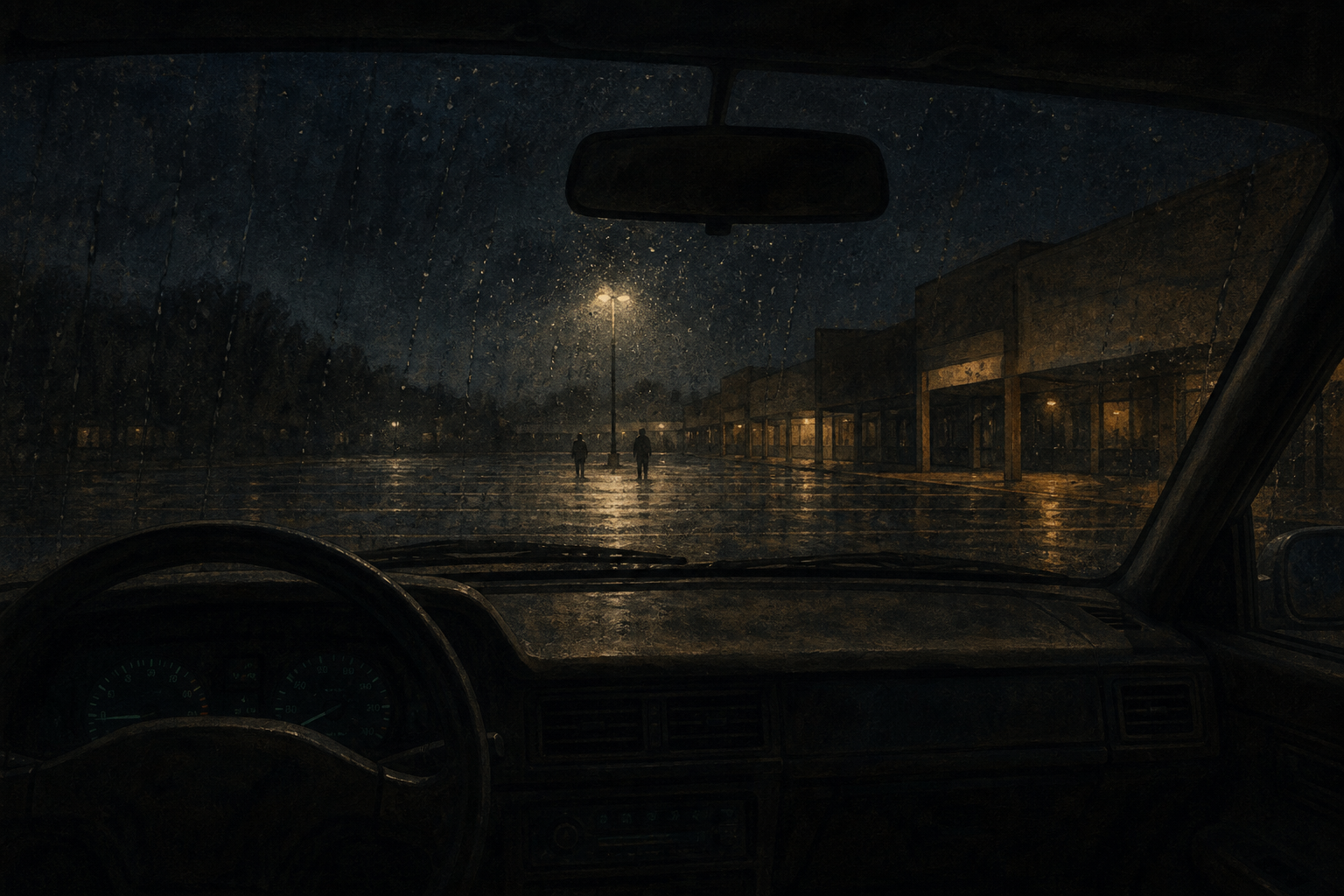
    Two children stand at a car window late at night. They want a ride. Or they need to use a phone. Or they ask, politely at first, to come inside. The person telling the story notices something wrong only after the request has already made courtesy feel dangerous: the children’s eyes are entirely black.

    The Black-Eyed Children—or Black-Eyed Kids—are one of the clearest examples of a modern urban legend becoming old in public memory. The story is often presented as ancient, vampire-adjacent folklore. The better-supported history is much more recent. It is tied to accounts circulating from the 1990s, especially a reported encounter by Texas journalist Brian Bethel in Abilene, then to the accelerant of online retelling.[^1]

    That distinction matters. A reported experience is not the same thing as evidence that supernatural children visit cars and doorsteps. But a story does not need paranormal proof to become real folklore. It only needs a form that strangers can repeat, modify, and recognize.

    The story’s likely ground zero

    The modern Black-Eyed Children legend is commonly traced to Brian Bethel’s account of an encounter in Abilene, Texas, in 1996. In the later version he discussed publicly, he described being approached in a movie-theater parking lot by two boys who asked for a ride. The encounter became frightening when he saw their eyes, which he described as completely black.[^1]

    Bethel treated the experience as something that happened to him. That is the beginning of a personal testimony, not a laboratory result or an independently verified supernatural case. The distinction is not meant to sneer at the account. It is how a useful archive keeps its shelves from collapsing: reported by a witness belongs on a different card from confirmed by evidence.

    Once the account circulated online, it acquired the features that make a story easy to carry. The setting could change from Texas to a rural road, a gas station, an apartment hall, or a front porch. The children could be younger or older. The request could be for a ride, a phone, a bathroom, or permission to enter. The eyes remained the same, because they solve the entire story in one image.

    Illustration: abstract blocks of an early internet message board glowing in a dark room; no readable text.

    Illustration: the legend did not need a campfire. It had an early internet connection.

    Why the request to enter is more frightening than the eyes

    Solid-black eyes are an efficient horror detail. They remove the ordinary information we expect from a face. But the legend’s real engine is the request for permission.

    The children usually do not attack. They ask. That makes the listener responsible for a decision before the story has explained the danger. A person who refuses a child at a door risks feeling cruel. A person who agrees may be admitting something that knows exactly how to use politeness.

    This is an old mechanism in a new costume. Folklore is full of threshold rules: do not invite the stranger in, do not open the door after a certain hour, do not accept a gift whose terms you do not understand. The Black-Eyed Children update that rule for parking lots, late-show theaters, and suburban porches. The monster does not need a castle. It needs access.

    That is why the story feels intimate even when it is obviously designed for retelling. It recruits the listener’s own manners. You know what you are supposed to do when someone asks for help. The legend makes that knowledge feel like a trap.

    A contemporary legend, not a recovered ancient one

    As the story spread, claims of older sightings appeared. That is common in successful folklore. Once a legend has a recognizable shape, earlier vague memories and unrelated stories can be pulled toward it. A strange child seen near a road decades ago becomes an earlier Black-Eyed Child because the new legend gives the memory a name.

    That process is older than the internet even when the delivery system is new. The Black Dog gathered reports, exaggerations, and local anxieties into a figure people could recognize on sight; the Black-Eyed Children do something similar with a request at the door.

    That backward growth is not fraud in every case. It is one way folklore works. People remember through available patterns. The problem begins when later retellings use those patterns to claim an unbroken ancient tradition that the record cannot show.

    The Black-Eyed Children are most interesting when we resist that temptation. They are internet-age creatures. Their pale faces, strange speech, and requests for entry combine several older anxieties, but their transmission belongs to the era of mailing lists, paranormal forums, reposted anecdotes, and stories that could circle the country without ever gaining an independent witness.

    The same process is visible in how Slender Man was born in a Photoshop thread. A new monster can become culturally durable faster than a regional legend once the network supplies the campfire.

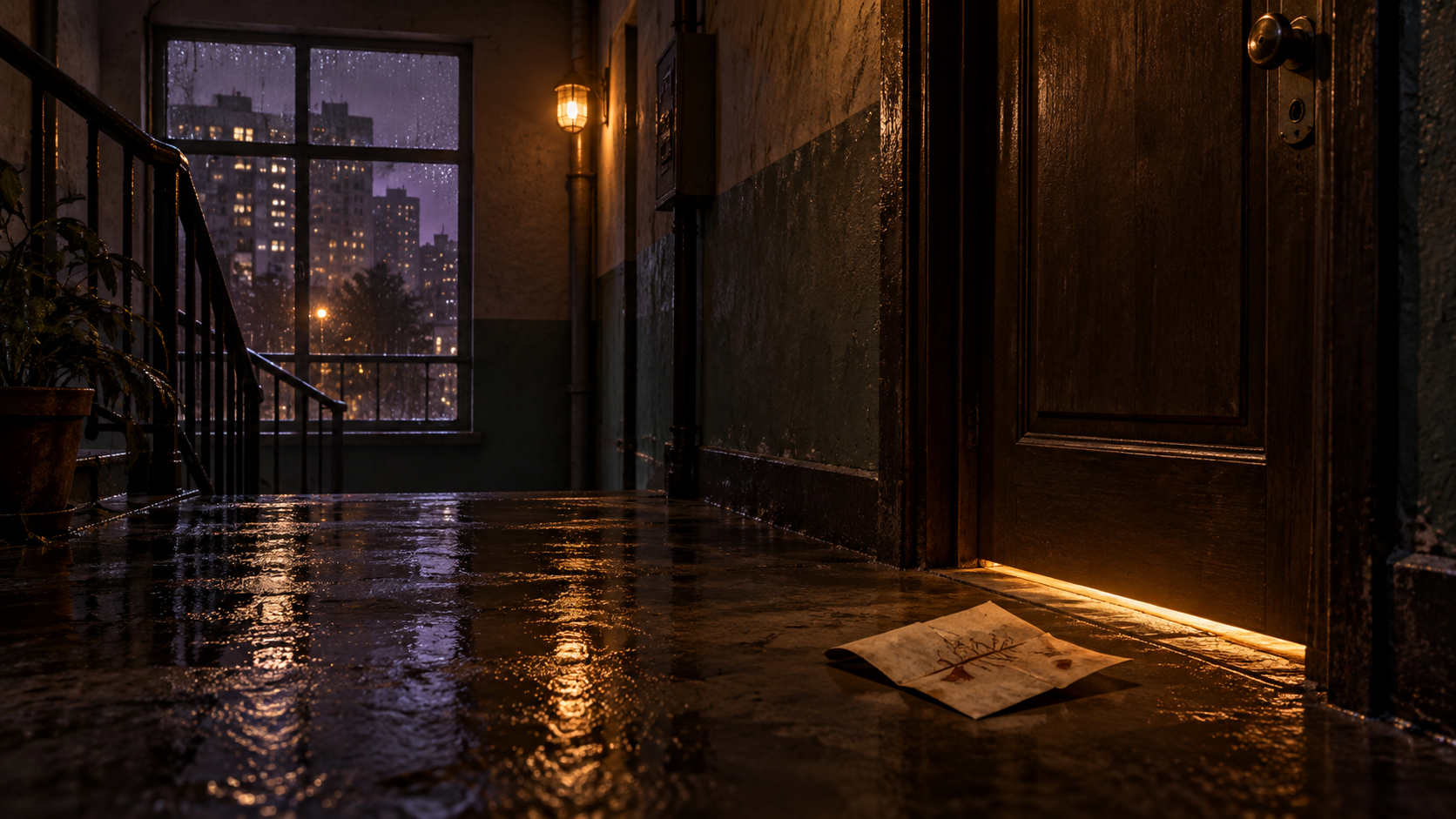
    Illustration: a rain-darkened apartment doorway with a chain lock and a bright threshold, no people visible.

    Illustration: the story is about the threshold long before it is about the eyes.

    Why the legend lasts

    The Black-Eyed Children compress several fears into a small scene:

    • a child who asks for help but does not feel like a child;
    • a face that removes the eyes we use to judge attention and emotion;
    • a request that makes refusal feel morally uncomfortable;
    • a door, car, or home that becomes a border rather than a refuge.

    It also lets the listener complete the frightening part. The story rarely provides a verified consequence. The narrator drives away, locks the door, or feels a wave of dread. That gap is useful. A named monster can be argued with. An unanswered request keeps working after the account ends.

    This is different from saying the legend is harmless. Some versions turn vulnerable children, strangers, or disability-coded appearance into easy threats. A careful telling should not confuse an invented monster rule with a reason to treat real people suspiciously. Horror is allowed to use the door. It does not get to make kindness itself look foolish.

    The Grimbard reading: folklore now moves at the speed of recognition

    The Black-Eyed Children are proof that folklore did not end when people stopped gathering around one fire. It changed its infrastructure.

    The first telling may have been a single person’s account. The creature that survives now is made from every person who knows which details must remain: black eyes, a request, a threshold, and the awful feeling that the decision has already been made for you.

    For more files on the stories that outgrow their first telling, join The Grimbard Press and receive Dead Ship, a free illustrated Subscriber Archive Edition. It begins with a document, a vanished crew, and a rule about what not to trust in the dark.

    FAQs

    Are Black-Eyed Children real?

    There is no reliable evidence that Black-Eyed Children are supernatural beings. They are best understood as a modern urban legend built from reported encounters and repeated online storytelling.

    When did the Black-Eyed Children legend begin?

    The modern legend is commonly associated with a reported 1996 encounter in Abilene, Texas, and later online circulation. Claims of a much older stable tradition are difficult to document.

    Why do Black-Eyed Children ask to be invited in?

    The request for entry creates the story’s main tension: it turns ordinary politeness and the safety of a threshold into a decision the listener fears getting wrong.

    Is this the same as creepypasta?

    It overlaps with creepypasta and internet horror, but it also works as contemporary folklore: a flexible story told as if it could have happened to someone nearby.

    [^1]: Emma Cieslik, “Death as a Child: The Modern Legend of the Black-Eyed Children”, Atlas Obscura (2024).

  • Spring-Heeled Jack: The Victorian Terror That Kept Leaping

    Spring-Heeled Jack: The Victorian Terror That Kept Leaping

    Spring-Heeled Jack: The Victorian Terror That Kept Leaping

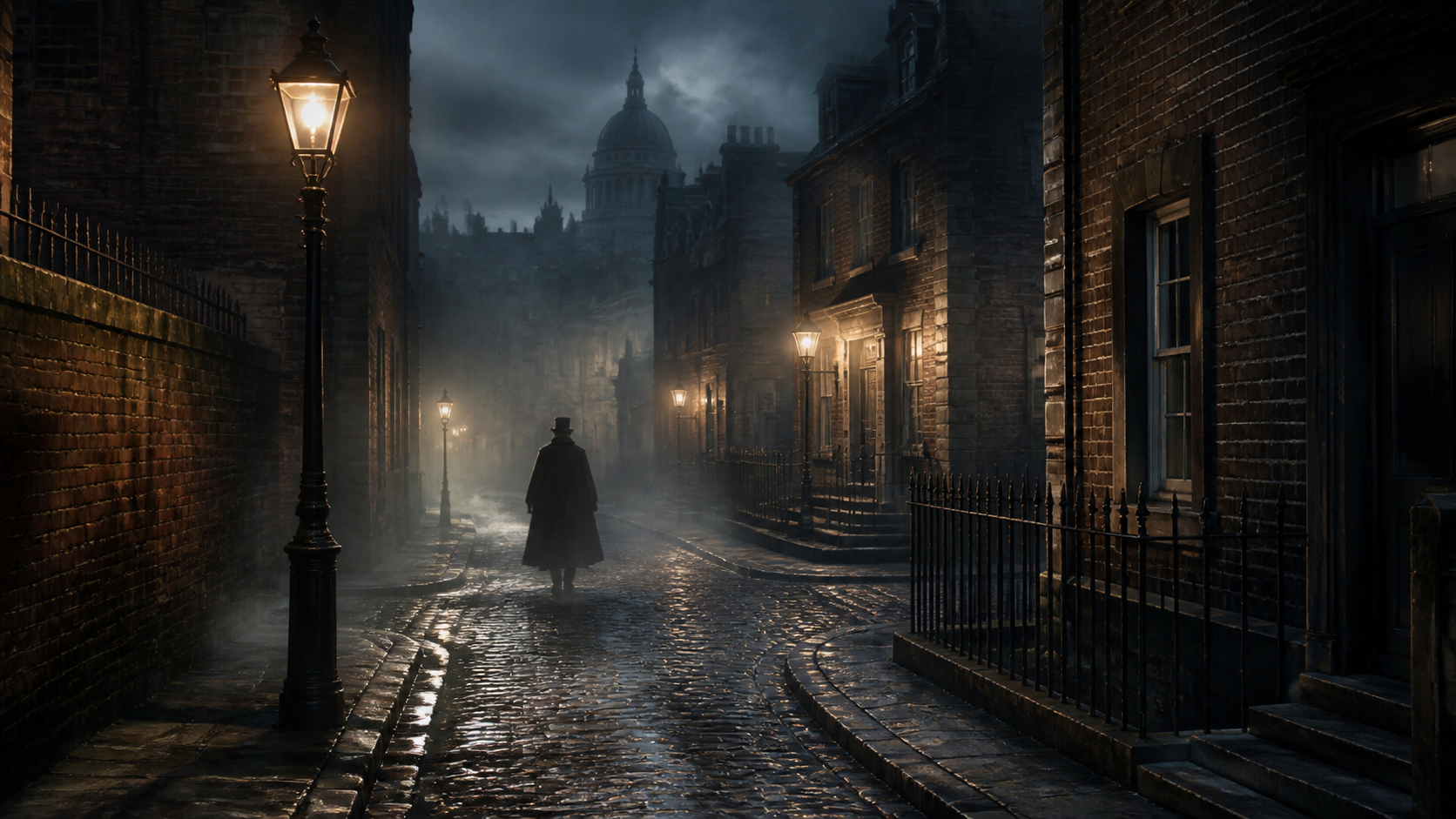
    London did not wake up one morning to find a monster on its roofs. It woke up to letters, rumours, complaints, newspapers, and a name that could travel faster than any person wearing claws.

    Spring-Heeled Jack is often described as a Victorian demon: a tall figure who attacked people, breathed fire, and escaped by jumping impossible walls. The safer historical answer is more interesting. The legend emerged from a cluster of reports and public alarm in London in 1838, then changed through newspaper repetition, later sightings, popular fiction, and the appetite for a villain who could appear wherever a dark street needed one.

    The record supports a real public scare and reports of assaults. It does not establish a supernatural creature, a single culprit, or a tidy solution. Spring-Heeled Jack is a useful lesson in how an urban legend becomes durable: it does not need one stable body. It needs a city ready to recognize the same fear under new clothes.

    The first thing to establish is the date

    A scholarly study, The Legend of Spring-Heeled Jack: Victorian Urban Folklore and Popular Cultures, identifies 9 January 1838 as a crucial public moment. At a Mansion House session, the Lord Mayor of London addressed a complaint about a figure alarming women in suburban districts. Contemporary reporting and later retellings quickly made the story larger than any single letter.

    That sequence matters. The earliest evidence is not a photograph of a leaping devil. It is a civic response to reports. The city was being asked to decide whether a set of frightening stories pointed to a criminal, a prank, a panic, or something stranger. The answer was never settled in a way that could close the file.

    It is tempting to begin with the most cinematic details: luminous eyes, claws, a mouthful of flame. Resist that temptation. Such details became part of the legend, but the responsible question is always: which report says this, when was it printed, and how far is it from the alleged event?

    Reports are evidence of fear, not automatic proof of every detail

    Illustrated evidence ladder for the Spring-Heeled Jack legend.
    Illustration: contemporaneous reports and later retellings carry different evidentiary weight.

    In February 1838, newspapers reported alleged attacks associated with the name Spring-Heeled Jack, including the widely repeated account involving Jane Alsop. The British Newspaper Archive preserves searchable records for contemporary coverage, including March 1838 reporting that used the name. Those papers are invaluable, but they should be read as newspapers: documents of what was alleged, believed, sensationalized, and argued in public.

    That does not make the people named in reports disposable. An allegation of assault is not a campfire accessory. It is a claim about harm. The legend has often swallowed the human scale of those reports because the monster is easier to remember than the frightened person at the door.

    There may have been imitators. There may have been more than one offender. There may have been exaggeration, misidentification, or journalists improving a story to make it travel. A confident article has to leave room for all of those possibilities rather than choosing the most theatrical one as fact.

    Why a leaping figure fit Victorian London

    Spring-Heeled Jack belongs to a city of expanding suburbs, gaslit streets, crowded print, and uneven information. A stranger could be close enough to touch and still be impossible to identify. News could spread faster than verification. A creature who crossed walls and vanished at the edge of a lamp’s light gave those conditions a face.

    The name itself does narrative work. “Jack” is familiar, almost casual. “Spring-heeled” is physical. It gives the unknown a method of escape. The figure can be pursued in every retelling because he is designed to get away.

    That is different from an older monster rooted in one wood, cave, or churchyard. Spring-Heeled Jack is portable. He can be moved from London to another town, from a report to a penny dreadful, from a possible attacker to a mask for every attacker who comes after. The legend’s mobility is its survival mechanism.

    The monster outlived the suspect

    Illustration showing how reports, newspapers, and later fiction spread the Spring-Heeled Jack legend.
    Illustration: the legend spread through reports, newspapers, and later fiction.

    Popular retellings have tried to give Jack a title, an aristocratic identity, a mechanical explanation, or a supernatural anatomy. None has settled the history. A research bibliography compiled by Mike Dash is valuable mainly as a map of the many sources and claims that accumulated around the case; it is not permission to choose the flashiest claim and call it the answer.

    The uncertainty did not weaken the story. It made it adaptable. A solved criminal case ends with a name and a sentence. An unresolved figure can reappear whenever a newspaper needs a fright, a writer needs a villain, or a neighbourhood needs a warning about the dark.

    Modern folklore operates the same way. Slender Man’s birth in a Photoshop thread was unusually well documented, yet the character spread because different people could add their own fragments. Spring-Heeled Jack had nineteenth-century versions of that network: letters, papers, gossip, and cheap print.

    An evidence ladder for Jack

    The story becomes clearer if we sort its ingredients instead of blending them.

    Documented public record: a January 1838 civic response; contemporary press coverage; reports made under the name Spring-Heeled Jack.

    Reported events: individual encounters and alleged assaults described by witnesses or newspapers. These deserve careful language: “reported,” “alleged,” and “according to the account.”

    Later legend: a fixed visual design, impossible leaps, particular identities, and a single continuous career extending across decades. Some parts may have roots in earlier reporting; none should be treated as one verified biography.

    That ladder does not drain the story of dread. It restores the thing that makes it effective. The monster is not powerful because he can jump a wall. He is powerful because everyone is already looking over it.

    The street is the monster’s natural habitat

    There is a difference between a ghost that haunts one address and a figure who makes the walk home feel unstable. Spring-Heeled Jack transforms the ordinary route: the front door, the lane, the edge of a streetlamp. He makes the city’s promise of visibility fail at exactly the point where people rely on it.

    That is why he belongs beside the Headless Horseman, though their landscapes differ. Both figures turn travel into an encounter with a story that arrives before the rider does. But Jack is sharper and more modern. He is the monster of a city learning that public information can make danger larger without making it clearer.

    For legends that mutate with every generation, There Be Monsters: Then and Now follows the creatures that change because we need them to. And for future evidence-minded monster files, join The Grimbard Press and receive Dead Ship, a free illustrated Subscriber Archive Edition.

    FAQs

    Was Spring-Heeled Jack real?

    The historical record shows real reports, public concern, and newspaper coverage in 1838. It does not prove that a supernatural being existed or identify one confirmed person behind every report.

    When did the Spring-Heeled Jack legend begin?

    The London public scare is closely associated with January 1838, when the Lord Mayor addressed complaints about a frightening figure. Reports and retellings grew rapidly afterward.

    Did Spring-Heeled Jack really breathe fire?

    Flame-like effects appear in later and contemporary descriptions, but the claim comes through reports and folklore rather than verified physical evidence. It should be presented as a reported detail, not a settled fact.

    Why did the legend last so long?

    The figure could be adapted to new streets, new newspapers, and new fears. Its uncertainty made it more reusable than a fully solved crime or a monster tied to one location.

    Sources

    – The Legend of Spring-Heeled Jack (JSTOR) – British Newspaper Archive: Spring-Heeled Jack search results – Mike Dash research bibliography

  • Was the Mummy’s Curse Real? How Newspapers Built a Horror Legend

    Was the Mummy’s Curse Real? How Newspapers Built a Horror Legend

    The curse has a perfect first victim.

    George Herbert, the fifth Earl of Carnarvon, helped finance Howard Carter’s search for the tomb of Tutankhamun. The burial chamber was opened in February 1923. Carnarvon died in Cairo that April. A mosquito bite had become infected; blood poisoning followed. The sponsor was dead, the tomb was open, and newspapers had the shape of a story before the excavators had finished clearing the rooms.

    The mummy’s curse was not real in the supernatural sense. No evidence shows that opening Tutankhamun’s tomb caused a chain of deaths, and no inscription in that tomb promised death to everyone who entered. But the legend was not invented from nothing in 1923. Ancient warnings against tomb violation, a century of European mummy entertainment and fiction, colonial anxiety, and sensational reporting were already waiting. Carnarvon’s death made them look like one story.

    The victim came after the plot

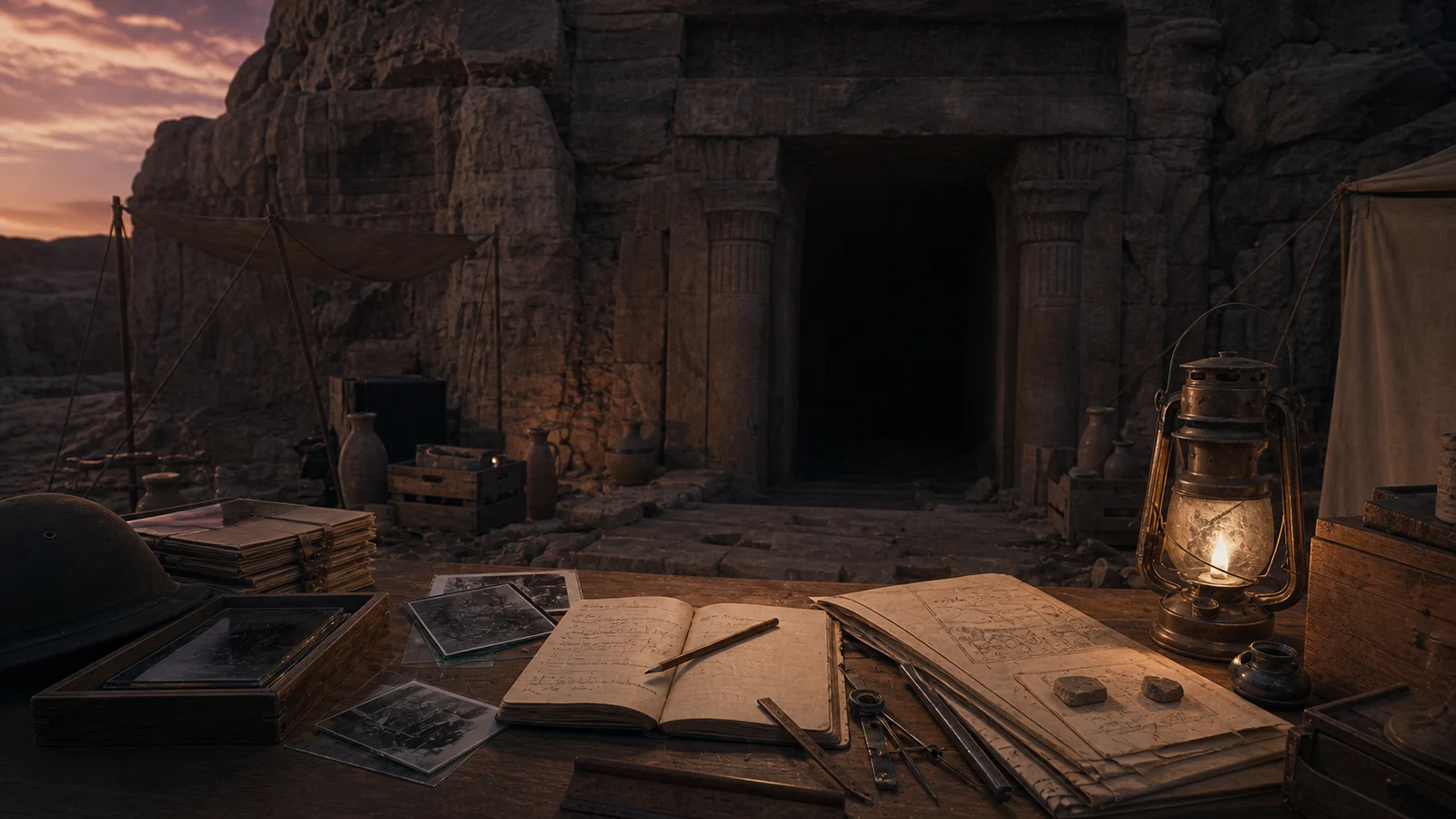
    Howard Carter found the first step leading to Tutankhamun’s tomb in November 1922. By the end of that month, he had made a small opening and looked into an antechamber crowded with objects. The formal opening of the burial chamber followed on February 16, 1923.

    Then Carnarvon died.

    The cause was not mysterious. Contemporary and later accounts identify blood poisoning after an infected mosquito bite. The timing, however, was irresistible. A wealthy Englishman had entered the sealed resting place of a king and died within weeks. The facts arrived already arranged like gothic fiction.

    Later lists expanded the curse’s reach. Anyone who visited the tomb, handled an object, knew Carter, or died unexpectedly could be added. Survivors were less interesting. Carter—the man most closely associated with opening and excavating the tomb—lived until 1939.

    That selective accounting matters. A 2002 survival study summarized by HISTORY compared Westerners present for openings or examinations with others connected to the excavation and found no significant association between supposed exposure and survival. National Geographic notes that only six of the 26 people present when the tomb was opened died within the next decade.

    The curse survives by counting the dead and treating the living as irrelevant evidence.

    Mummies were frightening Europeans before Tutankhamun

    The discovery did not teach Europe to fear a mummy’s revenge. It gave an existing story the most famous tomb in the world.

    For centuries, Egyptian human remains had been collected, traded, ground into supposed medicine, publicly unwrapped, displayed, and written into European fantasies. That history is stranger and uglier than the movie version. The mummy did not begin as a bandaged actor walking with both arms extended. It began as a dead person removed from a culture and made into an object.

    Nineteenth-century entertainment helped turn that object into an avenger. Egyptologist Dominic Montserrat traced the popular curse concept to theatrical and literary traditions that predated Carter’s discovery by decades. Louisa May Alcott published “Lost in a Pyramid; or, The Mummy’s Curse” in 1869. Arthur Conan Doyle’s “Lot No. 249,” published in 1892, presented an Oxford student suspected of using a mummy against his enemies.

    Those stories established the machinery: an ancient body is disturbed, an object is removed, and the past reaches into the present to collect a debt.

    By 1922, readers did not need a newspaper to explain how a mummy curse worked. They needed names and dates that made the familiar plot appear to have happened.

    Receive the next recovered file: Join The Grimbard Press for Dead Ship, a free illustrated Subscriber Archive Edition, new monster lore, and book news.

    Ancient warnings were not the modern curse

    There were ancient Egyptian texts that threatened tomb violators. That fact is sometimes presented as proof that the movie curse came directly from pharaonic religion. The connection is not so clean.

    Some tomb inscriptions warned that a person who desecrated the burial or approached in an impure state could face divine judgment or violent death. National Geographic cites Egyptologist Salima Ikram’s description of threats involving gods and dangerous animals. Such language can be understood as protection against robbery and desecration.

    That is not the same as the modern Tutankhamun legend.

    No curse inscription promising death to the excavators was found in Tutankhamun’s tomb. Ancient warnings attached to particular tombs and offenses should not be blended into a universal spell that kills any archaeologist associated with any mummy. The modern version often works like a contagious plot: touch the relic, enter the room, or accept the invitation, and the curse places your name on a list.

    The distinction does not make the ancient warnings unimportant. It reveals what later storytellers changed. A text meant to protect a specific burial becomes the voice of an entire civilization. “Do not rob this tomb” becomes “Egypt punishes those who enter.”

    That transformation tells us more about modern Europe than ancient Egypt.

    The newspapers found a story they already understood

    The excavation was a media event before Carnarvon died. Tutankhamun’s tomb was unusually rich and comparatively intact. Photographs and reports offered readers gold, secrecy, royalty, and a room closed for more than three thousand years.

    The coverage also emerged from a colonial world. British figures controlled much of the international story about an Egyptian king’s burial. Ancient Egyptian lives and bodies had long been treated as material Europeans could possess, interpret, and exhibit. The curse introduced a satisfying reversal: the plundered dead could answer back.

    It answered anxieties that factual excavation reports could not. What if the past was not passive? What if ownership did not erase trespass? What if the dead retained jurisdiction over the room?

    Carnarvon’s death allowed speculation to pass as pattern. Arthur Conan Doyle publicly suggested that an elemental spirit associated with the tomb might have caused it. Newspapers could attach later deaths to the same supernatural cause, even when the connections and timelines differed.

    This does not mean every reporter conspired to fabricate a curse. A legend grows because many people add what the story appears to require. One paper repeats a rumor. Another adds an allegedly ominous inscription. A later retelling removes the word allegedly. Soon the curse seems to have been discovered at the same moment as the tomb.

    The process resembles the press-built “Murder Castle” surrounding H. H. Holmes. A documented crime or death provides the foundation. Reporters, promoters, and later storytellers build the architecture readers remember.

    Coincidence becomes evidence when the list has no edge

    Suppose everyone connected to an excavation is potentially cursed.

    How close must the connection be? Present at the opening? Present in Egypt? A visitor later? A relative? Someone who received an object? If the category can expand after every death, it can never fail.

    This is the curse’s cleverest feature. It is not limited by a stated number of victims or a deadline. A death two months later looks immediate. A death ten years later proves patience. A survivor is merely someone the curse has not reached yet.

    Attempts to replace the supernatural cause with a biological one preserve the shape of the story. Mold and bacteria can exist in enclosed environments, and archaeological work has real occupational hazards. But that does not make a tomb pathogen responsible for Carnarvon’s infected mosquito bite or produce evidence of a fatal Tutankhamun cluster. A scientific-sounding explanation should still be required to explain the actual cases.

    The curse does not win by proving its cause. It wins by making unrelated deaths feel narrated.

    That is the same mechanism examined in the Blood Countess legend. Once a sensational version becomes the organizing story, every detail is asked how it supports the legend. Details that do not cooperate are discarded.

    Why the legend refuses burial

    The mummy’s curse has survived because it solves several emotional problems at once.

    It turns archaeology into trespass. It gives the dead agency. It punishes greed without requiring a court. It converts coincidence into design. It also relieves the audience of deciding how to feel about the removal and display of human remains: the dead make the judgment themselves.

    Most of all, it seals the story.

    A man enters a tomb and dies. Cause and consequence sit close enough that the imagination can lock them together. Blood poisoning is an accident. A curse is an ending.

    The legend has also been visually perfected by a century of fiction. The mummy became a recognizable monster, the scarab became an instrument of menace, and hieroglyphs became shorthand for a warning the characters would ignore. Ancient Egypt was reduced to a room full of traps waiting for Europeans.

    Good modern horror can use that inheritance without repeating its laziness. The tomb is frightening not because an unfamiliar culture is inherently occult. It is frightening because a burial was closed, someone with power opened it, and the dead cannot consent to what happens next.

    What monsters represent in folklore often depends on the boundary they guard. The mummy’s boundary is unmistakable. A sealed door says the living world ends here.

    The curse begins when someone decides the door applies to other people.

    The scarab after the curse

    The mummy’s curse was not real, but it became a real tradition in horror—a machine built from history, appropriation, guilt, wonder, and the fear that possession is not the same thing as permission.

    That machine is still running.

    The Scarab enters the same dark inheritance: an ancient object, a modern hand, and a debt that does not recognize the transfer of ownership. Readers interested in the wider gothic tradition can continue into The Beetle: A Mystery—Annotated.

    Read how The Scarab began, explore the book, or join The Grimbard Press for the next recovered file.

    Sources and further reading

    Continue exploring Grimbard