
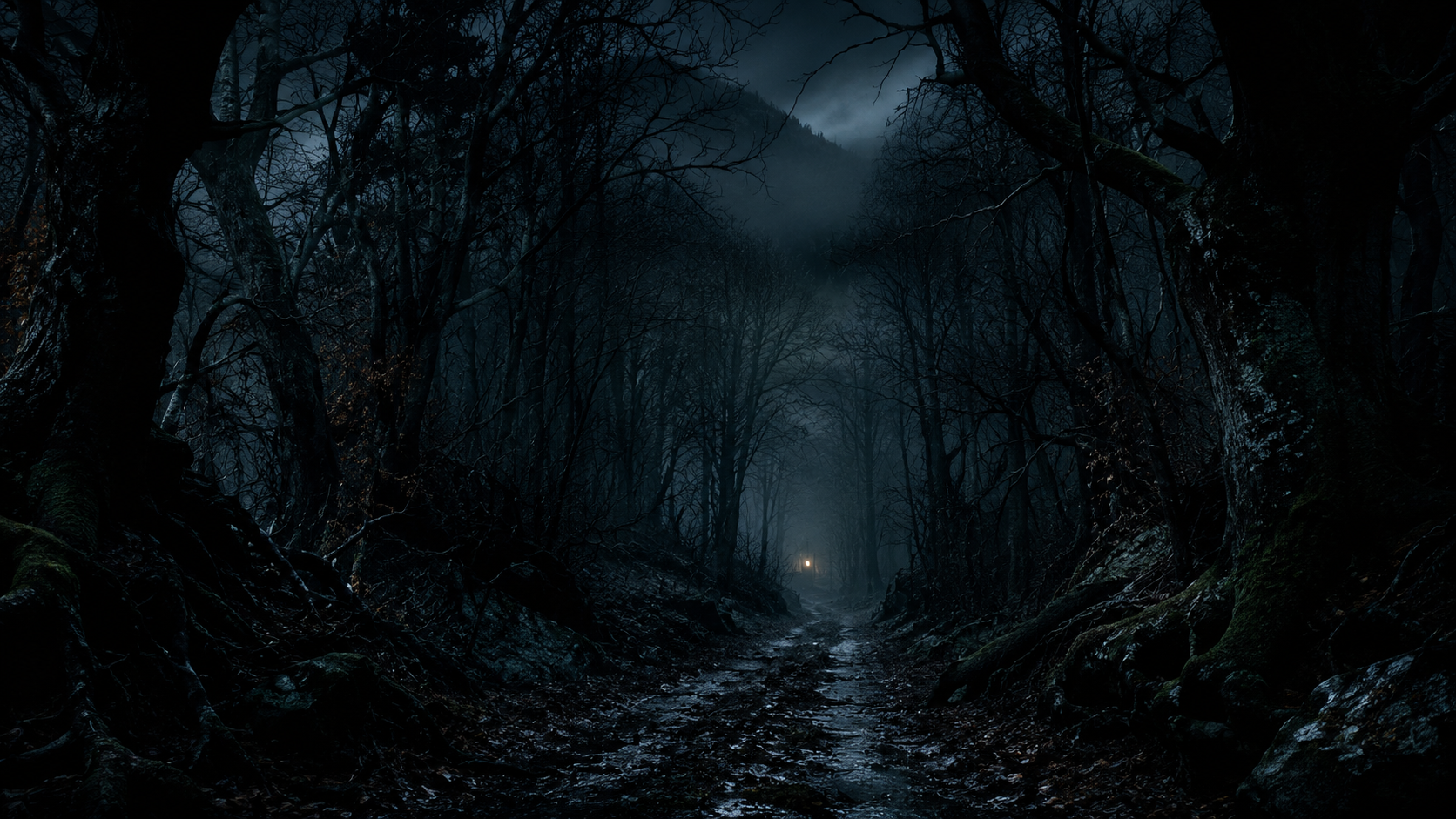
There’s a scene I keep coming back to, not from any book or film, but from a conversation I had with an older man at a ghost tour in western North Carolina a few years back. He’d lived in the same holler his whole life. Someone on the tour asked him if he believed in the things we’d been hearing about — the lights in the woods, the shape that walked the ridge at night.
He looked at them the way you look at someone who’s just asked if you believe in roads.
“Believe in it,” he said. “I’ve seen it.”
That exchange is, in miniature, what Appalachian horror is. Not atmosphere. Not aesthetic. Witness.
The Geography Does Something
Mountains do specific things to human psychology over generations. They cut off. They contain. They create what sociologists call “geographic isolation” but what feels, from inside it, more like the world forgetting you exist.
The Appalachian range runs roughly 1,500 miles from Alabama to Newfoundland, with the densest cultural concentration in a band stretching from northern Georgia through West Virginia. The settlements that took hold there in the 18th and 19th centuries were often cut off from the nearest towns by terrain that made travel genuinely dangerous for significant portions of the year.
That isolation does two things that matter for horror.
First, it concentrates tradition. The oral histories, the rules, the stories that would have diluted over generations in more connected communities stayed intact. Practices that died elsewhere survived. Beliefs that modernized away in cities held their shape in places where modernity arrived late and partially.
Second, it means the community becomes the authority. When there’s no external institution to appeal to — no sheriff an hour away, no hospital, no court — the community develops its own mechanisms for managing fear, conflict, and the things that happen in the dark that nobody has a good explanation for.
Both of those conditions produce folklore with teeth.
The Things That Live Here
Appalachian folk horror has a specific creature catalog, and what’s striking about it is how local it is. The Wampus Cat. The Tailypo. The Bell Witch — not a ghost so much as a presence, a force, something that understood the Bell family well enough to hate them specifically. The Booger. The Raw Head. These aren’t imports. They’re not Greek mythology dressed in new clothes. They grew from this place.
They’re also not uniform. The Tailypo legend varies significantly from county to county. What the creature wants, what it looks like, whether there’s any way to survive encountering it — these change based on who’s telling it and where. That variability is a sign of living tradition. Dead traditions calcify. Living ones adapt.
The Wampus Cat is a good example. In some versions it’s a pre-contact shapeshifter, a woman transformed by the Cherokee as punishment for witnessing a sacred ceremony. In others it’s simply a mountain lion that has been wrong for too long, something that started natural and became something else by accumulation of wrongness. The two versions are doing different cultural work, but they share an anxiety: things here can change into what they are not, and you won’t know until it’s too late.
What Hollywood Gets Wrong
Most Appalachian horror films make the same mistake. They treat the mountains as backdrop for urban people to suffer in. The locals are either villains or props. The horror is generated by the gap between the sophistication of the protagonists and the otherness of the place.
This is not Appalachian horror. It’s tourism horror — horror about what happens when you leave your comfort zone. The mountains are incidental.
Real Appalachian horror is horror about the place — the way the land holds memory, the way communities deal with what they can’t explain, the way the isolation creates both tight bonds and the kind of silence that lets bad things persist. It’s the difference between a story set in the mountains and a story that could only be set in the mountains.
The gold standard is still the oral tradition itself. Second to that, look at what writers like Ron Rash and Wiley Cash do with the region in their fiction — not explicitly horror, but working with the same raw material.
Why It’s Having a Moment
Appalachian horror has been mainstream-adjacent for a few years now, and I don’t think that’s coincidental. We’re in a cultural moment when a lot of people are asking questions about what gets preserved, what gets lost, what survives in communities that were cut off or overlooked, and what that survival cost.
Appalachian folk tradition has answers to those questions. They’re not comfortable answers. They’re the kind of answers that involve the lights in the woods and the shape on the ridge and the old man who looks at you like you asked about roads.
But they’re real answers, from people who were paying attention.
That’s what the best horror has always been.
My fiction lives in this territory — folk horror, creature stories, the kind of dark that grows in isolated places. There Be Monsters: Then and Now collects thirteen of them. Start there.
For more folklore, regional legends, and the horror that feels like it came from somewhere — get on the list.