
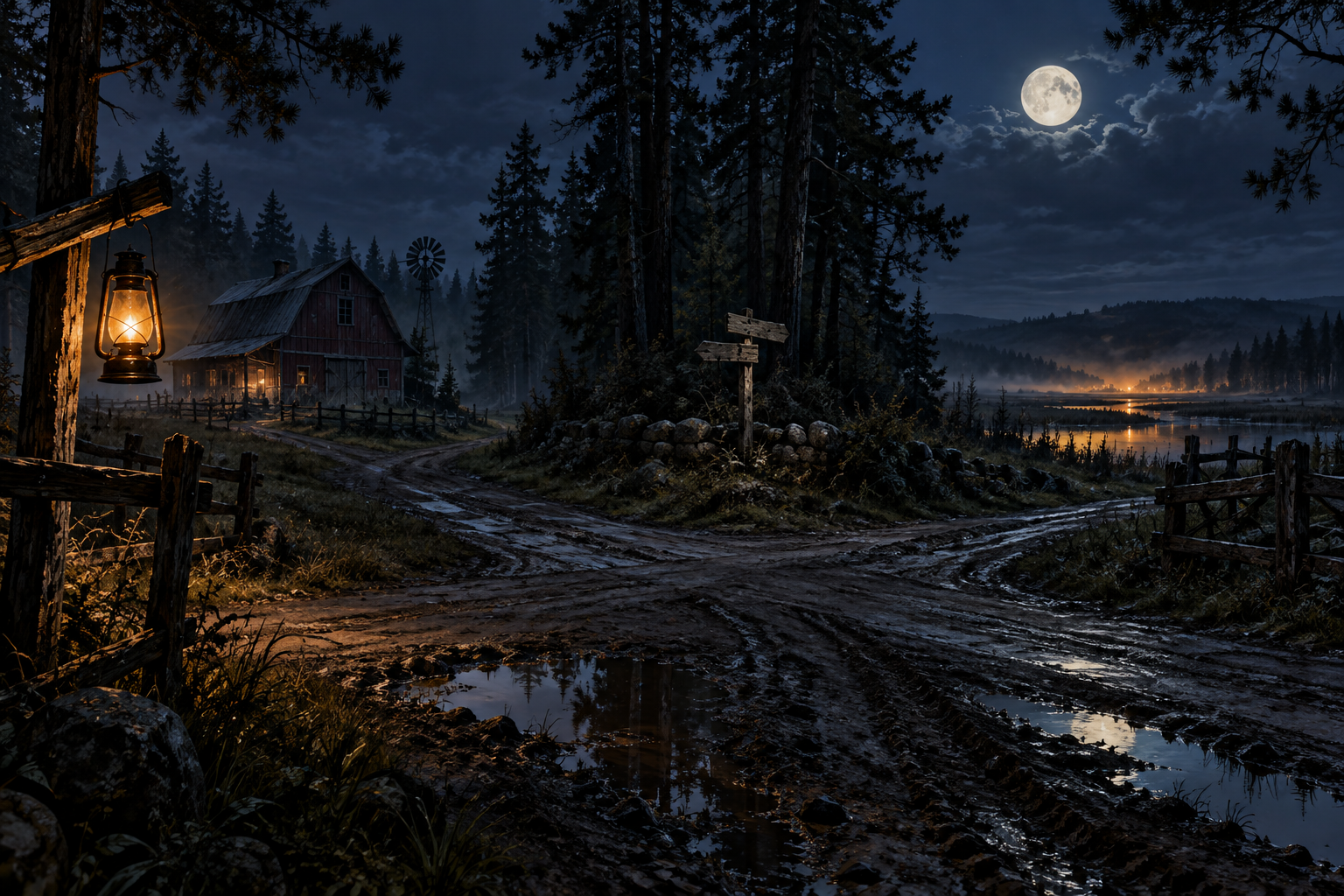

An American folklore monsters list quickly becomes a map of different kinds of storytelling: something in a New Jersey pine barren, a creature reported off the Massachusetts coast, a lumber-camp exaggeration that grew teeth in print. Bigfoot dominates the souvenir shop, but it is only one branch of a much stranger family tree.
The useful question is not whether every creature was “real.” Folklore records how communities explain danger, landscape, work, migration, and the pleasure of being frightened together. Some of the figures below are old regional tales; others are modern cryptids or deliberate tall-tale inventions. Keeping those categories distinct makes the stories better, not less magical.
A quick guide to reading monster lore
An old story is not automatically an ancient one. A newspaper may be the earliest surviving evidence, not the origin. A creature’s name may have been attached to a place long after the underlying warning existed. And a modern legend can still be meaningful without pretending it came from colonial America.
Here are thirteen places to start.
1. The Jersey Devil — New Jersey Pine Barrens
The Jersey Devil is the region’s great shape-shifter: commonly described with wings, hooves, a horse-like head, or an inhuman cry. Later versions connect it to the Leeds family, but the legend has changed repeatedly through pamphlets, newspapers, civic rivalry, tourism, and horror culture. The Pine Barrens matter as much as the creature: a vast, sandy landscape can make a night sound travel farther than it should.
For a fictional route through that terrain, see The Pine Barrens Incident.
2. The Hodag — Rhinelander, Wisconsin
The hodag is one of the most entertaining American examples of a monster becoming local identity. A black, horned, spined beast was promoted in nineteenth-century Wisconsin by Eugene Simeon Shepard, who staged photographs and a captured specimen. It is not an ancient woodland being, but a superb lesson in how a hoax can become folklore when a town adopts it with affection.
3. The Wampus Cat — Appalachia and the Southeast
“Wampus cat” has been used for different large-cat and boogeyman stories across the American South and Appalachia. That variety is the point: the name travels. It can mean an animal at the edge of the porch light, a warning for children, or a creature given a later fixed origin by retellings. Avoid reducing its many regional uses to one neat, supposedly authoritative myth.
4. The Snallygaster — Maryland
The snallygaster’s name is often connected to German-speaking settlers in Maryland, though the monster as most people know it was amplified through nineteenth-century newspaper stories. It was said to swoop down on livestock and people. The legend demonstrates the productive collision of immigrant language, local landscape, and newspaper spectacle.
5. The Snallygaster — Maryland
The snallygaster is a winged creature of Maryland lore whose reported shape has changed as stories passed through newspapers and local telling. The Library of Congress traces an especially important complication: versions of the legend were exploited for racist voter suppression. That history should be named, not turned into a harmless bit of monster trivia. The creature shows how a legend can be both an entertaining regional symbol and a tool used by real people for harm.

6. The Hidebehind — North American logging lore
The hidebehind is said to stay just out of sight behind the trunk you are about to inspect. It is an elegant forest monster because its rule is visual: you never see it directly. Whether invented for lumber-camp storytelling or adopted from older oral patterns, it turns a real workplace hazard—being alone in dense woods—into a creature with perfect tactics.
7. The Squonk — Pennsylvania
The squonk is the melancholy member of the lumberjack bestiary, a creature so ashamed of its appearance that it weeps constantly. Stories say it can dissolve into tears when captured. It is comic, but its endurance shows that monster lore does not always operate through aggression. Sometimes a region preserves a creature because it is odd, tender, and impossible to forget.
8. The Mothman — Point Pleasant, West Virginia
The Mothman reports of the 1960s belong to modern legend rather than old folk belief. Witnesses described a winged, red-eyed figure before the Silver Bridge collapse, and later writers assembled those reports into a larger omen narrative. Treat the tragedy and the witnesses with care: the creature’s cultural life is real, while claims of supernatural causation remain claims.
9. The Flatwoods Monster — West Virginia
In 1952, residents near Flatwoods reported a frightening figure after seeing an object cross the sky. Explanations have ranged from an owl and misperception to extraterrestrial encounter. Whatever happened, the episode shows how quickly a shared night, unusual light, local testimony, and national anxieties can become a durable monster.
10. The Loveland Frog — Ohio
The Loveland Frog is a modern roadside cryptid associated with Ohio reports of a large, upright frog-like figure. It belongs to a broad family of “the thing seen near a road at night” legends. Those stories work because a car gives a witness speed but not certainty: the sight is gone before the mind can arrange it.
11. The Beast of Bladenboro — North Carolina
In 1954, reports of animal attacks around Bladenboro drew press attention and a wave of hunting. The “beast” became larger and more mysterious in retelling. The historical record is a useful reminder that predation, fear, headlines, and community attention often enlarge one another.
12. The Gloucester sea serpent — Massachusetts
Nineteenth-century observers reported a long, sinuous creature off the Massachusetts coast, and the reports became a lively argument about what witnesses had seen. The Library of Congress recounts how sea-serpent reports intersected with a period when people hoped science might identify unfamiliar animals. Here the monster is also an information problem: a surface glimpse of an animal in moving water can resist confident identification.
13. The sidehill gouger — lumber-camp tall tales
The sidehill gouger is said to have legs shorter on one side, making it perfectly adapted to circle steep hills but hopeless on level ground. It belongs to the “fearsome critters” invented and retold around North American lumber camps. The joke is wonderfully practical: a strange slope becomes a creature’s entire anatomy. Like the hidebehind and squonk, it reminds us that a monster need not be solemn to be memorable. Workers could use absurdity to entertain one another and make an unfamiliar landscape feel narratable.

Folklore, fakelore, and cryptids are not enemies
“Fakelore” describes traditions presented as old or authentic when their origins are known to be recent or manufactured. That does not mean they are worthless. The hodag is still meaningful to Rhinelander. A modern cryptid can still shape a town’s imagination. The key is honesty: say what is documented, say what is later, and let the story earn its own strangeness.
For more regional dossiers, explore the Lost Boundary Archive and the broader There Be Monsters series.
Frequently asked questions
What is the most famous American folklore monster after Bigfoot?
The Jersey Devil is among the best known because its legend has remained strongly tied to a specific region, the New Jersey Pine Barrens, while continually changing through print and popular culture.
Are cryptids the same as folklore monsters?
Not exactly. A cryptid is generally proposed as an undiscovered animal, while folklore monsters may be supernatural, symbolic, comic, or openly invented. The categories overlap in modern storytelling.
Why did lumber camps invent so many monsters?
Camp stories entertained workers, explained the strangeness of unfamiliar woods, and turned dangerous or lonely work into shared lore.
Want one original warning for every night of October? October 31 is available on Amazon. For new lore, story announcements, and the free illustrated Dead Ship, join The Grimbard Press.
Sources and further reading
• Library of Congress: American cryptids and how their stories spread
• Library of Congress: the great American sea serpent
• Contemporary and archival reporting on Point Pleasant, Flatwoods, and Bladenboro; distinguish reports from supernatural conclusions