
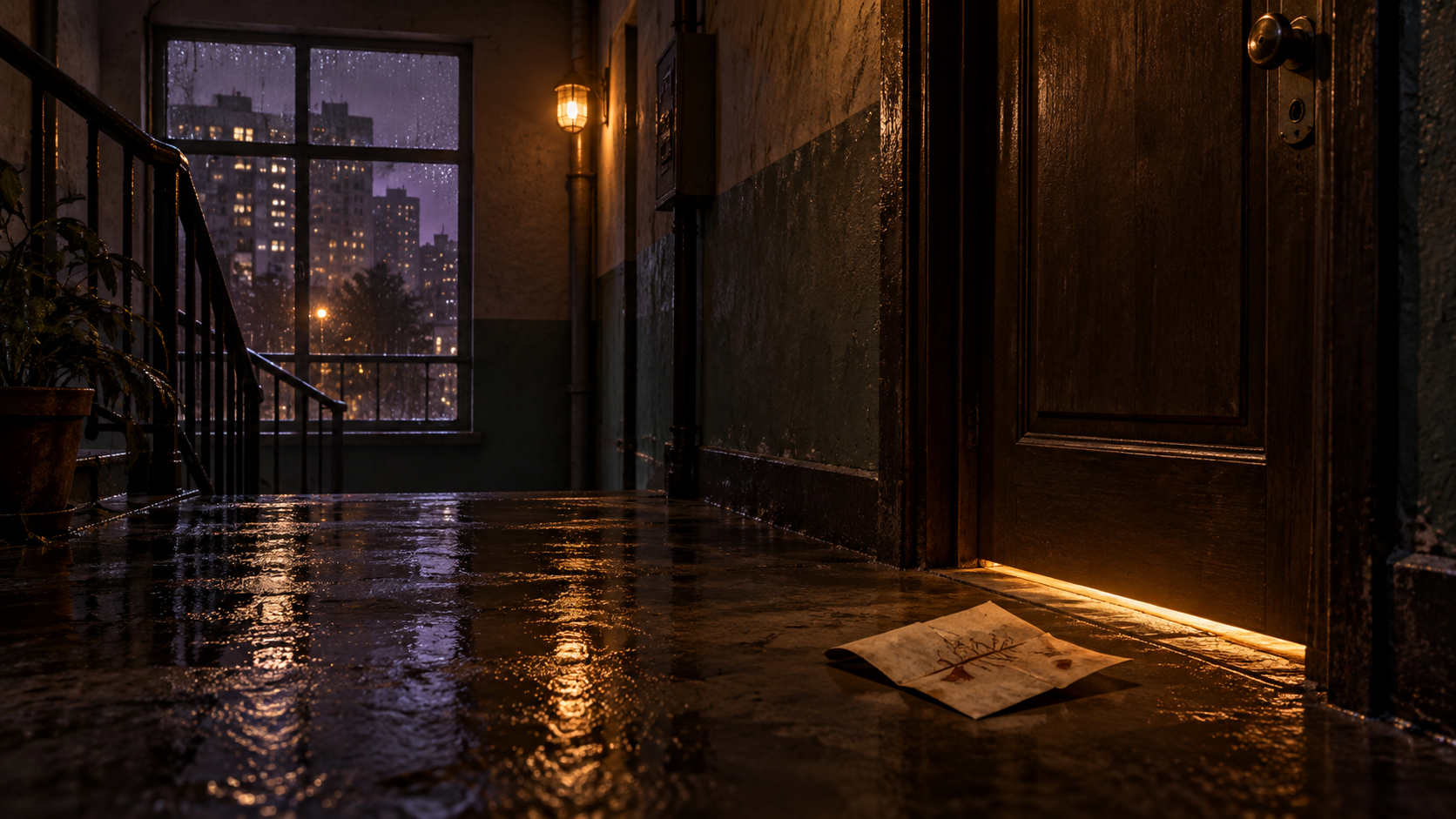
An urban legend is a kind of folklore. The difference is not that folklore is old and urban legends are false.
Folklore is a practice, not a museum shelf
That is why the distinction matters to horror readers. A monster does not need to be ancient to be folklore. It only needs to become portable.
Folklore is a practice, not a museum shelf
People sometimes use “folklore” to mean old stories from a rural past: fireside tales, ruined castles, a creature in a wood that no longer exists. Folklorists use the word more broadly. Folklore is what groups make and carry together. It happens in offices, schools, online communities, military units, families, and neighborhoods as readily as it happens in a village.
That does not make every repeated opinion folklore. A piece of folklore develops a recognizable form. It can be told again. It has a pattern people know how to complete. “Do not answer the voice outside after midnight” is more than a sentence once it has acquired consequences, variants, and a listener who knows not to test it.
The useful question is not, “How old is this story?” It is, “What work does the story do for the people who repeat it?”
Some stories teach caution. Some help people laugh at embarrassment before it happens to them. Some make a private fear public without asking anyone to confess it directly. Some turn a messy uncertainty into a creature with a face, a habit, and a place to stand.
That last function is especially durable. What monsters represent in folklore is often less about a beast than about the boundary around a community: who belongs, what behavior crosses a line, and what happens after the warning is ignored.
An urban legend wants to be believed for five minutes
Urban legends usually arrive in a more realistic costume. They are often set in ordinary places and told with contemporary details: a specific brand, a particular road, a relative’s workplace, a screenshot, a photo that has been cropped just enough to keep the uncertainty alive.
They also tend to favor what folklorists call a “friend of a friend” frame. The teller may not claim direct experience. That distance is not a weakness. It is a device. The story is close enough to matter and far enough away that the listener cannot easily check it.
The Black-Eyed Children legend is a useful example. Its best-known modern form grew through late twentieth-century and internet-era retellings, not through a medieval village tradition. Yet its force comes from older patterns: a child at the door, hospitality turned dangerous, the threshold that cannot be crossed without permission. Read how the Black-Eyed Children urban legend learned to knock for the history of that particular story. The point here is that modern circulation did not make it less folkloric. It gave the legend a new route.
An urban legend can be entirely invented, partly based on a real event, or built from several unrelated reports. Its factual status is not its defining feature. A legend is not a police report with worse paperwork. It is a story that asks: could this happen here?
Why these stories spread even after correction
Correction and circulation do not always move at the same speed. A factual correction has to explain dates, sources, context, and uncertainty. A legend has to make a clean impression.
The story is shorter. It arrives ready for retelling. It offers the listener a role: the person cautious enough to warn someone else.
That does not mean people who share legends are foolish. Most people are not conducting a field study when they repeat a story at midnight. They are signaling concern, amusement, identity, or the particular thrill of passing along a door that ought to stay closed.
Digital platforms intensify the old process because images and captions travel together. A rumor can borrow the authority of a map pin, a grainy video, or an anonymous account that sounds official. But the basic movement is older than the feed: witness, retelling, embellishment, correction, new retelling.
Folklore survives because it can accept the correction and keep the feeling. A story about a vanished hitchhiker can lose one location and gain another. A local ghost can move from a bridge to a highway exit. The name changes because the need for the story remains.
The difference in one sentence
Folklore is the broad set of traditions groups make and share. An urban legend is one modern form of folklore, usually told as a plausible warning about ordinary life.
The line is useful, but it should not become a wall. Folklore is still being made around you. It has simply learned to carry a phone.
When a story becomes a monster
Horror understands something the fact-check rarely needs to say: a story can reveal a fear even when it does not document an event.
The monster may not be the point. A monster gives the fear a body small enough to carry from one person to another. That is why the best legends do not end when a skeptic names the likely explanation. The explanation answers one question. The story is still asking another.
If you like folklore that changes shape as it moves between centuries, There Be Monsters: Then and Now begins there: with creatures whose danger is tied to what people need them to mean.
Follow the next warning. Join The Grimbard Press and receive Dead Ship, a free illustrated Subscriber Archive Edition, plus new monster lore and recovered stories.
FAQs
Is an urban legend the same as a myth?
Not exactly. A myth often concerns sacred, cultural, or cosmological questions. An urban legend usually presents itself as a plausible modern incident. The categories can overlap in how they function, but they make different claims about setting and belief.
Are urban legends always false?
No. Some borrow from real events or recognizable dangers. Their defining feature is their patterned retelling, not a guaranteed factual status.
Can internet stories become folklore?
Yes. A story can become folklore when communities adapt, repeat, and recognize it beyond one original post or author.
Why do scary legends use ordinary settings?
Ordinary settings reduce distance. A monster in an inaccessible castle is contained. A stranger at an apartment door, a store parking lot, or a school hallway is not.Read What monsters represent in folklore for a related guide.
