Looking for Horror Anthologies About Folklore and Monsters? Start Here
If you are looking for horror anthology books about folklore and monsters, start by deciding what you want the stories to do to you.
Do you want a creature that belongs to one landscape? A ghost story with the weather pressing against the windows? A modern story that treats an old legend as a live wire? Or do you want several kinds of dread in one book, because committing to a single monster for four hundred pages feels like a risky first date?
An anthology is often the best answer. Short fiction lets a reader test a voice, setting, and fear mechanism without making a long-term promise. It also lets folklore behave as folklore does: not as one official canon, but as a set of variations. The monster can change with the witness, the county line, the century, or the person foolish enough to open the door.
The right anthology is not necessarily the scariest one. It is the one whose kind of danger you want more of after the first story ends.
Start with the fear, not the monster label
“Folklore horror” and “monster horror” sound like clean categories until you start reading. A story about a black dog can be a regional legend, a grief story, a road story, or a warning about the person who recognizes the dog too late. A story about a sea creature can be maritime survival horror, classical myth, ecological dread, or a study of what people see when a horizon refuses to stay empty.
So choose by pressure.
If you want old stories in a modern landscape
Look for tales that let a local rule survive into the present. The strongest versions do not simply move a folk creature into a suburb and call it adaptation. They ask what the original warning was doing—guarding a boundary, explaining a loss, naming a danger—and then find a modern place where that warning still has teeth.
Start with the Archive’s black-dog legend and the documented history behind Spring-Heeled Jack to see why changing a legend is not the same as flattening it. Good folklore horror respects the fact that a story belonged to someone before it became atmosphere for someone else.
If you want creatures that reveal people
Monster stories work best when the creature changes the human question. A monster may be a literal threat, but it can also expose the rule a community has quietly been enforcing: who may enter, who may leave, who gets believed, who gets named as dangerous.
That is why folklore and monsters belong together so naturally. Both arrive with histories. The reader meets a creature, but the creature is carrying every earlier version of itself in the room.

Illustration: an anthology works because each story opens a different file.
If you want atmosphere without a marathon
Anthologies are especially useful for readers who prefer atmosphere, ideas, and dread over a single relentless plot. One story can build a haunted shoreline. The next can move to an office after midnight. Another can put a strange object on a kitchen table and let the room change around it.
The form gives you recovery time. It also gives writers permission to make a precise ending rather than stretch one premise until the monster has explained itself to death. A short story can leave a footprint in the hall and stop there.
For a reader who wants a gentler entry point into the genre, How to Start Reading Horror If You Don’t Like Gore is a useful companion. “Not gory” does not mean “not disturbing,” but it can help you choose dread that suits your appetite.
What to look for in a folklore-horror anthology
The phrase “inspired by folklore” is not enough on its own. Before choosing a book, look for a few signs that the collection has thought about its material.
- Specificity: Does the story name its place, people, and tradition accurately, or does it borrow a creature as generic scenery?
- Variation: Does the anthology understand that legends have versions, rather than presenting one retelling as the official answer?
- Consequence: Does the monster change the story’s moral weather, or is it only a decorative jump scare?
- Range: Do the stories offer different forms of fear—body, place, family, work, history, landscape—or only repeat the same twist?
- Permission: If a story draws from a living tradition, does it avoid treating belief as a costume rack?
These questions do not make horror less fun. They make it stranger for longer. A creature with a real context has more ways to haunt a story than one that exists only to knock over a lamp.
The Grimbard entry: There Be Monsters: Then and Now
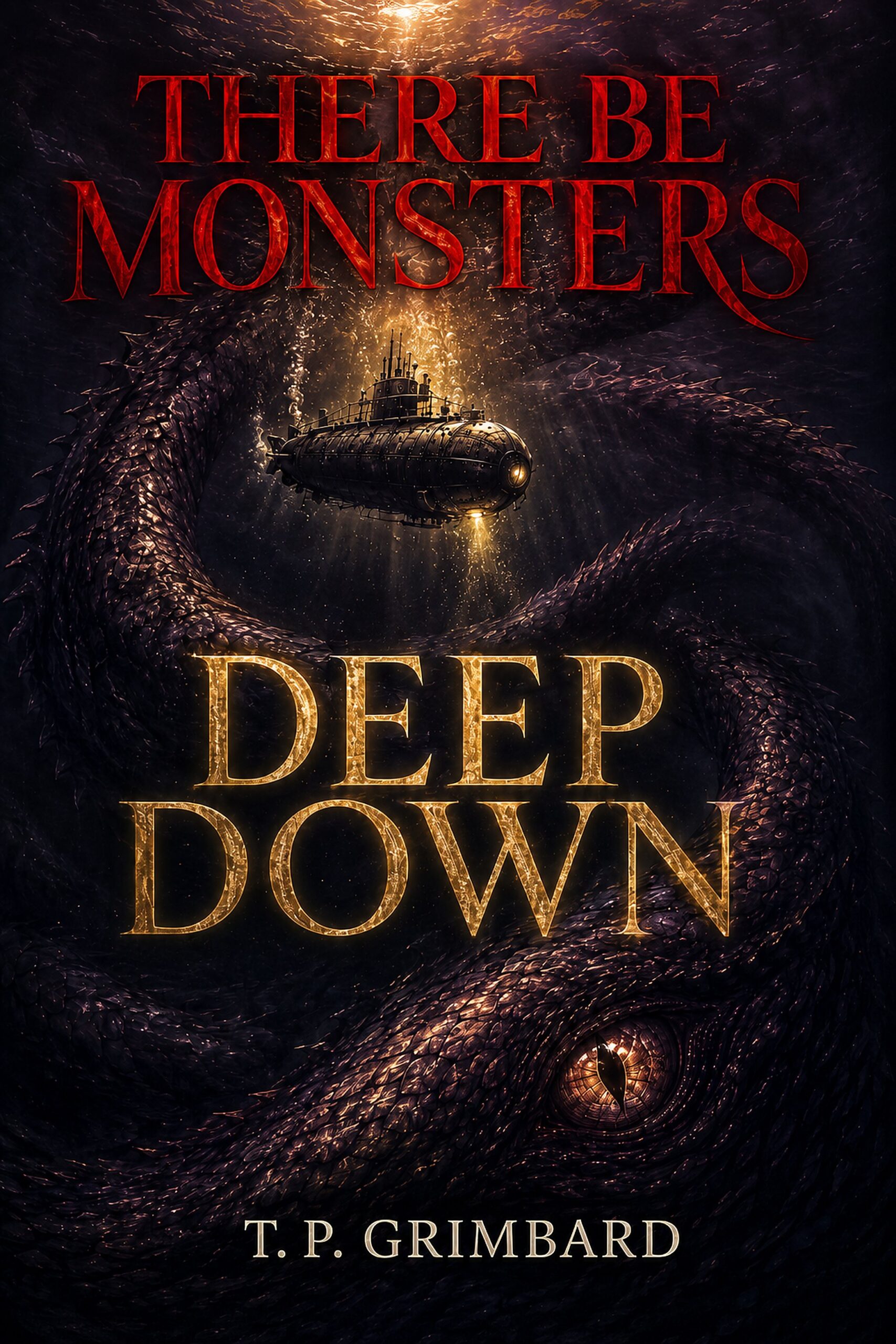
If you want an original anthology route through monsters and the stories that survive around them, begin with There Be Monsters: Then and Now.
It is the first entry in the There Be Monsters series: original horror stories built around the idea that the most frightening monsters are often the ones closest to human. It is not presented as a definitive survey of world folklore, and it should not replace the communities and traditions that produced the legends it touches. It is a fiction collection for readers who want monster stories with consequence, unease, and the sense that a familiar rule has just stopped protecting anyone.
The best way to use an anthology is to follow the story that stays with you. If you find yourself wanting more haunted history, move into There Be Monsters: Among the Dead. If the creature and its changing versions are what hold you, keep an eye on the Archive and the series page. Reading routes should widen, not trap you in a sales funnel disguised as a recommendation list.

Illustration: a good anthology gives a reader more than one door and does not force the same room behind each one.
Why short stories are the right form for monster lore
Legends themselves are compact. Someone saw something by the road. Someone failed to follow a rule. Someone came home with a story that did not fit in the house.
That does not mean every folk narrative is short, but it does mean the short-story form understands the value of a pressure point. It can show the warning, the decision, and the cost without translating every shadow into an encyclopedia entry.
The form also lets readers compare. One story may make the monster visible. The next may make absence the monster. By the end, the reader has not learned one correct definition of horror. They have learned what kind of uncertainty they want to open again.
For free fiction with an Archive-file shape, join The Grimbard Press and receive Dead Ship, an illustrated Subscriber Archive Edition. If the anthology route feels like home, continue to There Be Monsters: Then and Now.
FAQs
What makes a horror anthology good for folklore fans?
Look for stories that treat place, tradition, and variation with care. A good collection uses folklore to deepen the story’s stakes, not merely to supply a monster name.
Are horror anthologies good for new horror readers?
Yes. They let readers sample different voices and fear styles without committing to one long novel. They are especially helpful for learning whether you prefer creature stories, ghosts, psychological dread, or historical horror.
Is There Be Monsters: Then and Now an original book?
Yes. It is an original T. P. Grimbard horror anthology and the first entry in the There Be Monsters series.
Do all folklore-horror stories need to be scary in the same way?
No. Folklore can support dread, wonder, grief, revenge, warning, and mystery. Variety is one reason anthologies suit the material so well.