Tag: creepypasta

  • Black-Eyed Children: How a 1990s Internet Legend Learned to Knock

    Black-Eyed Children: How a 1990s Internet Legend Learned to Knock

    Black-Eyed Children: How a 1990s Internet Legend Learned to Knock

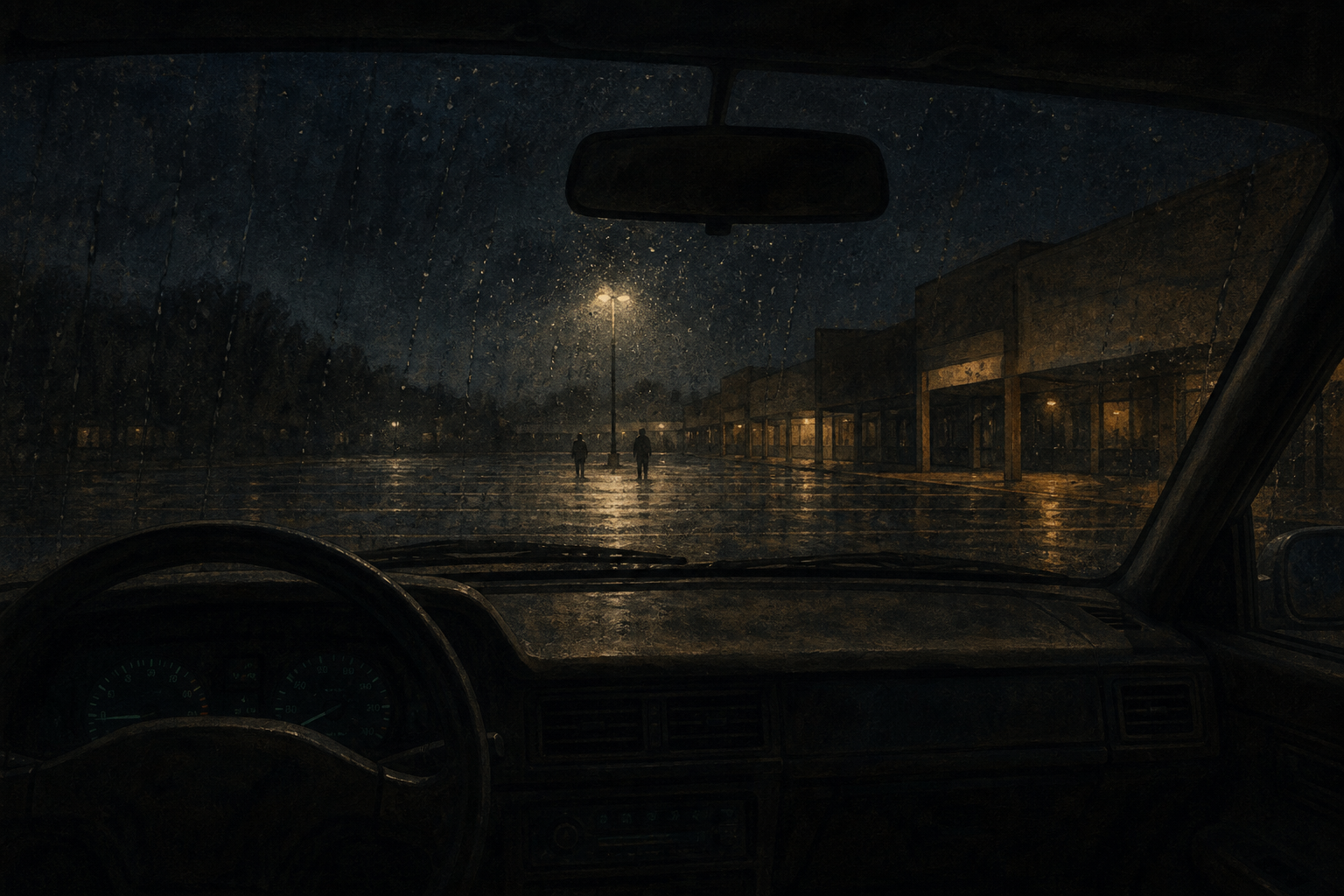
    Two children stand at a car window late at night. They want a ride. Or they need to use a phone. Or they ask, politely at first, to come inside. The person telling the story notices something wrong only after the request has already made courtesy feel dangerous: the children’s eyes are entirely black.

    The Black-Eyed Children—or Black-Eyed Kids—are one of the clearest examples of a modern urban legend becoming old in public memory. The story is often presented as ancient, vampire-adjacent folklore. The better-supported history is much more recent. It is tied to accounts circulating from the 1990s, especially a reported encounter by Texas journalist Brian Bethel in Abilene, then to the accelerant of online retelling.[^1]

    That distinction matters. A reported experience is not the same thing as evidence that supernatural children visit cars and doorsteps. But a story does not need paranormal proof to become real folklore. It only needs a form that strangers can repeat, modify, and recognize.

    The story’s likely ground zero

    The modern Black-Eyed Children legend is commonly traced to Brian Bethel’s account of an encounter in Abilene, Texas, in 1996. In the later version he discussed publicly, he described being approached in a movie-theater parking lot by two boys who asked for a ride. The encounter became frightening when he saw their eyes, which he described as completely black.[^1]

    Bethel treated the experience as something that happened to him. That is the beginning of a personal testimony, not a laboratory result or an independently verified supernatural case. The distinction is not meant to sneer at the account. It is how a useful archive keeps its shelves from collapsing: reported by a witness belongs on a different card from confirmed by evidence.

    Once the account circulated online, it acquired the features that make a story easy to carry. The setting could change from Texas to a rural road, a gas station, an apartment hall, or a front porch. The children could be younger or older. The request could be for a ride, a phone, a bathroom, or permission to enter. The eyes remained the same, because they solve the entire story in one image.

    Illustration: abstract blocks of an early internet message board glowing in a dark room; no readable text.

    Illustration: the legend did not need a campfire. It had an early internet connection.

    Why the request to enter is more frightening than the eyes

    Solid-black eyes are an efficient horror detail. They remove the ordinary information we expect from a face. But the legend’s real engine is the request for permission.

    The children usually do not attack. They ask. That makes the listener responsible for a decision before the story has explained the danger. A person who refuses a child at a door risks feeling cruel. A person who agrees may be admitting something that knows exactly how to use politeness.

    This is an old mechanism in a new costume. Folklore is full of threshold rules: do not invite the stranger in, do not open the door after a certain hour, do not accept a gift whose terms you do not understand. The Black-Eyed Children update that rule for parking lots, late-show theaters, and suburban porches. The monster does not need a castle. It needs access.

    That is why the story feels intimate even when it is obviously designed for retelling. It recruits the listener’s own manners. You know what you are supposed to do when someone asks for help. The legend makes that knowledge feel like a trap.

    A contemporary legend, not a recovered ancient one

    As the story spread, claims of older sightings appeared. That is common in successful folklore. Once a legend has a recognizable shape, earlier vague memories and unrelated stories can be pulled toward it. A strange child seen near a road decades ago becomes an earlier Black-Eyed Child because the new legend gives the memory a name.

    That process is older than the internet even when the delivery system is new. The Black Dog gathered reports, exaggerations, and local anxieties into a figure people could recognize on sight; the Black-Eyed Children do something similar with a request at the door.

    That backward growth is not fraud in every case. It is one way folklore works. People remember through available patterns. The problem begins when later retellings use those patterns to claim an unbroken ancient tradition that the record cannot show.

    The Black-Eyed Children are most interesting when we resist that temptation. They are internet-age creatures. Their pale faces, strange speech, and requests for entry combine several older anxieties, but their transmission belongs to the era of mailing lists, paranormal forums, reposted anecdotes, and stories that could circle the country without ever gaining an independent witness.

    The same process is visible in how Slender Man was born in a Photoshop thread. A new monster can become culturally durable faster than a regional legend once the network supplies the campfire.

    Illustration: a rain-darkened apartment doorway with a chain lock and a bright threshold, no people visible.

    Illustration: the story is about the threshold long before it is about the eyes.

    Why the legend lasts

    The Black-Eyed Children compress several fears into a small scene:

    • a child who asks for help but does not feel like a child;
    • a face that removes the eyes we use to judge attention and emotion;
    • a request that makes refusal feel morally uncomfortable;
    • a door, car, or home that becomes a border rather than a refuge.

    It also lets the listener complete the frightening part. The story rarely provides a verified consequence. The narrator drives away, locks the door, or feels a wave of dread. That gap is useful. A named monster can be argued with. An unanswered request keeps working after the account ends.

    This is different from saying the legend is harmless. Some versions turn vulnerable children, strangers, or disability-coded appearance into easy threats. A careful telling should not confuse an invented monster rule with a reason to treat real people suspiciously. Horror is allowed to use the door. It does not get to make kindness itself look foolish.

    The Grimbard reading: folklore now moves at the speed of recognition

    The Black-Eyed Children are proof that folklore did not end when people stopped gathering around one fire. It changed its infrastructure.

    The first telling may have been a single person’s account. The creature that survives now is made from every person who knows which details must remain: black eyes, a request, a threshold, and the awful feeling that the decision has already been made for you.

    For more files on the stories that outgrow their first telling, join The Grimbard Press and receive Dead Ship, a free illustrated Subscriber Archive Edition. It begins with a document, a vanished crew, and a rule about what not to trust in the dark.

    FAQs

    Are Black-Eyed Children real?

    There is no reliable evidence that Black-Eyed Children are supernatural beings. They are best understood as a modern urban legend built from reported encounters and repeated online storytelling.

    When did the Black-Eyed Children legend begin?

    The modern legend is commonly associated with a reported 1996 encounter in Abilene, Texas, and later online circulation. Claims of a much older stable tradition are difficult to document.

    Why do Black-Eyed Children ask to be invited in?

    The request for entry creates the story’s main tension: it turns ordinary politeness and the safety of a threshold into a decision the listener fears getting wrong.

    Is this the same as creepypasta?

    It overlaps with creepypasta and internet horror, but it also works as contemporary folklore: a flexible story told as if it could have happened to someone nearby.

    [^1]: Emma Cieslik, “Death as a Child: The Modern Legend of the Black-Eyed Children”, Atlas Obscura (2024).
  • Slender Man Was Born in a Photoshop Thread. Then He Got Real.

    Slender Man Was Born in a Photoshop Thread. Then He Got Real.


    We can name the exact moment a monster was born. That has almost never been possible before.

    On June 10, 2009, a user going by “Victor Surge” — real name Eric Knudsen — posted two doctored black-and-white photographs to a Something Awful forum thread. The thread was a contest: take an ordinary photo, edit in something paranormal, make it look like a real found artifact. His entry showed groups of children with a tall, unnaturally thin figure in the background, faceless, in a dark suit, its limbs a little too long. He added fake captions in the clipped voice of an archive note. “One of two recovered photographs from the Stirling City Library blaze.” A librarian’s disappearance. A reference to “the Slender Man.”

    A nostalgic, grainy found photograph of children in a park

    That’s it. That’s the entire origin. A guy won an internet Photoshop contest. Within a decade his invention had its own mythology, a feature film, a video game franchise, and a body count.


    How a Meme Becomes a Folk Belief

    The folklorist Trevor J. Blank has spent years arguing something that sounded strange when he started and sounds obvious now: the internet doesn’t kill folklore, it turbocharges it. Folklore was never about age. It was about transmission — stories that spread person to person, mutating as they go, owned by no one, treated as communal property. That’s exactly what a forum is. That’s exactly what a subreddit is.

    Slender Man is the cleanest case study in existence for how a contemporary legend forms, because we have the whole fossil record. We can watch the mutation happen in real time. Knudsen’s original was sparse — a faceless figure, some missing children, a librarian. Then other users started adding to it, because the forum culture invited them to. Someone gave him tentacles. Someone gave him the ability to induce coughing fits and paranoia in people who researched him too closely, “Slender sickness.” Someone built him a proxy mythology — human servants under his control. Someone made Marble Hornets, a found-footage web series that gave him a coherent visual grammar. None of these people were the author. All of them were the author. That’s precisely how oral folklore always worked; it just used to take three hundred years and a lot of firesides, and now it takes a weekend and a comment section.

    A neural web of glowing connections representing digital transmission

    The thing people get wrong is assuming that “made up on the internet” means “not real folklore.” It’s the opposite. The internet didn’t dilute the folk process. It compressed it. Slender Man went from invention to genuine, sincerely-held-in-some-corners belief faster than any legend in recorded history, and the mechanism was identical to the one that produced every older bogeyman — accretion, anonymity, communal ownership, and the deep human hunger to believe the scary thing is out there.


    The Part Where It Stopped Being Fun

    In 2014, in Waukesha, Wisconsin, two twelve-year-old girls lured a third girl into the woods and stabbed her nineteen times. She survived, barely, by dragging herself to a road. The two attackers told police they did it to become “proxies” of Slender Man — that they believed he was real, that they believed he would kill their families if they didn’t, that they were trying to earn a place in his mansion in the forest.

    This crime should not be used to turn a mental-health crisis into a monster story. The people involved were children, the survivor endured severe violence, and court records included complex mental-health findings. A fictional character did not cause the attack, and no single explanation can responsibly account for it. The lasting lesson is narrower: sensational coverage can turn a real child’s trauma into a mythology about media, belief, and danger.

    That’s the real horror of digital legendry, and it’s got nothing to do with tentacles. A story with no owner, no canonical text, and infinite mutability will eventually be encountered by someone with no filter for where the fiction ends. The old legends had priests, elders, a village context that came bundled with “this is a story we tell, not a thing you do.” The creepypasta has none of that. It arrives context-free, on a screen, presented in the exact documentary style — the fake archive note, the found photograph — designed to erode the line between made-up and found. Knudsen built him to look real. He succeeded past anyone’s intention.


    Why He Works When Older Monsters Don’t

    Set aside the tragedy for a second and ask the craft question: why this figure? A thousand creepypastas were posted that year. Most are forgotten. Slender Man became the first genuinely global native monster of the internet age. Why him?

    Because he’s built out of almost nothing, and the nothing is the point. He has no face — so your brain supplies the worst one it can. He has no stated motive — so he can be about whatever you fear. He appears in the background of photographs of children, in ordinary daylight, at the edge of frame, which is the exact position our peripheral-threat detection is wired to distrust. He doesn’t chase; he’s just there, having been there the whole time, in the photo you’ve already looked at. Knudsen’s original captions did the single smartest thing horror can do: they withheld. No explanation, no origin, no rules. Just a faceless tall thing standing among kids and a note saying the photographer later disappeared.

    Restraint made him. Every attempt since to explain him — the movie especially — has made him smaller, because explanation is the enemy of this kind of dread. The version that scared the world was the version that told you almost nothing and let the folk process, and your own mind, fill the void with something worse than any screenwriter could pitch.


    The Uncomfortable Takeaway

    We are going to keep doing this. Slender Man wasn’t a fluke; he was a proof of concept. The conditions that made him — anonymous authorship, documentary-style fakery, communal mutation, instant global transmission, and an audience that can’t always tell the campfire from the woods — are not going away. They’re intensifying. AI-generated images now do effortlessly what Knudsen did by hand: manufacture found artifacts of things that never existed, in bulk, indistinguishable from the real thing.

    The next Slender Man is already in a thread somewhere, half-built, being passed hand to hand by people who don’t know they’re writing scripture. Most of them will be forgotten. One of them won’t. And the folklorists were right all along: the monsters never needed the old world to survive. They just needed us to keep telling each other, in the dark, that this one might be real.


    I write horror that takes the folk process seriously — including the modern, screen-lit version of it. Get the free story here and I’ll keep sending you the strange from the edge of the frame.

    The fiction this feeds is There Be Monsters: Then and Now. If you want to see where a lot of us first learned that a plain photograph could be the scariest thing in the book, Scary Stories to Tell in the Dark still holds up.